

They were classmates, but never friends. The relationship between the two celebrities appears strange from the outside. They are almost the same age, coming from the same stratum of intelligentsia – military nobility, students of the same professors of the Moscow Conservatory. Rachmaninoff and Scriabin were almost the same age, but they were dissimilar … Continue reading “When Titans Collide: Rachmaninoff and Scriabin’s Interwoven Fates”
Month: March 2025
The ‘Holy Fool’ Mussorgian
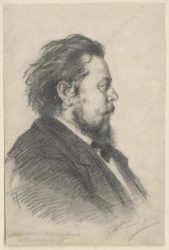
The music of Modest Petrovich Mussorgsky, author of the masterpieces Boris Godunov, Khovanshchina, and Sorochinskaya Yarmarka (The Fair at Sorochyntsi), strikes with dramatic truth and simplicity of presentation. His work is characterised by ingenuity and innovative techniques combined with folk traditions. However, due to alcohol addiction, the composer failed to realise his full potential. Modest’s … Continue reading “The ‘Holy Fool’ Mussorgian”
The Evolution of Dress Code in Classical Music: Tradition vs. Self-Expression

The world of classical music has traditionally upheld a strict dress code, predominantly characterised by black and white uniforms that have been the norm for centuries. As society progresses, the understanding of identity and artistic expression also shifts, creating opportunities for female, non-binary, and transgender musicians to challenge traditional norms and expectations in the music … Continue reading “The Evolution of Dress Code in Classical Music: Tradition vs. Self-Expression”
Marie Pleyel and the Fight for Female Recognition in 19th Century Music
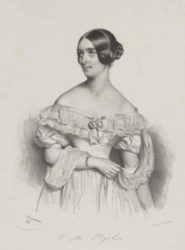
Marie Pleyel, born Marie Félicité Denise Moke on September 4, 1811, in Paris, was a virtuoso pianist and composer whose contributions to the world of music remain significantly underrepresented in historical narratives. Despite being a celebrated figure in her time, Pleyel’s legacy has often been overshadowed by her male counterparts, resulting in a lack of … Continue reading “Marie Pleyel and the Fight for Female Recognition in 19th Century Music”
Two-Piano Arrangements of W.A. Mozart’s Keyboard Sonatas by Edvard Grieg
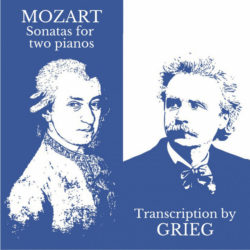
In his critical essay Mozart and His Significance for Our Time, Edvard Grieg wrote: Many contemporary composers have attempted to modernise Mozart in order to rekindle public interest in his music, especially among audiences whose tastes have been dulled by excessive seasoning. A difficult task! I, too, have attempted to give some of Mozart’s piano … Continue reading “Two-Piano Arrangements of W.A. Mozart’s Keyboard Sonatas by Edvard Grieg”