
Written by Hannah Absalom
In this piece, CUWB Associate Member, Dr Hannah Absalom reflects on her participation in the All Party Parliamentary Group on Social Science and Policy in February. Hannah’s research, funded by the ESRC at the Centre for Urban Wellbeing has developed community engaged action research which foregrounds the lived experiences of tenants and explores new perspectives on persistent inequalities and societal divides.
Reflections on the All-Party Parliamentary Group (APPG) Meeting
Transitioning from social housing practitioner to early career researcher (ECR)—a label that still amuses me at my age—I’m always pleased when my research reaches policymakers. So, I was delighted to be invited to an All-Party Parliamentary Group (APPG) meeting on the cost of living. The session featured three expert presentations and a roundtable discussion. While I wasn’t one of the speakers, I contributed insights from my work.
APPGs are informal, cross-party groups where MPs, peers, and external experts discuss pressing issues. Though they lack legislative power, they shape policy debates. The APPG on the cost of living is one such forum, tackling the crisis that continues to affect millions in the UK. However, much of the discussion at this meeting focused on economic productivity as a solution to wage deflation—currently averaging £14,000 below where it should be. One speaker presented compelling evidence that stronger workers’ rights and job security actually boost productivity, an insight that should be obvious but apparently isn’t, given the last 14 years of… well, whatever that was.
My contribution: stability over productivity
Amid all this talk of productivity, I kept coming back to stability. The disconnect between policymakers and the public is striking—an obsession with productivity overlooks the reality that stability is fundamental to human flourishing. Without it, despair grows. Poverty isn’t just about numbers; it’s about the crushing weight of uncertainty. I argued that if policymakers want a true measure of poverty, they should be looking at indicators of despair. I’m not really surprised that despair is overlooked in such examinations. It is a topic I occasionally deep dive into, and I have to manage my wellbeing when doing so.
But the reality is, turning away from despair is a privilege we can no longer afford. If we keep refusing to look directly at its impact, we risk sliding into a future where despair isn’t just a consequence of poverty—it becomes the defining feature of our times. Stability isn’t a luxury; it’s a necessity, and our policies need to reflect that urgency.
The skewed impact of social value accounting
I also raised concerns about social value accounting, a mechanism increasingly used to justify private sector involvement in what used to be the domain of the state. While it sounds promising, in practice, it distorts priorities. Supermarkets now funnel yellow-stickered items to food banks to gain social value points. This forces people in circumstances of poverty into charity models rather than enabling them to self-manage. The shame of using food banks is a major barrier, yet these mechanisms continue to strip people of autonomy. The role of the private sector in alleviating the cost of living crisis needs far greater scrutiny. It also needs public accountability on how their efforts are used to alleviate problems that an obsession with profit has contributed to.
The ethics deficit in public leadership
Another crucial issue is the ethics deficit in public leadership. We need stronger professional standards, particularly in sectors like housing, where ethical lapses have real, damaging consequences.
Professionalisation is often touted as a solution, but too often, what this really means is the injection of market logics into public service domains. This needs to be resisted. Public service is not a marketplace; it requires ethical thinking and action. True professionalism in public leadership is not about adopting corporate strategies—it’s about upholding values that prioritise people over profit.
Great public leadership is distinguished by ethical integrity, not by the monotony and misfit of market-driven efficiency measures. The creeping managerialism that has reshaped public service needs to be challenged. We need leaders who see ethical decision-making as fundamental, not incidental. Until ethics is placed at the heart of public service leadership, we will continue to see policy failures that prioritise cost-cutting over people’s well-being.
The UK’s Skills Shortage: A crisis decades in the making
Finally, I highlighted the UK’s critical skills shortage. Years of cost-cutting and short-term efficiency thinking have stripped the country of skilled trades. This failure to invest in workforce development leaves the UK unable to respond effectively to economic and social challenges. Addressing it requires long-term investment, a topic rarely prioritised in policymaking because the returns won’t be seen within the typical election cycle.
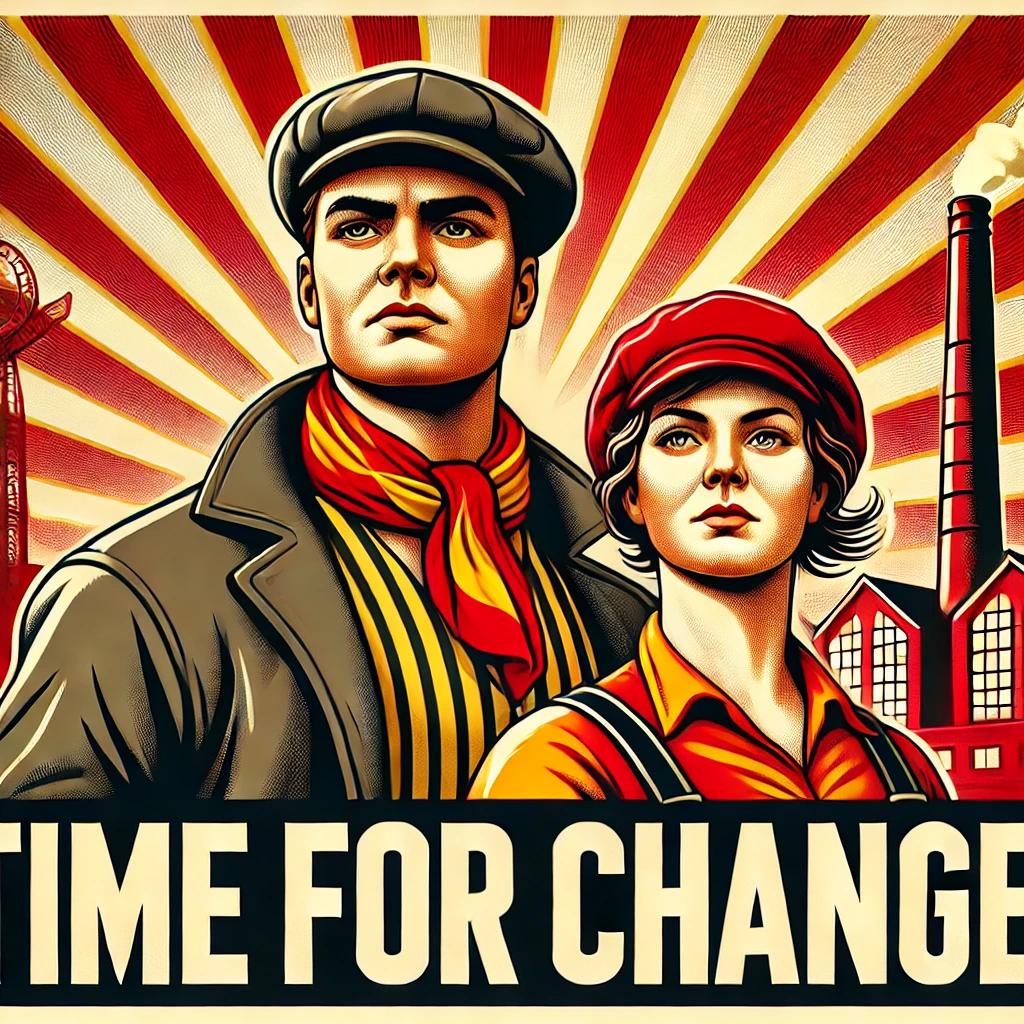
Tied into this is the need for some uncomfortable introspection on the left. Left-wing politics has been hollowed out, stripped of its class-based and labour-rooted identity. Recognising the skills shortage isn’t just about economics—it’s about acknowledging the damage done to working-class communities across the UK. Too many industries have been decimated, too many livelihoods shattered, and too many opportunities lost. If we want to rebuild a fairer, more just Britain that we can all be proud of, we must first acknowledge these failures and recommit to policies that support and empower working people.
A call for action, not just more debate
While the discussion was insightful, my biggest takeaway was the urgent need to move from diagnosis to action. We don’t need more reports confirming what we already know—we need political will and policy implementation that tackle systemic inequalities with a long-term perspective.
The UK is at a crossroads. We have a chance to break from the global trend toward extreme right-wing policies and forge a different path. Isn’t that what Brexit was supposed to be about—charting our own course? We face tough choices, but we also have a history of collective action and a deeply ingrained public ethics that resists unfairness.
Few injustices are as stark as a super-rich elite hoarding resources while an entire system bends to accommodate their interests. The cost of living crisis isn’t inevitable—it’s a policy choice. My contribution to the APPG may have been small, but I hope it helped shape the thinking of those with the power to make real change.