
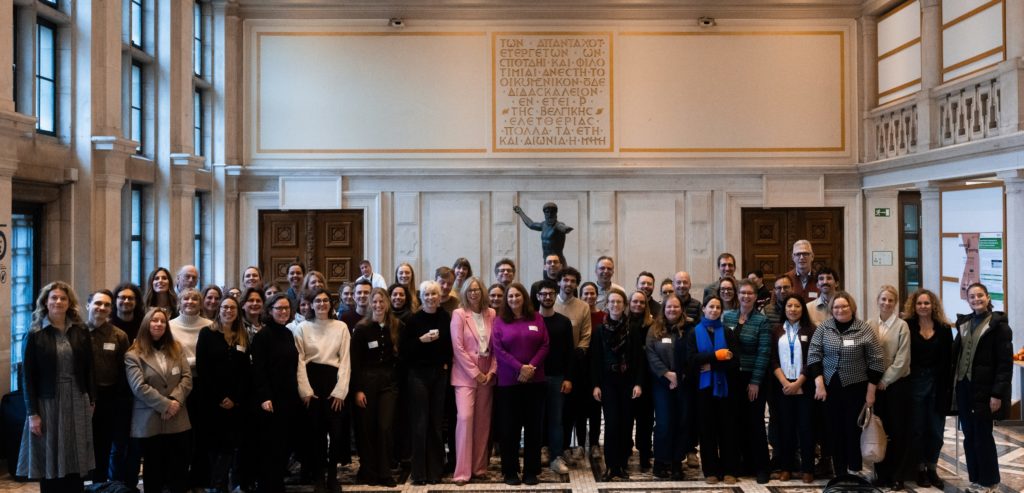
In late November, our team participated in BE-PIN – Belgian Pandemic Intelligence Network’s “Getting ready for trouble” workshop and symposium on science communication during crises. What became immediately clear, across disciplines, countries, and professional roles, is that crisis preparedness is not simply a matter of protocols or technical expertise. It requires collaboration and concerted societal efforts that hinge on communication, trust, the ability to navigate uncertainty, and implement preparatory activities long before the next emergency unfolds.
The symposium on day one set the stage by challenging a familiar narrative from the COVID-19 pandemic: science communication is complex, but necessary to ensure good health outcomes for citizens. In the first keynote, Paul Cairney, Professor of Politics and Public Policy at the University of Stirling, discussed different policy advice strategies – internal, following “rules of the game” and external, keeping critical distance from the government policy. Drawing on Cairney’s work, discussions explored why some experts gained influence while others did not. Insider strategies, such as following institutional rules, defining problems narrowly, and maintaining closed discussions, often proved more influential than outsider critique, even when the latter aligned more closely with scientific norms of transparency and open debate. Scientists, trained to “speak truth to power,” often found themselves navigating unfamiliar rules of the policy game.
Afterwards, participants took part in a simulation exercise of communication processes for decision-making, run by Jeannette de Boer and Femke Overbosch of the Dutch Pandemic and Disaster Preparedness Center. Afterwards, researchers and practitioners from Belgium, the Netherlands, Finland, Germany, and Switzerland shared the learnings they are implementing into new pandemic preparedness plans. Many of them highlighted that trust cannot be manufactured during a crisis. It must be built beforehand through long-term relationships, community engagement, and co-creation. As one lesson succinctly put it: you do not increase trust in a crisis, you draw on the trust you have already created.
Day two shifted from practice to emergent research on ways to integrate expertise into policy, create effective communication strategies and institutional design to support his integration. In the second keynote, Simone Rödder, Professor at the University of Hamburg, and the principal investigator of the WISDOM project, discussed knowledge transfer as a wicked problem through the COVID-19 case.
On day two, two of our colleagues – Prof Holger Strassheim and Dr Marija Antanaviciute – presented findings and learning from Ethics & Expertise project. Holger presented on the epistemic failures and the role of polycentric knowledges, arguing for the need to detangle value assumptions early in the advisory process. Marija’s presentation on Rapid Ethics Assessment and Learning Tool complemented this by offering learnings from one particular way of embedding ethics expertise within crisis advisory structures, rather than treating ethics as an afterthought or a box-ticking exercise. Together, their interventions highlighted that ethical reflection is not separate from science communication. Ethics expertise and advice shape not only how science is communicated but also how trade-offs are justified and the legitimacy of choices maintained.
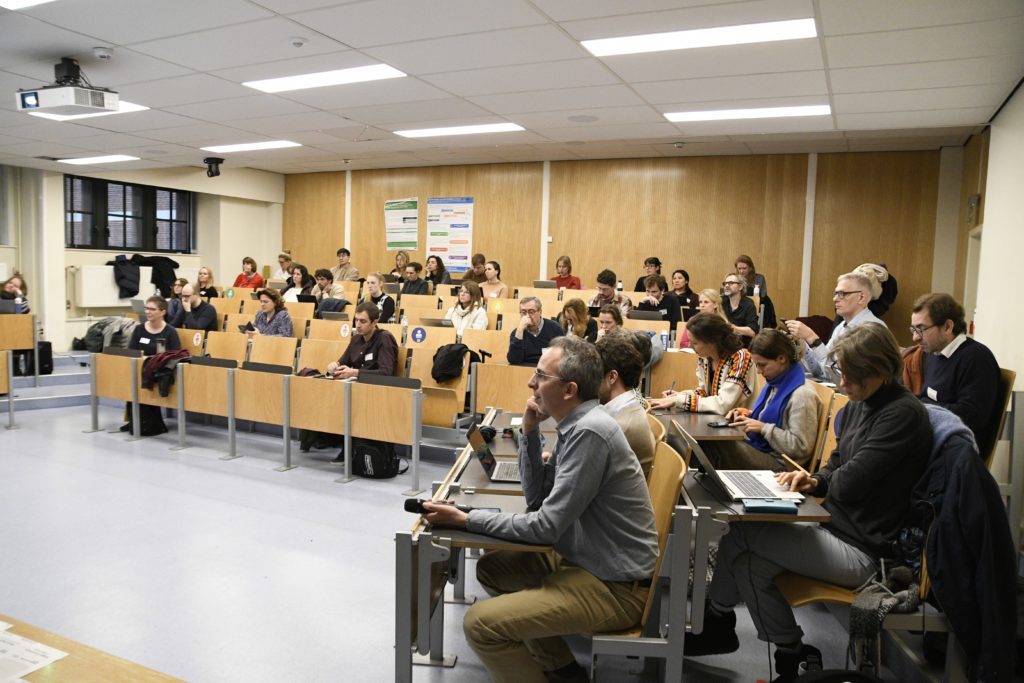
Experiences such as Finland’s “science sparring” sessions and the Netherlands’ Societal Impact Teams have shown how structured, interdisciplinary dialogue can surface blind spots that remain invisible when biomedical, social, and economic advice are delivered in silos. Successful science communication and policy advice require deliberate frameworks, facilitation, and institutional support.
As one of the organisers, Ingrid van Marion, said:
“Being ready for trouble means to prepare in advance how to organise and communication for crises to come, but each crisis will require adaptability to the concrete circumstances. Ethical reflections should be at the center of any communication strategy during crises. Values, emotions and citizen experiences are crucial to make policy decisions, and scientific research has its own values. Being explicit about them is necessary to have honest and transparent decision-making processes.”
Ultimately, “getting ready for trouble” means more than preparing messages or setting up expert committees. It means investing in relationships, clarifying roles and responsibilities, training both scientists and policymakers, and creating spaces where ethical, societal, and scientific knowledge can genuinely meet. To use a term from one of the keynote speeches, crises are often a type of wicked problem: they cannot be solved once and for all, but they can be managed. These two days offered a clear message: crisis management is as good as preparation for it.