
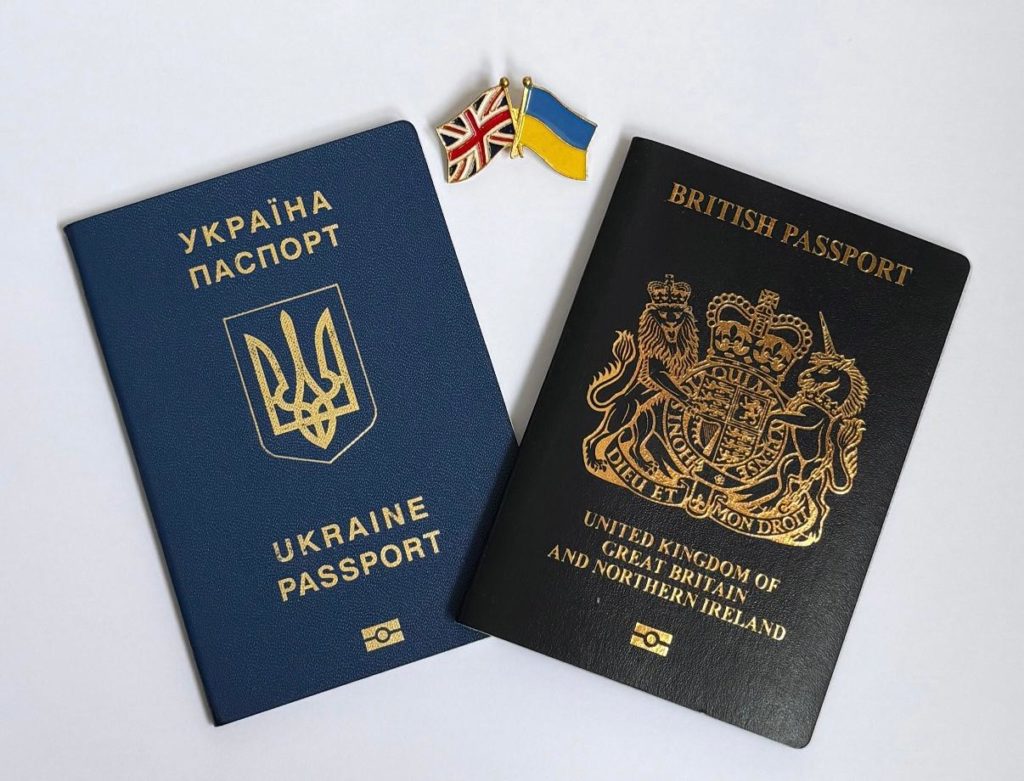
In January and February, the Ukraine Policy Network started its work – all three of the Working Groups have now met for the first time. Natalia Kogut reflects on the discussions.
Visas and Pathway to Settlement
The initial meeting of the Visas and Pathway to Settlement Working Group (Working Group 1) highlighted the many issues that displaced Ukrainians are facing due to the short-term visa status and absence of any path to settlement. Visa precarity impacts their ability to obtain employment, housing, loans, and to access higher education and healthcare. The Ukraine schemes were very generous at the start, but exclusion of the time spent on the Ukraine visas from the 10-year long route to residency in 2024 has created serious barriers to settlement and full integration of displaced Ukrainians. The meeting comprised three pieces of research.
The first presentation, by Dr Natalia Kogut of the University of Birmingham, looked at their recent research Displaced Ukrainians in the UK – Experiences and Future Intentions, from the perspective of visas and pathways to settlement. It showed the uniqueness of the Ukraine scheme alongside other humanitarian routes that grant settlement in 5 years. Kogut highlighted the humanitarian protection nature of the Ukraine schemes and the unaffordability for most displaced Ukrainians of switching to economic migration rules. The presentation touched on the approaches of different EU countries to moving towards long-term status for Ukrainians.
The second presentation, by Dr Gabriella D’Avino also from the University of Birmingham, looked at their recent research Shaping the future of community sponsorship in the UK and beyond: expanding pathways for refugee resettlement, comparing the Ukraine scheme with other sponsorship schemes for refugees. The Homes for Ukraine model has a lot of positives due to the initial high level of government support, but it has one major flaw – no path to settlement. All sponsorship schemes for refugees are resettlement schemes apart from Homes for Ukraine. It also highlighted the shift of the burden of initial support for refugees from the state to the volunteer and charity sector.
The third presentation, by Maryna Kapas-Romaniuk of the University of York, was related to difficulties of preserving Ukrainian language among displaced Ukrainian children, who are nonetheless expected to return to Ukraine at the end of the war. The Ukraine scheme visas remain temporary, but there is a lack of provision in Ukrainian language support. Kapas-Romaniuk conducted research that shows a rapid deterioration of native language fluency of kids living abroad after just 12-18 months. Forced return to Ukraine risks retraumatising children due to cultural and linguistic reintegration into the post-war country.
The discussion raised many issues relevant to cases of long UPE application processing times and 3C leave that in practice oftentimes doesn’t work. People can’t get share codes to prove their immigration status, meaning they are losing jobs, housing, and university places, and vulnerable groups are losing access to benefits. Many Ukrainian kids have expired passports, and their visa applications are pending for this reason. Ukraine is at war and many of those who fled don’t feel it is safe to visit Ukraine to sort out their documents. There are cases of elderly and disabled people who can’t travel to visit visa centres even here in the UK to provide their biometrics.
Employment and Skills
The initial meeting of Employment and Skills Working Group (Working Group 2) revealed many issues that displaced Ukrainians are struggling with related to employment and education. The issues with formal and actual recognition of qualifications and especially for those with regulated professions were presented as very acute. The meeting consisted of four presentations.
The first presentation, by Prof Sara Jones of the University of Birmingham, looked at their recent research Displaced Ukrainians in the UK – Experiences and Future Intentions, from the perspective of access to employment. According to the team’s survey, 56% of Ukrainians are full-time employed, another 20% are part-time employed and 7% are students – showing a high motivation of Ukrainians to work. But visa precarity causes missed job opportunities, loss of existing job contracts and impacts on Ukrainians’ ability to access higher education. The research also showed an acute problem of “downskilling” with 67% of displaced Ukrainians taking roles below their skills.
Olha Maksymiak from Integravia Foundation looked further into the experiences of displaced Ukrainian doctors and pharmacists. The skills and qualifications of Ukrainian doctors and pharmacists are not properly utilised in the UK, despite shortages in the NHS. Ukrainian doctors and pharmacists are not allowed to practice in the UK without additional exams in English language and medical practice, which also come at a cost.
Roman Bazelchuk, Director of NEC Planning Solutions, stressed that the experience of Ukrainian professionals in Ukraine is completely discounted here in the UK and even senior specialists are treated as beginners. UK construction companies are cautious about employing Ukrainians even if they have experience of work in the EU and they often require a reference from a UK-based company in related sphere.
Marianna Vaszilyiv, Growth Company and United for Ukraine, presented the work of the United for Ukraine initiative that helps displaced Ukrainians to navigate the labour market in the UK. This initiative provides a searchable list of vacancies for displaced Ukrainians with employers who have committed to providing good job opportunities in a supportive environment. They have helped thousands of displaced Ukrainians find employment (click here to learn more about United for Ukraine).
The discussion raised many issues related to the additional struggles of Ukrainian women, who are often sole carers of young kids, which makes it harder to find employment. The meeting also discussed accent bias and the challenges that can cause in the job market.
Mental Health and Wellbeing
The initial meeting of Mental Health and Wellbeing Working Group (Working Group 3) explored the psychological issues of displacement, exacerbated by war trauma and visa precarity. A lack of language-sensitive psychological support provided by Ukrainian specialists is another issue that was presented at the meeting. The meeting consisted of three presentations.
The first presentation, by Dr Irina Kuznetsova of the University of Birmingham, looked at their recent research Displaced Ukrainians in the UK – Experiences and Future Intentions, from the perspective of the mental health of displaced Ukrainians. The highest stressor amongst displaced Ukrainians is the precarity caused by a visa status that does not lead to any settlement. This situation means Ukrainians cannot plan for the future and creates a permanent sense of living in limbo. This especially impacts young Ukrainians and people who have nowhere to return to.
Olga Lutshyshyn, Secretary of Health & Wellbeing Working Group of the Cross-Party Group on Ukraine in the Scottish Parliament, presented an analysis of the survey on Psychological Support & Stress Level among Ukrainians in Scotland. The survey gathered responses from 375 forcibly displaced Ukrainians. The research reveals the top three stressors: 1) uncertainty with visa status (87.7%); 2) worries related to the war (77.9%); 3) loss of professional identity (64%). It also showed signs of chronic stress and anxiety within the Ukrainian community that in some cases lead to maladaptive coping practices such as dependency on alcohol and unprescribed sedatives, and social isolation.
Olga Lutshyshyn also presented a second piece of work on recognising the qualifications of displaced Ukrainian psychotherapists and psychiatrists. She stressed that costs of accreditation, membership, insurance, and supervision are often unaffordable for displaced Ukrainian mental health professionals. There are also struggles with a limited number of places and long waiting lists for supervision. But – as noted – there is insufficient Ukrainian-language therapy available and the need for it is crucial.
The meeting raised many issues relevant to specific patterns of Ukrainians’ displacement; for example, separation from fathers, brothers and sons of conscription age who are not allowed to leave Ukraine. So, there are pressures from different sides – war trauma, integrating in a new country, fear for those who stayed in Ukraine and feelings of guilt for leaving them. Some Ukrainians have lost close family members, have disabilities, many have had their housing physically destroyed or occupied by the invaders.
Thank you for launching the platform and for such an excellent overview of the major challenges faced by Ukrainians displaced to the UK as a result of the war.
I am looking forward to the second part of the panel discussions, where we can share successful examples of how Ukrainian refugees are being supported in integrating into society, with a view to scaling positive practice and reflecting these approaches in policy.