
From the 11th to the 22nd of February, the RBSA Gallery in Birmingham’s Jewellery Quarter hosted the UrbTerr exhibition Remembering is Painful, Forgetting is Unbearable, which focused on the role of creative practice in the remembering, confronting, bearing witness to, and transforming of trauma.
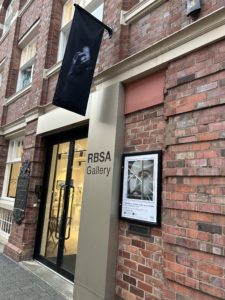
Exhibition poster photo taken by PI Katharina Karcher. Flag by Alejandro Acín, model Darryn Frost.
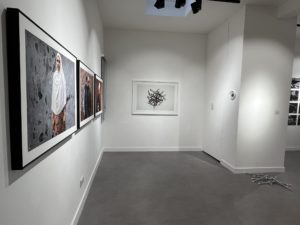
Photography and door sign by Mahtab Hussein.
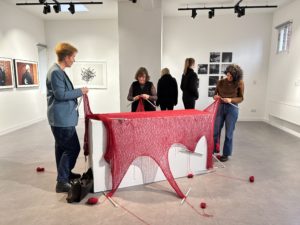
Exhibition visitors co-creating the piece Untitled/Unfinished Knitting Project, by Mia Parkes.
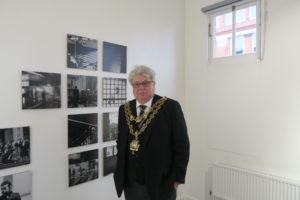
Photography by Daniel Fritz Goeppinger.
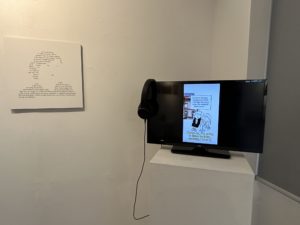
Film Le Grand Procès, Bahareh Akrami. Poetry by Harry Man and Endre Ruset.
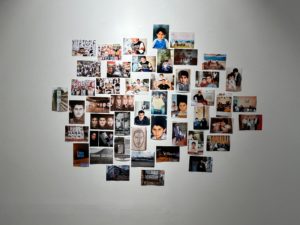
Archive photos by Çetin Gültekin and Mutlu Koçak.
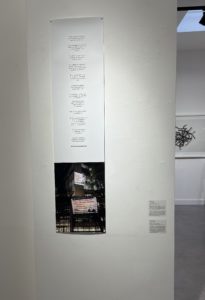
Slogans from the #IAmMohammedSaleem campaign, led by activist Maz Saleem. Projection by Feral X, photography by Antonio Pagano.
On the 15th of Feb, UrbTerr and RBSA also hosted an interdisciplinary panel in the exhibition space. The day featured a number of talks from artists, survivors, and practitioners. During the morning session, Figen Murray and Bahareh Akrami spoke about what inspires and drives their creative practice.
Figen’s tireless work on Martyn’s Law in honour of her son Martyn Hett and her use of knitting as a means of coping with trauma during the MAnchester bombing inquest inspired the work Untitled/Unfinished Knitting Project, photographed above, and one of her knitted bears was also on display in the exhibition space.
Bahareh Akrami, whose mini-series Le Grand Procès featured in the exhibition, discussed her use of drawing during the trial of the November 13 attacks in Paris, which she herself survived. The trial was the largest criminal trial ever seen in France. Le Grand Procès combines a voiceover by Sara Forestier with sketches by courtroom cartoonists, photos, collages and texts.
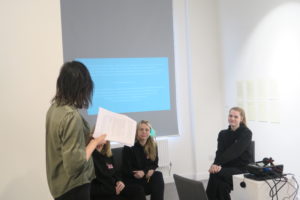
In the following session, Suzanne Atkins and Vicky Brown and Cath Hill, Alicia Taylor, and Ava Turner discussed enabling and encouraging creative practice among survivors of terrorism. Focusing on the aftermath of the Manchester Arena bombing, this panel explored the different ways that creative practice can help survivors with their mental health following trauma.
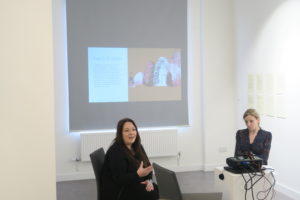
In the afternoon session, our expert panel Ana Milosevic, Sudhesh Dahad, Ingvild Folkvord and Saray Falcon Trejo discussed what it is that makes creative response so important in the aftermath of terror, and PI Katharina Karcher delivered a report on UrbTerr’s Study on Creative Practice among Victims and Survivors.
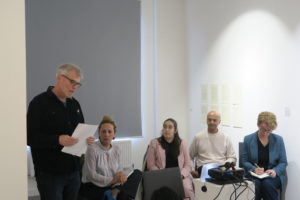
The UrbTerr would like to thank everyone who visited the exhibition or attended the workshop, and the RBSA for hosting this work.