
Paul Dukas was famously self-critical, leaving behind a relatively small body of work. Yet The Sorcerer’s Apprentice, composed in 1897, instantly became his signature piece — and remains one of the most beloved orchestral hits of all time. Some music tells a story so vividly it feels like you’re watching an animated film or reading a thrilling book. This is exactly the case here.
In Dukas’ hands, the ballad becomes a scherzo, with the storytelling — voiced through the character of the apprentice — transforming into a dynamic scene. The piece features all the hallmarks of a scherzo: a 9/8 triple meter, a lively tempo, and sudden shifts in musical imagery. (Fun fact: the original meaning of scherzo is joke — and here, Dukas captures a story with a distinctly comic spirit.)
Even if you don’t recognise the name, you’ve likely heard this bustling, witty, and slightly eerie music — especially if you’ve seen Disney’s Fantasia, where Mickey Mouse desperately battles an enchanted broom. Dukas structured his piece with remarkable fidelity to the literary source: Goethe’s 1797 ballad, written during a friendly poetic ‘duel’ with fellow giant of German letters, Friedrich Schiller.
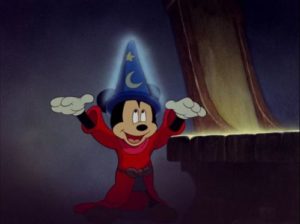
The story unfolds: having overheard his master’s spell, the young apprentice summons spirits to do his bidding. He orders a broom to fetch water from the river — and it obediently begins. But once the cauldron is full and the water overflows, he realises he’s forgotten the counterspell needed to stop the broom. In panic, he grabs an axe and chops the broom in half (this moment is vividly portrayed in the music with two sharp chords, followed by a sudden pause, then even more frantic orchestral scurrying). Now, instead of stopping, each half of the broom picks up a bucket and redoubles its efforts. The water floods the entire house. How can he stop this runaway magic? Finally, the old sorcerer returns, utters the right spell, and restores order. An attentive listener can follow every stage of this tragicomic adventure in Dukas’ music — from the brief, mysterious introduction evoking the sorcerer’s dark chamber, to the triumphant final scene where the master reasserts control.
The scherzo opens with a slow introduction: the violins play a descending melody built on a diminished seventh chord, painting the old sorcerer’s dim and mysterious home. They are soon joined by flute and piccolo, enhancing the magical atmosphere. This mood is then disrupted by lively, bouncing staccato figures in the oboe, flute, and clarinet, launching the scherzo proper. The main theme, growing from the nervous energy of the introduction, circles around the tonic note, with its stability emphasised by a rising stepwise movement from dominant to tonic, falling on the strong beat. (This somewhat clumsy ‘hammering in’ of the tonic humorously underscores the apprentice’s naïve and overconfident character.)
A second theme, introduced by the winds against pizzicato strings and decorated with grace notes, reveals another side of the apprentice: youthful zeal and eagerness. A third short theme, marked by a dotted rhythm, represents the spell itself. Played fortissimo by muted horns and trumpets, it might sound terrifying — if not for the mischievous undertones borrowed from the main scherzo theme. This playful spirit dominates the musical development, which teems with colorful orchestral effects (like the string and harp figurations depicting splashing water) and even polyphonic textures. Chromatic inflections lend a fantastical sheen to the theme. In the coda, the second theme returns, now played by a solo viola with plaintive intonations — the apprentice’s regret as he begs his master for forgiveness.
Listening to The Sorcerer’s Apprentice is an invitation to embark on a thrilling musical journey, where magic and mischief intertwine to create a truly dazzling experience. It’s a brilliant example of program music: every twist in the story finds a precise musical counterpart. Thanks to its vivid imagery, sharp wit, and masterful orchestration, The Sorcerer’s Apprenticecontinues to enchant listeners of all ages — and reminds us all: don’t meddle with forces you don’t fully understand!
