
When we think of the great composers, we often imagine them wholly absorbed in their art — tirelessly sketching melodies, chasing harmonies, and living entirely within the world of music. But even the most devoted musical minds had hobbies and passions outside their creative work — and some of them might surprise you. Let’s take a closer look at the lesser-known fascinations of some of music’s greatest figures.
🎲 Sergei Prokofiev – Master of Music and the Chessboard
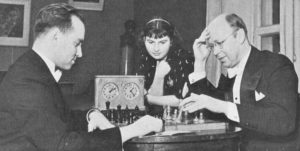
From an early age, Prokofiev developed a deep love for chess — one that stayed with him for life. Much to the dismay of his mother, who believed all spare time should be spent on music, young Sergey would spend hours refining his strategy and studying grandmasters. He even achieved the first category rank in chess and famously played a public match against violinist David Oistrakh. Grandmaster Mikhail Botvinnik recalled that Prokofiev’s playing style mirrored his musical persona: direct, imaginative, and aggressive — and he strongly disliked defending.
Even illness couldn’t dull his enthusiasm. In May 1949, while bedridden, he greeted visiting chess player Yakov Rokhlin with reproach: ‘And where is that promised volume of Steinitz–Lasker 1894 games?’ — much to the guest’s embarrassment.
🍽 Gioachino Rossini – From Opera to the Oven
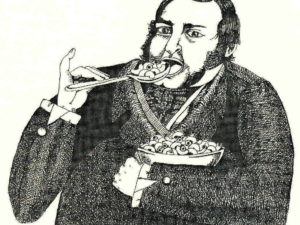
At the height of his fame, Rossini stepped away from composing and moved to Paris — not for a musical retreat, but to devote himself to his other great love: cooking. At just 37, he could have continued composing masterpieces, but the allure of culinary artistry won him over. He occasionally returned to music, but it was truffle-stuffed turkey and tournedos à la Rossini that truly stirred his soul. His signature pairing of foie gras and truffles became so iconic that it’s still known in haute cuisine by his name.
🚗 Sergei Rachmaninoff – Engineer of Sound and Speed
Rachmaninoff had a profound fascination with technology. After emigrating in 1917, he invested in modern conveniences — proudly becoming one of the first to install an elevator and own a vacuum cleaner. He even patented a warming muff to prepare his hands for performances.
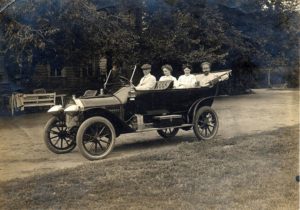
But his true passion was cars. His first love, a Laureau automobile, accompanied him on all his tours, and he would often go for high-speed drives. So intense was his attachment that a scratch on the paint could ruin his day — and if it rained, he might cancel a concert to protect the finish. He replaced his cars annually to avoid maintenance, once even comparing conducting to driving: requiring attention, coordination, and a touch of musical instinct.
🐟 Giacomo Puccini – The Outdoorsman Composer
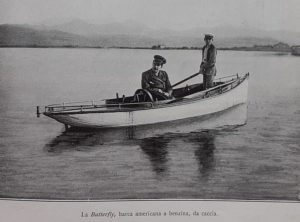
Puccini too was an early automobile enthusiast, buying his first car in 1900. A near-fatal accident didn’t stop him — not even when he drove off a five-metre cliff with his wife and son onboard. Later, living in a small Tuscan village, he embraced a rustic lifestyle. He served guests meals of wild-caught eel and game he hunted himself — partridge, pheasant, and more — all expertly prepared by his own hand.
⚽ Dmitri Shostakovich – Football Fanatic and Statistician
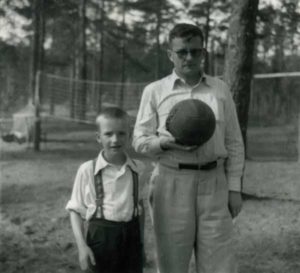
Dmitri Shostakovich’s love for football wasn’t a passing hobby — it was a lifelong passion that provided him with solace, joy, and a sense of freedom. Introduced to the sport in the 1930s, he quickly became a dedicated fan, rarely missing a match whether in the stadium, via radio, or on television. He kept detailed statistical tables, filled notebooks with scores, player stats, and league results, and even referred to his master log as the Grossbuch.
Remarkably, Shostakovich also wrote football journalism. In 1942 and 1944, he published articles in the leading Soviet newspapers Krasny Sport and Vechernyaya Moskva, making him possibly the only major composer in history to moonlight as a sports reporter. He was so respected as a football expert that his commentary was published alongside that of professional journalists and athletes.
🍄 John Cage – Mushroom Lover and Sonic Adventurer
In 1954, Cage discovered a new obsession while living in a rural commune near New York: mushrooms. He became an amateur mycologist, spending weekends foraging with friends and even supplying gourmet mushrooms to upscale restaurants. Once, however, he mistakenly served a toxic plant — false hellebore — thinking it was skunk cabbage. Everyone fell ill, and Cage himself had to be hospitalised after eating the most.
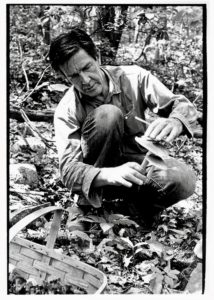
For Cage, mushrooms and music were intimately linked. He once said he wanted ‘to hear the sounds of mushrooms’ and dreamed of amplifying the sound of spores hitting the ground. In 1964, he was awarded by the Mycological Society of America and went on to teach a course on mushroom identification. This eventually led to the founding of the New York Mycological Society.
It seems that great artists are not only brilliant but often wonderfully eccentric. Their passions — from gourmet cuisine to mushroom hunting — reveal the richness and complexity of their inner worlds. Perhaps it’s precisely these curious minds and unusual perspectives that allow them to create art that transcends the ordinary.
