
In September 1815, Italy’s most influential impresario, Domenico Barbaja, summoned the young Gioachino Rossini to Naples with a mission:
This audience needs to be stunned! There are no subtleties—only No tenderness— only boiling passion. No nuances—sing at full power.
And with that command, Barbaja offered a final suggestion: “I recommend Isabella Colbran to you.”
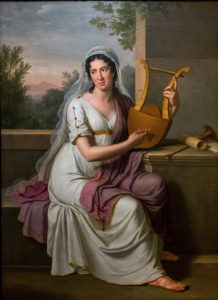
There were many reasons why Barbaja put forward Colbran’s name for the position. A Spanish-born mezzo-soprano, she was both a close companion of Barbaja and favoured by the King of Naples. Above all, she possessed a remarkable voice. Her dark, rich mezzo timbre was fused with the agility and brilliance of a coloratura soprano, extending overnearly three octaves. Critics were unanimous in their praise: Colbran’s command of ornamentation and expressive phrasing were unparalleled. She seemed to sing impossibly difficult arias with ease, freedom, and clarity—qualities she inherited from her training with the last generation of Italian castrati, including Carlo Marinelli and Girolamo Crescentini. On stage, she was equally compelling, famed for her refined musicality and moving interpretations of tragic heroines. At the height of her fame, she was a striking presence: tall, voluptuous, poised, and magnetic.
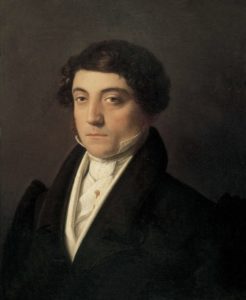
Rossini had known her name for years. When he was accepted into the Bologna Music Academy as a teenager, it was proudly announced that Isabella Colbran—then twenty-one and already a celebrated singer—had just joined the institution. Fifteen years later, they meet in Naples. Although she was several years his senior, they both politely pretended to be the same age. “She was a very striking woman,” wrote Rossini’s biographer Arnaldo Fraccaroli.
A striking Spaniard—huge black eyes, full lips, dark skin […] She looked like a very respectable, imposing lady, but this did not prevent her from carrying herself with grace and elegance.
Their mutual attraction was immediate and intense. Both were beautiful, successful, and passionately dedicated to their craft. Their personal and creative lives soon became intertwined. Rossini wrote roles tailored to Colbran’s unique voice and dramatic style; she in turn brought those works to life with radiant conviction. In this way, she became a double muse: a personal inspiration and a musical standard to which he aspired to. As she favoured serious, dramatic roles, Rossini—previously best known for comic operas—shifted towards opera seria, beginning an extraordinary Neapolitan period that culminated in what critics would call “Rossini fever.”
Although Rossini was not yet wealthy, he offered Colbran something far more precious than diamonds: leading roles created especially for her. Some detractors accused him of shaping his operas around her vocal style at the expense of dramatic substance, but this now seems to be a limited reading. Far from pandering, Rossini composed for a voice that expanded his own artistic vision.
For six years, their romantic and musical partnership flourished. They split and reconciled more than once, forgiving each other for their indiscretions. In 1822, they finally married quietly and without ceremony in the small chapel at Villa Colbran near Bologna. Shortly thereafter, they travelled to Vienna to begin a season of Rossini’s works at the Italian Theatre. Barbaja is stunned, unaware of their marriage. The confrontation was swift but resolved with Rossini’s calm ultimatum:
If you wish me to leave, just say the word. Of course, Isabella will leave with me.
Barbaja relented. The season was a success. However, by the late 1820s, cracks appeared. In 1827, shortly before the Paris premiere of Moïse et Pharaon, Rossini’s mother died. Colbran, now entering her forties, began to experience vocal decline. Although she attempted to mask the deterioration with her unmatched technique, Semiramide—her final role—made the signs unmistakable. With characteristic dignity, she withdrew from the stage.
During her withdrawal, Colbran turned to cards. Rossini distanced himself from her because he was concerned about her growing dependence on gambling. By the 1830s, he was travelling widely across Europe, basking in the international acclaim. However, with his rising fame came personal estrangement. In his absence, another woman entered his life: Olimpia Pelissier. Their relationship ended Rossini’s marriage. Colbran, aware of Olimpia’s existence, agreed to a legal separation. Rossini left her the villa at Castenazzo, a monthly stipend, and a winter apartment. Soon after, he invited Pélissier to Bologna. When the two women met, Colbran’s graceful welcome to her rival served as a quiet but powerful rebuke to her husband.
By the mid-1840s, Rossini—then in a period of melancholy—sought news of his former wife. She was living modestly, giving voice lessons and occasionally hosting musical evenings. When she fell gravely ill, Rossini returned to Castenazzo after years of absence. Their reunion lasted only half an hour, but it left him visibly shaken. A month later, Colbran passed away. Her last words were reportedly “My Gioachino!”—a final, intimate cry heard by those at her bedside. Ten months later, Rossini secretly married Olimpia Pélissier.
By the time of Rossini’s death in 1868, his operas had largely vanished from the public repertoire. The rise of Verdi and the shift towards heavier dramatic singing rendered Rossini’s refined bel canto style unfashionable, and even unperformable. Without singers of Colbran’s calibre, his works were shelved for a while. Only The Barber of Sevilleendured, albeit in a truncated or modified form. Semiramide, once Colbran’s signature role, has faded into obscurity.
Today, Rossini’s works have returned to the stage, and their vocal demands continue to thrill performers and audiences alike. However, behind the coloratura fireworks lies a quieter history of human connection, ambition, and love. Isabella Colbran was not merely Rossini’s muse—she was the voice that shaped an era.
