
Princess Zinaida Alexandrovna Volkonskaya (1789–1862) is a prominent figure in early 19th-century Russian cultural history, known not only for her talent as a singer and composer but also for her role as a salon hostess and patron of the arts. After many years of active cultural activity in Russia and Europe, Volkonskaya finally settled in Rome in 1829, where her estate became a cultural centre reflecting the synthesis of Russian and European artistic traditions. This blog examines the significance of Volkonskaya’s Roman estate, its cultural environment, and its long-term influence on the musical and intellectual landscape of her time.
Before her final move to Rome, Volkonskaya established a renowned musical and literary salon on Tverskaya Street,Moscow. Her salon was a gathering place for aristocrats, poets, musicians, and intellectuals, offering a lively space in which art and ideas flourished. However, after personal and political upheavals, including her intimate relationship with Count Miniato Ricci and the aftermath of the Decembrist uprising, she moved to Rome with her son and close friends, including Stepan Shevyrev, who became her son’s mentor.
In Rome, Volkonskaya established a villa that became a cultural beacon, continuing the traditions of her Moscow salon but imbued with a new cosmopolitan and Catholic ethos. She converted to Catholicism, and her Roman estate becameboth a personal refuge and an artistic haven.
The villa hosted evenings, concerts, and theatrical performances that embodied the essence of 19th-century salon culture transferred to Italian soil. Volkonskaya’s Roman estate was not just a private residence but a lively centre of artistic life that attracted famous figures of the time.
The cultural significance of the estate is underscored by the rich archive at Harvard’s Houghton Library, which houses a significant collection of musical manuscripts and literary documents related to Volkonskaya and her circle.
Among the artistic events held at the estate were musical evenings featuring performances of operas, chamber music, and vocal works. Notably, composer Fidel Bruni painted a portrait of Volkonskaya dressed as Joan of Arc, a role she made famous in his opera Giovanna d’Arco, highlighting her dual identity as a muse and an artist. This blending of visual art, music, and performing art was symbolic of the multidisciplinary artistic environment of the estate.
The estate also served as a centre for Russian émigrés and other European intellectuals to gather. For example, the famous Russian composer Mikhail Glinka corresponded with her and visited her in Rome, and the composer Ferdinand Paer participated in musical projects associated with Volkonskaya. The presence of such personalities emphasises the role of the estate as a site of intercultural exchange and artistic collaboration.
Princess Volkonskaya’s Roman villa was closely linked to the musical trends of its time. The archival collection shows that performances were staged at the estate, including Rossini’s opera Tancredi, in which Volkonskaya herself had previously played the lead role in Verona and Rome, and other Italian operas. This repertoire reflects her preference for the Italian bel canto tradition, which dominated her musical tastes and salon programs in both Russia and Italy.
In addition, her compositions, including the opera Giovanna d’Arco, cantatas, and romances, were preserved and promoted at the estate. Manuscripts of the second act of her opera and several arias are preserved in the Harvard collection, testifying to the estate’s role in preserving and disseminating her legacy.
The villa also hosted private performances of sacred music, including masses and hymns, reflecting Volkonskaya’s religious devotion after her conversion to Catholicism and the estate’s role as a spiritual and cultural centre. Although evidence of the existence of these sacred compositions is limited, contemporary reports indicate that her religious musical works were well received by the local clergy and visitors to her gatherings.
Volkonskaya’s Romanesque estate functioned as a microcosm of European cultural interactions in the 19th century. It was a place where Russian aristocratic traditions met Italian opera and Catholic spirituality. This synthesis was not only aesthetic but also ideological, as Volkonskaya balanced her identity as a Russian émigré and European intellectual.
Her correspondence and archival materials show that the estate was a centre of literary and artistic exchange, where manuscripts and letters from such prominent contemporaries as Alexander Pushkin, Vasily Zhukovsky, and Adam Mickiewicz circulated in her circle. This network extended beyond Moscow and St Petersburg. Petersburg and included a vibrant community of émigrés in Rome, Italy.
The estate’s role as a cultural crossroads is also evident in its support of young Russian artists and musicians, who found mentors and patrons in Volkonskaya. This favourable environment helped maintain Russian artistic traditions abroad while encouraging innovation influenced by Italian and French styles.
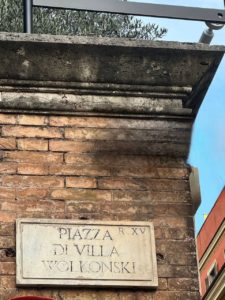
Today, Volkonskaya’s estate in Rome remains an important subject of study for musicologists and historians interested in the spread of Russian culture in Europe and the role of salons in the development of 19th-century musical life in Italy. Harvard’s archival collections provide invaluable information about the repertoire performed and preserved at the estateand Volkonskaya’s role as a composer and cultural mediator.
Scholarly research emphasises that Volkonskaya’s creative work and salon activities contributed to the evolution of a transitional Russian musical style that combined Italian and French influences with emerging national idioms. Thus, the Roman estate was not only a personal refuge but also a dynamic place of artistic creation and cultural exchange.
Princess Zinaida Volkonskaya’s Roman estate is a testament to the vitality of salon culture and the ability of music and art to transcend national and cultural differences. It embodies all the complexities of 19th-century identity, creativity, and patronage, offering a rich field of study for those interested in the intersection of Russian and European musical history. Thanks to her villa in Rome, Volkonskaya continued to influence the cultural life of her era, leaving behind a legacy preserved in archives, manuscripts, and ongoing scholarly research into her multifaceted contributions.
