
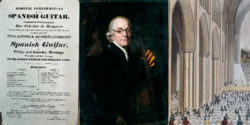
At the end of July, the University of York played host to the 14th Biennial International Conference on Music in Nineteenth-Century Britain — an event that has become a highlight in the calendar for anyone working in this field. I was delighted to attend this year not only as a delegate but also as a … Continue reading “Reimagining Nineteenth-Century Music: Reflections from York”
Clementi House: London’s Hidden Salon of Musical Legends

Nestled on Kensington Church Street in west London, 128 Kensington Church Street—the Georgian townhome once belonging to Muzio Clementi (1752–1832)—is a remarkable living tribute to one of music history’s unsung innovators. Known as the ‘Father of the Pianoforte’ Clementi composed, taught, and built his name here between roughly 1811 and 1824. Today, the house remains … Continue reading “Clementi House: London’s Hidden Salon of Musical Legends”
Dimash in London: A Night from Another World

It has been a few weeks since that unforgettable evening of 3 June 2025 when music met the divine at OVO Arena Wembley. For one magical night, the legendary Lara Fabian brought her Voices tour to London, but what truly made it historic was the special appearance of Dimash Qudaibergen, whose voice stopped time. Dimash … Continue reading “Dimash in London: A Night from Another World”
Bold, bleak, and unforgettable: Semele at the Royal Opera House

Oliver Mears’s staging of Handel’s dramma per musica offers a strikingly dark and provocative reinterpretation of Semele, now running at Covent Garden through July 18. Mears places the tale in a glitzy yet soulless the 1960s luxury hotel, where ambition and betrayal play out against sleek Art Deco backdrops and an ever-present furnace motif. This … Continue reading “Bold, bleak, and unforgettable: Semele at the Royal Opera House”
Istanbul Jazz Festival 2025: A Celebration of Sound, Soul, and the Spirit of the Times

Jazz first captivated European audiences in the early decades of the 20th century. A century later, its vibrant pulse still resonates across the continent — perhaps nowhere more powerfully than in Istanbul, where the 32nd International Jazz Festival is now in full swing. A city at the crossroads of East and West, Istanbul becomes a … Continue reading “Istanbul Jazz Festival 2025: A Celebration of Sound, Soul, and the Spirit of the Times”
Music from a time capsule: Respighi’s ‘Antique Arias and Dances’

Imagine that you have found an old, dusty music book with melodies written hundreds of years ago for a lute or harpsichord. They are beautiful, but their sounds seem distant and fragile. Now imagine that a genius artist took these melodies and coloured them with the richest and velvety tones of a modern string orchestra, … Continue reading “Music from a time capsule: Respighi’s ‘Antique Arias and Dances’”
William Lawes: A Seventeenth-Century Court Musician Reflected in English History
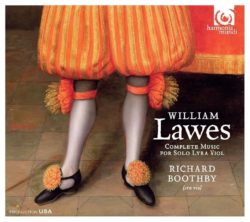
Among the paintings in the Oxford University collection, a ceremonial portrait of a young man by an unknown artist stands out. This portrait, known through several copies and the source of numerous unanswered questions, conveys the aristocratic image of an English cavalier. He is depicted full-length, leaning on a cane—a symbol of courtly etiquette—and … Continue reading “William Lawes: A Seventeenth-Century Court Musician Reflected in English History”
Tchaikovsky’s Italian Holidays
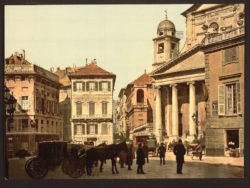
A glance over the vast creative legacy of Pyotr Tchaikovsky reveals a recurring fascination with Italy—evident in the titles, motifs, and moods of many of his works. From Romeo and Juliet and Francesca da Rimini to the Neapolitan Song from the Children’s Album, Italian references abound. Among these is the lesser-known chamber work Souvenir de … Continue reading “Tchaikovsky’s Italian Holidays”
Curious Passions of Musical Geniuses

When we think of the great composers, we often imagine them wholly absorbed in their art — tirelessly sketching melodies, chasing harmonies, and living entirely within the world of music. But even the most devoted musical minds had hobbies and passions outside their creative work — and some of them might surprise you. Let’s take … Continue reading “Curious Passions of Musical Geniuses”
Magic Out of Control: Dukas’ The Sorcerer’s Apprentice

Paul Dukas was famously self-critical, leaving behind a relatively small body of work. Yet The Sorcerer’s Apprentice, composed in 1897, instantly became his signature piece — and remains one of the most beloved orchestral hits of all time. Some music tells a story so vividly it feels like you’re watching an animated film or reading … Continue reading “Magic Out of Control: Dukas’ The Sorcerer’s Apprentice”