
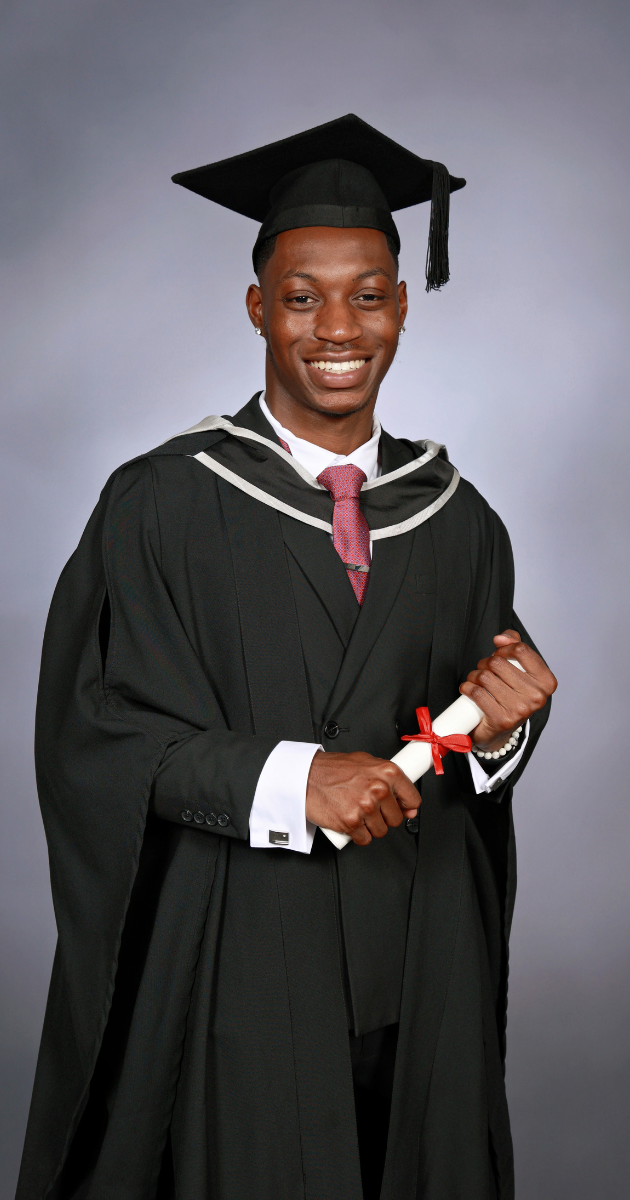
How did you decide on what your next steps were after graduation and the industry that you wanted to take your career into?
After graduation, I reflected on the broad exposure I had gained across finance, while also considering that I wanted to take some time to reflect on who I am beyond internships and deadlines.
During my time at Birmingham, I spent each summer interning at firms like J.P. Morgan, Bridgepoint, and Sompo International, while also engaging in mentorship schemes, insight days, and social mobility programmes. These broadened my perspective by giving me access to knowledge and people I would not have met otherwise, while also highlighting the value of access to information, networks, and mentorship, a theme that later inspired the founding of my charity, MISSION 33.
I was then fortunate enough to be recognised for this work in MIPAD’s Top 100 list of the UK’s most influential people of African descent under 25, as well as being named a Top 40 Black Heritage Undergraduate of the Year by TARGETJobs.
From there, I ultimately realised I wanted a career that blends analytical rigour with long-term client interactions. Wealth management and Private Equity particularly stood out to me as they allow me to go beyond the numbers and support client work that is both strategic and meaningful.
What was your top moment during your time at Birmingham?
In the three years I spent at Birmingham, it is hard to single out one particular moment, but one stands out. It was a small football match towards the end of my final year, played amongst so many familiar faces I had seen, met, or become friends with during my time at Birmingham. It mattered to me because it marked both the end of one chapter and the start of another, while also carrying personal meaning.
Before sixth form, I wanted to be a footballer and even turned down football-focused colleges to pursue my education. I even gave up playing for several years until midway through my second year, when I started playing for the Ghanaian Society football team.
Returning to the sport required discipline and teamwork, which complemented the skills I was developing academically and professionally. And returning to the sport I loved reminded me of the importance of balance, and how shared activities outside education can strengthen networks and foster a real sense of community.
What is the best advice you have been given?
As clichéd as it sounds, the best advice I have received is that authenticity is far more powerful than pretending to fit in.
In my first year at university, without a clear career direction, I often spent weekends in Mayfair, travelling from university to pick the brains of business owners, entrepreneurs, and senior leaders across a wealth of industries. From these conversations, I found a mentor who told me not to “fake it till you make it”, instead, I should create my own reality. And this completely shifted how I thought about my career.
I realised that being authentic is how you beat the competition. In a world where every industry, business, and art form is oversaturated, authenticity cuts through the noise.
In a corporate setting, it’s easy to feel small in rooms filled with vast amounts of wealth, experiences, and connections. However, your education, background, and heritage are not things to hide, but they are strengths that set you apart. Real confidence coming from practising your competence, and when this is paired with your authenticity, it creates an essence unique to you and impossible to replicate.
What does Black History Month mean to you and how are you hoping to celebrate?
I find Black History Month isn’t just a reminder of historical trauma or cultural achievements made in the face of violent and prejudicial obstacles. Instead, I see it as a powerful celebration of the boundless creativity, perseverance, and ongoing contributions of Black people globally. It serves as a reminder to act intentionally, look to the future, and recognise those who confidently embrace their distinctive identities.
Unfortunately, as a result of living in a world that tends to overlook the success and contributions of Black individuals too often, Black History is seen as isolated points in time rather than a coherent and continuous story. From Rosa Parks’ stand against segregation, to the fall of the Black Panther Party, and George Floyd’s murder, it’s often easy to frame Black History through struggle. However, in a world that often asks us to conform to predetermined socio-political standards. Black History Month offers a unique opportunity to celebrate the beauty of our individuality, and the greatness that emerges from the Black experience.
To mark this month, being an avid reader, I am not only revisiting books such as ‘How Europe Underdeveloped Africa’ by Walter Rodney, and exploring Tomi Adeyemi’s ‘Children of Blood and Bone’, I am also taking the time to actively highlight and show appreciation to the voices and efforts of those in my community who are continuously pushing boundaries.
From Kevin and Karlon Bonsu, two Peckham-born creatives recently named in Forbes’ 30 Under 30,to my fellow Birmingham alumni, including Start-up founder Emmanuel Dei, and those leveraging social media to share their experiences across the corporate world, such as Andrew Amoako and Jahmai Edwards. Such multi-faceted examples of trailblazers across their spaces remind me that this month is not just a time to reflect,but a source of strength and inspiration, drawn from those who are carrying our future forward.
Thus, having grown through this reflection from a young age,this month reminds me to embrace my responsibility to impact my community, and to celebrate advocacy, activism, and social progress, and the role Black History has played, and continues to play, across time.
Absolutely fantastic piece – Great insight into a wonderful lived experience at Birmingham and the lovely highlight of BHM.