
Disability Law at Birmingham (D-L@B, formerly the Disability Law Research Group) sits within the Care, Health, and Human Flourishing Research Theme at Birmingham Law School. We are a collective of researchers with an interest in disability justice and the law.
We host speakers and events throughout the year, details of which are available on the Events page.
Professor Rosie Harding

Professor Rosie Harding’s research explores the place of law in everyday life. Her primary interests are in social justice, disability and family law. Her work has a particular focus on the regulation and recognition of caring and intimate relationships. She uses social science methods including both qualitative and quantitative approaches to empirical research to investigate the place of law in everyday life, including everyday understandings of law and legal discourse. Her work is grounded in feminist legal theory and gender, sexuality and law, and has been supported by research grants from the AHRC, ESRC, British Academy and Leverhulme Trust.
Her current research is focused on the relationship between mental capacity and legal capacity in the context of everyday decisions made by people with intellectual disabilities. She is author of Duties to Care: Dementia, Relationality and Law (2017, Cambridge University Press) explores family carers’ experiences of the regulatory frameworks surrounding dementia care, and Regulating Sexuality, winner of the 2011 Hart-SLSA Book Prize and Early Career Prize. She is editor of Legal Capacity in Socio-Legal Context (2022, Hart), Revaluing Care in Theory, Law and Politics: Cycles and Connections (2017, Routledge Social Justice), Ageing and Sexualities: Interdisciplinary Perspectives (2016, Ashgate), and Law and Sexuality (2016, Routledge Critical Concepts). She is General Editor of the Law, Society, Policy series for Bristol University Press. Professor Harding was Chair of the Socio-Legal Studies Association from 2017 – 2022. She was a British Academy Mid-Career Fellow from 2016-2017. In 2017 she was awarded a Philip Leverhulme Prize for Law.
Professor Harding is a Fellow of the Academy of Social Sciences, an Honorary Academic Bencher of Middle Temple, and a Charity Trustee of Changing our Lives.
Dr Emma Oakley
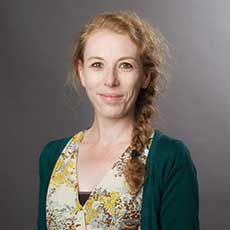
Dr Emma Oakley teaches in the areas of socio-legal studies, criminal justice and research methods. Her own research explores how people make sense of and use law in their everyday personal and working lives, what shapes this, and with what consequences. Emma draws on sociological and socio-legal ideas and methods to produce empirically-grounded, theoretically-informed accounts of the relationship between situated decision-making, formal and informal mechanisms of governance, such as law, policy and cultural norms, and the wider organisational and socio-political contexts in which people act. She is particularly interested in lay and practitioner decision-making in complex socio-legal arenas such as criminal justice, social welfare, legal education, and legal practice.
Emma is currently involved in research exploring the identities, ethics, and practices of corporate lawyers; defence lawyers’ use of judicial review to challenge magistrate court decisions; and how large corporate law firm recruiters interpret the value of LLM education.
Dr Clare Williams
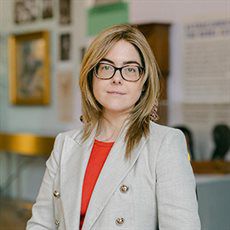
Clare’s research sits at the interface of law, economy and society; notably how we do, talk, and think about the relationships between the three fields and how these are leading us into financial crashes, social crises, and environmental catastrophes. She draws on diverse theoretical framings from sociology, economic sociology and political economy to critique the economic life of the law, using ‘designerly’ approaches to interrogate and prefigure pathways towards more equitable and inclusive futures.
Her first monograph, published in 2022 with Routledge, analysed the effects of talking about the law and economy as embedded in society, taking inspiration from the works of Weber, Polanyi, Cotterrell and Giddens to propose an alternative framing that understands the econo-socio-legal sphere as mutual re-co-constructed through interactions.
More recently, she has developed these insights in the light of her experiences of labour market inclusion and exclusion during The Great Prefiguration of the pandemic lockdowns to develop her original theory of ability capitalism; that is, the constitutive role of law in market constructions of disability.