
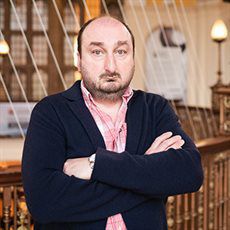
Professor Alexander Orakhelashvili
The latest Israel/US-Iran crisis is not anything special as far as international legal discourse is concerned. It involves the same methodological questions and challenges that have arisen with Ukraine, Libya, Iraq or Kosovo crises over the past three decades. All those crises have involved conflicting policies and interests that make the use of force on the international plane desirable from some and undesirable from other points of view. Does international law propose its own impartial guidance to assess these uses of force? As with previous crises, there have been some indications on the back of the Israel/US-Iran crisis that by far not all international lawyers think that this is the case.
In his recent post, Professor Michael Schmitt outlines a number of contributions written on the Israel/US-Iran crisis, including one by Marko Milanovic who has earlier suggested that “we all know” that the uses of force in this as well as Ukraine and Iraq crises has been unlawful under international law. This strongly presumes, to say the least, that the community of international lawyers is substantially uniform how these crises should be assessed analytically and normatively which, in its turn, presupposes that the community of international lawyers is relatively at least uniform on their methodological approaches. For, how otherwise would “we all know” that the legal system does (not) endorse a particular position or outcome? However, precisely here we see that that there is no such methodological unity right now, and there has been none of that over several past decades. To illustrate, Schmitt alludes to the New Haven policy-oriented theory, which suggests that international lawyers themselves have to assess underlying matters and not be bound by pre-determined normative criteria. Instead, and arguably, “a legal scholar has an independent responsibility to examine all legal formulations in terms of their current and prospective consequences for (and contributions to) the basic goals of minimum and optimum world order. If they do not contribute to these goals, the legal scholars should suggest alternatives that are likely to approximate them.”
In other words, a legal scholar becomes a sort of judge or assessor of the propriety of the rules of international law agreed upon and consented to by sovereign States. In a rather similar spirit, Koskenniemi has suggested that “few international lawyers think of their craft as the application of pre-existing formal rules or great objectives. What rules are applied, and how, which interpretative principles are used and whether to invoke the rule of exception – including many other techniques – all point to pragmatic weighing of conflicting considerations in particular cases. What is sought is something practical, perhaps the ‘fairness’ of the outcome.” (See also here on Koshenniemi’s indeterminacy thesis, and critique of it here.) David Kennedy has made a further effort with presenting a more structured perspective on this, suggesting that “International law is not a bundle of rules governing relations among states. International law is a profession, a discipline” in which people pursue projects with some “shared vocabulary”.
All the above theoretical inputs are similar in professing to over-empower international lawyers against the system of positive international law, and enable them determining the aims and objectives of that system. But such empowerment is bound to come with a price. Because, the exercise of such empowerment would rarely be an exercise of the mind and judgment of individual international lawyers and their own – if deep, careful or sophisticated – assessment of the system’s goals and objectives. International lawyers are not free of social influences. They are unlikely to speak merely in their personal capacity and solely on the back of their own independent intellectual reflection. Instead, they are not very unlikely to represent the ideas and preferences widespread in the social circles they are part of, or among people they talk to, be it a spouse or next-door neighbour, a political party they vote for, a social class they belong to or national interest of the country of which they are citizens. It would be – in fact it has for decades been – a very open secret that some international lawyers see their job as manipulating legal reasoning the way that meets the preferences and expectations of social circles to which relevant international lawyers belong. It should require no further explanation as to where all that would lead in the context of major military crises driven by major political and strategic considerations, or by aspirations of modern forms of imperialism or hegemony and, as a consequence of all that, whatever would be left of the independence or impartiality of international lawyers, either in the context of populist pressure (at the example of “dualism” and campaign against ECHR on the domestic plane, for instance in the UK), or in the context of global hegemonic agenda. In was in this context that political realist John Mearsheimer has remarked that “When the United States violates international law, it goes to a law school and finds a bunch of clever law professors to explain why violating international law is not really violating international law”; and that “lawyers provide the U.S. government with an explanation that it is actually following international law when it is not.”
Here again, this is a give and take exercise. Politicians who are intent on engaging in violations of international law are intuitively at least aware that their policy-making efforts would not always be complete without the endorsement by some international lawyers who would then, in their turn, engage in the rationalisation of “community objectives” through some “shared vocabulary”.
It turns out, after all, that theory and practice are not that far away from each other, nor is the number of instances in which (academic or practising) international lawyers have endorsed and approved violent or brutal foreign policies and outcomes entirely independent from some international lawyers’ undeclared adherence to analytical frameworks other than consensual positivism. On the other hand, understanding determinacy of international law inherently requires adopting a somewhat more moderate perspective about the role of international lawyers. International lawyers are not policymakers called to reassuring politicians who engage in breaches of international law, if not egging them on to do so. They have no independent policy expertise, nor do they have any democratic mandate to represent or articulate policy preferences according to the public opinion in the relevant country or part of the world. Nor are they unlikely to err in their assessment or belief that could counterfactually presuppose a state of power politics that gives the violator State a certain, if not near-absolute, power advantage over its adversaries and makes its unlawful actions feasible. If anything, the opposite has been proved by recent major crises (as discussed in detail here, here, here and here). The call from Hedley Bull, made four decades ago, that international lawyers would do far better if they stick to their lasts does not seem to have been heeded so far to a required extent. Instead, the international lawyers’ overreach does not seem to be in any stopping mood, and it remains to be seen for how many more political blunders it would have to assume a responsibility shared with policymakers.