
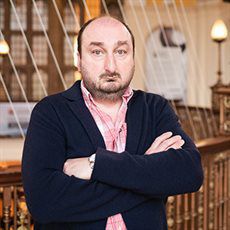
Professor Alexander Orakhelashvili
This post was almost completed when the US operation to seize Venezuela’s President Nicolas Maduro took place, which is sure to provide much food for thought on the ongoing debate on whether international law is dead or alive. This forms part of a rather old debate as to whether politically contingent situations could “kill” specific rules of international law or the entire international legal order, as manifested with Thomas Franck’s views in 1970s and Michael Glennon’s view that the Kosovo-related events in 1990s have led to de-regulation of jus ad bellum.
Apart from involving high political stakes, the “dead or alive” question is an essentially jurisprudential one, relating to the identity of a legal order – a matter that turns on the essence and varieties of the law-making function. In analytical terms, whatever happens to validity or content of a specific rule of international law and what happens to the entire international legal system is not that different. A legal order cannot be dead unless its law-making function stops functioning or unless it is replaced by a different legal order that has its own law-making tools. But what the discussion of international law has witnessed over decades is the imposition of a political implant of hegemonic law-making that operates in addition or as an alternative to the ordinary sources of international law. Using this tool, the hegemon’s power-political action could arguably influence or alter the qualification that the international legal order bestows upon the conduct of legal entities.
More widely, the thesis of hegemonic law-making is a variety of the normative contestation thesis. In order to plausibly, if not successfully, contest ordinary outcomes validated under positive international law, the contesting entity has to possess a great power status. Ardi Imseis considers events around Palestine and Middle East to be a litmus test on the matter of the continuing life of international law. And it is absolutely right to consider this as one of the cases in which the “superpower” advances selective agenda regarding major crises that involve violations of international law. The involvement of a great power or “superpower” is of key relevance here. For, it is not Israel’s activities that amount to a chief problem, but the American government’s policy involved in its decisions to recognise Golan as territory of Israel (and similarly Western Sahara as territory of Morocco). President Trump has clearly regarded this case as one of hegemonic law-making, when he stated that “I signed the Golan Heights — the rights to the Golan Heights — over to Israel. Nobody thought that was possible to get.”
This hegemonic piece of attitude, involving a series of rather blunt and far-reaching assertions of authority over foreign sovereign territories, comes in tandem with Trump’s plans to administer Gaza and turn it into another riviera, and his plan to run Venezuela – another potential riviera spot in the Caribbean – until the power transition is carried out or, more plausibly, until American oil companies are firmly established in Venezuela. But the matter did not begin with the current crises. Instead, this process began in 1990s, with the US-led uses of force against Iraq (1998, 2003) and Yugoslavia (1993), which manifested the aspiring hegemon’s eagerness to use its power advantage over other great powers to make its special hegemonic status more plausible. The Kosovo situation has combined the hegemonic use of force against Yugoslavia and the hegemonic attempt to redraw international boundaries through the validation of Kosovo’s status as an independent State.
All those policies and activities were driven by the aspiration of hegemonic law-making. An average State expressing views contrary to international law, for instance an average Latin American State recognising Taiwan as a separate State independent from China – is not the same as a great power doing a similar thing, precisely because in the former case the contestation of the default legal position firmly expressed or accepted by the international community would not be that plausible. Policies driven by a “superpower” and with hegemonial confidence are ordinarily calculated not simply to be a disparate voice in the field of State practice but one that can produce or alter the narrative, paradigm or legitimacy underlining the entire matter in question. It is not surprising that several actions by the UK Government in contradiction to international law that led to multiple instances of litigation were ones undertaken in the alliance with the American hegemon. The effect of those power-informed attitudes across the disciplinary line, manifested through the views of some international lawyers that customary international law is informed by power before or above anything else should not be surprising either.
All this obviously relates to major international crises that need to be resolved one way or another, and the sooner the better, and it is natural if one wonders what should be done about them in the alternative of hegemonic unilateralism. Historical experience shows that the most reliable method is cooperation between great powers the way that their combined critical mass of international power is deployed more efficiently and constructively to address international crises. With the increase of superpower and hegemonial confidence from 1990s onwards, this pattern was abandoned in favour of a power-driven unilateralism, and prospects of cooperation between great powers have, for the time being at least, effectively vanished. At the same time, nothing has proved to be more unreal than an exclusive and privileged status enjoyed by some great powers to the exclusion of other great powers, because the real distribution of power in the world does not match the unipolar perception of the international system. The unreality of those political or ideological beliefs is what made more possible, if not led to, the events around Crimea in 2014 and Ukraine crisis from 2022 onwards.
Hence, what matters in legal as well as power-political terms is not as much what the self-styled King of the Two Rivieras can do in relation to countries like Venezuela, as what the US government cannot do in relation to countries such as China and Russia. What is dead is not international law, but the liberal hegemonic dream unleashed in 1990s, and power advantage-seeking agenda sought or enjoyed by those who found liberal internationalism attractive. The liberal pattern of allocating the goodie and baddie labels does not sell so well on the world market of ideas anymore. This is manifested, not least, with the reaction within the Global South to Western policies in the aftermath of the Ukraine crisis (see also here).
And this is not simply an African matter. The latest security strategy published by the US government around the same time as it seizes tankers or leaders of foreign sovereign States under the guise of the Monroe doctrine re-invoked by the President Trump in the above security strategy document and after capturing Venezuela’s President, is also premised on the insufficiency of US-led hegemonic power to resolve global crises. We must wait and see whether Trump’s reference to the Monroe doctrine manifests any ongoing trend to revert to regional dominance in contradistinction to global hegemony to which the American political or policy establishment has been attached to for so long; but on the global plane the strategy document clearly strikes a more acquiescent note. It suggests that “The Ukraine War has had the perverse effect of increasing Europe’s, especially Germany’s, external dependencies. Today, German chemical companies are building some of the world’s largest processing plants in China, using Russian gas that they cannot obtain at home.” More recently, there was no European unity even regarding seizure of Russian assets to help Ukraine. Therefore, the Western power is enough for doing certain things but plainly not enough for securing other priority outcomes, ones that would both uphold its vision of international law as well as make its hegemonic position more plausible. Some of us might remember the events around Kosovo in 1999, when the Russian envoy was travelling across various capitals to secure the agreement to end the armed conflict between NATO countries and Yugoslavia, while NATO countries continued bombing Belgrade and other places in Yugoslavia unabated. Over the recent weeks, we have been witnessing the opposite phenomenon when the US President tries to get Ukraine to accept a peace deal embodying some or most of Russia’s ambitions, and the latter carries on its bombing of Kiev and other Ukrainian cities as it deems fit. Tables have been turned, and that cannot be affected or undone by lamentations on how bad Russia’s aggression is.
Whether the Western political mainline is ready to recognise all that is not at all clear, however. The problem may have to do with proper use of methodology. If international law is wholly or partly dead, then there is no way to say that Russia’s war against Ukraine is unlawful. Similarly, if legal arguments about Western-led military operations are manipulable to present 8 out of 10 Western-led uses of force as lawful or legitimate, then there is no reason why legal argument regarding the Ukraine crisis could not be similarly manipulated. To prevent this, a hegemonic lawmaker would need to be involved, and it does not exist. Another issue relates to the popular understanding of international law, as vividly manifested by Becker Lorca’s postman example. However, the popular understanding aspect should not be divorced from the proper jurisprudential focus. As it happens, many people in many countries not only think international law is dead but they also want it to be dead and not to exist at all, because it imposes external normative constraints on the national and democratic will to have its way in international crises. This is also obvious at the example of the popular and political opposition to ECHR in the UK. By far not everyone is happy for international law to stand in the way or provide additional criteria for decisions that are supported by democratic legitimacy and are perceived to be in the national interest. That is one of the reasons why one newspaper in the UK described the issue of legality of Iraq war in 2003 as one of gigantic irrelevance. The US Government and many Americans must have thought the same in relation to President Maduro’s capture as well.
But international law is not about popular attitudes or convenience, but about relations between States. When legal and political stakes involved between States are concerned, there is not that big difference between the outright disregard of the law’s relevance and manipulation of legal reasoning to present illegal conduct or policy in the language of international law. Vattel has said a wrong interpretation of a treaty is just as bad as its violation. I dare say it is even worse, because it proposes a policy of perpetuating illegal State conduct and its a priori justification and legitimation. And politically in many cases it results in the attempts of perpetuation of power-political advantage of some States over others to the extent greater that the real dynamics and distribution of power in the world would allow.
It may not be possible to make an exact empirical determination of whatever proportion of international lawyers think that important political decisions on the use of force are governed by law, nothing but law, and especially law as opposed to feelings, emotions or ideology; and that consequently nothing else than positive law considerations should influence their minds when assessing the legality of the relevant use of force. This is at the core of the question as to the extent to which international lawyers would be prepared to assess international crises without selectivity or bias, in terms of the rigour of the argument used in relation to a particular crisis, the outcomes endorsed or disapproved, and the harshness or lenience of the tone or language that is employed in the relevant case, as compared to other cases. The alternative is a political and ideological finetuning of the legal argument which could be welcome in the circle of policymakers, but it would not tell them too much beyond a momentary or general reassurance, or anything that they did not know before. An international lawyer walking the tightrope of proving useful to the dominant political or ideological agenda and at the same time preserving their apparent disciplinary independence is not a plausible path either, at least in a medium or longer term; because this path is a manipulation path and it is rather easy to see it through. The wider of the mark a proposed or endorsed solution is, if the proper legal method was applied to it, the less plausible or believable it is to present that solution as one commanding a somewhat authoritative consensus from the qualified circles. A message of confidence sent to policymakers across the disciplinary divide could make those policymakers believe, for the time being, that they got their ducks in a row. In practical terms, that only increases political confidence for more unilateralism and selectivity based on uncertain grounds and sets the stage for further political blunders bound to provoke more adverse political reaction in contrast to what the liberal hegemonic dream unleashed in 1990s had envisaged.