
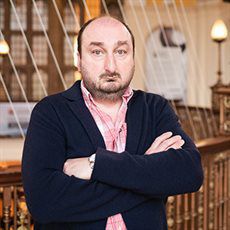
Professor Alexander Orakhelashvili
Invention is exhausted; reason is fatigued; experience has given judgment; but obstinacy is not yet conquered. Edmund Burke (1774)
Over a long time and across many countries, many international lawyers have maintained the feeling of disciplinary insufficiency. Whether professing so expressly or believing so intuitively, many of them are of the view that, given that international law deals with realities of power, international legal reasoning cannot suitably be a pure legal reasoning and policy, political and ideological elements need to be incorporated into it. It is also often forgotten or overlooked that political and ideological instincts are more than often subjective, biased and parochial; they lead to overlooking not simply the merit of the legal argument, but often they also lead to overlooking the realities of power politics.
Let us take a brief stock of what the implication of several instances of illegal use of force over past decades has been (these being instances which several international lawyers would rush to denote as legitimate, necessary or justified). Here are the scale and record of decline and deterioration to which the series of American “hegemon”-led uses of force have led:
- The 1999 air campaign against Yugoslavia with the aim to save Kosovar Albanians from Belgrade’s oppression has led, instead, to a drastic increase of human suffering and number of victims in Kosovo. The post-conflict stabilisation has produced a situation that is inherently divisive and it is difficult to predict if and whenever it would explode again. In addition, the Western great powers’ insistence on “humanitarian intervention” and Kosovo’s independence has generated the policy of hegemonial exclusivity that has made non-Western great powers (as well as third world countries) rather unhappy. What has happened in Ukraine since then is a direct implication of how the Kosovo crisis was handled.
- The 2001 war in Afghanistan was initially seen as military success. But it ended with the strengthening of Iranian influence in the region and somewhat chaotic US withdrawal. The Taliban got back to power.
- The 2003 war against Iraq has ended in a disaster, generating a power vacuum and repeated increase of Iran’s influence in the region.
- The 2018 US bombardment of Syria has pressed that country towards greater alliance with Russia and further Russian entrenchment in the region.
- The current 2026 war against Iran is not likely to bring to any incontestably successful outcome. Even if some, most or all strategic objects are verifiably achieved, the downsides that this war has already created are bound to persist. By now, a great deal of escalation across the region has been witnessed, together with implications in various areas ranging from mortgage to energy resources. All that comes on the top of widespread human suffering. Other implications that may follow over years or decades to come, in terms of further destabilisation in the region and Islamic radicalisation, are difficult to predict in detail, but fairly easy to predict on generic terms.
All these uses of force were justified by policy-makers and some international lawyers by reference to inactivity or ineffectiveness of the UN Security Council; none of them except one brought about any substantial improvement of the situation on the ground; and all of them led (or are bound to lead) to the alteration of the overall power balance in the world to the disadvantage of the US-led political camp and to the advantage of their adversaries. After every such blunder, the relative power of USA towards its adversaries has declined; liberal hegemony became less and less real. And yet, time and again, it was conveniently overlooked that force is not the same as power, or that power is not the same as success. It is on the account of the factors of historic causality, as between these instances of the use of force and their implications, by reference to which any impartial historian would assess all that in the future.
A recent post on Just Security by Yuval Snany and Amichai Cohen focuses on several ways in which the US/Israel war against Iran could be justified, namely on the right to self-preservation (which international law does not recognise), the idea of State survival and the distinction between legality and legitimacy. The suggest that “Once international lawyers and institutions stop engaging seriously and professionally in problem-solving and turn to political grandstanding or lecturing States on how to behave without offering them credible practical solutions to their actual and acute problems, they bring the whole field into disrepute and, ultimately, irrelevance.” In a follow-up post, Kenneth Watkin similarly suggests that “Twenty-first Century threats require an application of the law based in realism, not aspiration.”
Whether or not the above assertions are true or false, what is the feasible alternative available to international lawyers commenting on this war both impartially and accurately? Should international lawyers pretend that they are policymakers, by designing new constructs of legality, or invent new criteria of legitimacy the way that would appease the political agenda of the day? For instance, WM Reisman has suggested decades ago that “a legal scholar has an independent responsibility to examine all legal formulations in terms of their current and prospective consequences for (and contributions to) the basic goals of minimum and optimum world order. If they do not contribute to these goals, the legal scholars should suggest alternatives that are likely to approximate them.” If that is the case, then international legal reasoning is nothing but a free storytelling to appease the sources of political pressure. It is difficult to see how that is a better way for international lawyers avoiding falling into irrelevance. Because, not even political advisers of governments are generally meant to be that adaptive or conformist.
Another way is to keep uttering the Krisch ultimatum addressed to the international legal system, to the effect that unless it softens its insistence on consent, international law risks to get less relevant and marginalised. And then one must probably expect that, the world in which policymakers are unwilling to listen to the legal reasoning, the entire system of international law will be all in ears and eager to comply with the instructions given.
What could more feasibly lead international lawyers towards irrelevance is their loss of disciplinary identity, to the effect that there would be no feasible distinction between an international lawyer and an odd think-tank analyst appearing on various television channels. If international lawyers were to pose as lay preachers of applied ideology, they would face fierce competition in which they would be unlikely to prevail, because there are already too many lay or professional preachers in this area, with better experience and skills to use in that trade. On a wider plane, if international lawyers deal with international legal reasoning as though it was a subset of political ethics, in essence they keep telling policymakers not only what they want to hear but also what they are already aware of too. It is rather difficult to see how all this increases the relevance of international legal community across the inter-disciplinary divide. If anything, it does the opposite. Overall, parochialism and conformism are among the safest ways to secure the irrelevance of international legal discipline and of international lawyers.
Shany and Cohen articulate the option of return to the “illegal but legitimate” paradigm that was rather popular after the Kosovo crisis. At the same time, the Kosovo Inquiry Commission’s findings on this matter were made in the context of how the power-political equation was perceived by many back then. The Commission’s findings would be plausible to people who intuitively at least believed that the criteria to determine what is legitimate and what is not were conducive to the policies and interests of the American hegemon and of their European allies. That may have sounded somewhat plausible at the peak of the unipolar domination, but it would not sound any plausible today when the existence of diverse centres of power in the world is an undeniable reality. Still less plausible is the ever-persisting attitude at the back of minds of many international lawyers that the world is, or has to be, run through the power of some liberal hegemon and that the international legal system is mere a façade front of or camouflage around that power. In reality, however, the international legal system is premised on the fact that no one has enough power to run the world. If anyone has such power, they would already have established some alternative system of power-based governance to give institutional reflection to their hegemonic power.
Given all that, it seems that Shany and Cohen, as well as Watkin, are asking too much from international lawyers and from the methodology of international law. It is plainly beyond the international lawyers’ power to construct the criteria of legitimacy or legality if the absence of a feasible political and material support to secure the systemic recognition of those constructs, as opposed to reflecting it in conference discussions or in the parlance of an odd politician or a think-tank pundit appearing on CNN. Especially in today’s multipolar environment, it is clear that the warning given by UN High Level Panel on Threats, Challenges and Change two decades ago was understood precisely in the context of serious and grave crises like the current war against Iran. The Panel has concluded that, even in such grave situations, solutions should be sought in multilateralism, not in unilateralism, and went on to conclude that:
For those impatient with such a response, the answer must be that, in a world full of perceived potential threats, the risk to the global order and the norm of non-intervention on which it continues to be based is simply too great for the legality of unilateral preventive action, as distinct from collectively endorsed action, to be accepted. Allowing one to so act is to allow all.
The use by international lawyers of concepts and categories that the international legal system does not want to accept or reflect has been going over decades, if not over centuries. It has been an ever-persistent circular travel. When international lawyers purport to act as mentors of the international legal system, they sound implausible and unrealistic. When policymakers act the same way, they generate yet another circle of blunders and reciprocal reaction that is bound to upset the stablished power balance in the world even more. Today, the international community is not at crossroads the way that Shany and Cohen suggest. It was at crossroads in 1990s, in years following the end of the Cold War, when a wrong turn was taken towards unilateralism under the leadership of the confident unipolarist hegemon, with all the implications we see today. These implications, consisting in greater instability with its many centres, less cooperative world, or reciprocal unilateralism generating more armed conflicts is more on policymakers than on international lawyers and it is for policymakers and their advisers to design ways out of it, if they can and if they are willing to do so. Or we’ll have to put up with more rounds of circular travel, and the world will have to put up with more crises and blunders.