
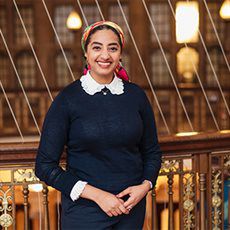
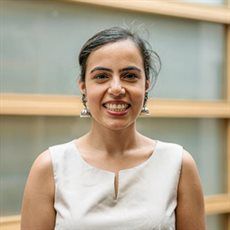
Shaimaa Abdelkarim (BLS), Rishika Sahgal (BLS), Martha Harrison and Daz Cox (CALICO)
Introduction
In September 2025, Dr Shaimaa Abdelkarim and Dr Rishika Sahgal partnered with Calico leveraging virtual reality technology to interrogate institutional responses to gender-based violence (GBV) and to reimagine a feminist city. Through this blog, we introduce this project.
The project has two main objectives. First, it challenges dominant narratives that frame GBV as primarily interpersonal violence, overlooking structural and systemic issues. Dominant narratives typically call for stricter penalties and increased policing to address GBV, but this fails to address the power dynamics that make the criminal justice system part of the problem and prevent centring survivors’ experiences. Second, the project examines concerns around spatial justice, with emphasis on the exclusions and negotiations that women and gender minorities encounter when navigating urban public space. The project asks – how can we reimagine urban public space as feminist; and can we use emerging technologies, particularly virtual reality (VR), to enable this reimagination?
The impact partner, Calico Theatre CIC is a Birmingham-based social enterprise harnessing the arts to combat GBV. Founded & led by University of Birmingham alumni Daz Cox and Martha Harrison, their co-created art spans film, theatre, and virtual reality. With 1 in 2 women feeling unsafe walking through a busy public space after dark (Office of National Statistics, 2021), Calico’s vision is a world where public spaces feel safe for everyone.
Calico developed CurfewVR to explore the gendered experience of being in public space at night in the city of Birmingham. The virtual reality tool invites users to step into the shoes of a woman travelling through Birmingham. Calico initially developed CurfewVR as a tool to train institutional actors including the police and transport authorities. Our collaboration re-purposed this tool to stimulate critical conversations around the role of state-led responses to GBV, the gendered construction of urban space and role of emergent technologies. To that end, between September and November 2025 we conducted workshops with 17 Birmingham-based civil society groups, community-led organisations and NGOs that work within the area of GBV. During the workshops, participants were invited to trial CurfewVR.
We reflect below on the utility of VR tools to open conversations on, first, the limitations of state-led and institutional response to GBV; second, the construction of public space; and third the ethics of using immersive technology that simulates gendered experiences.
CurfewVR as a provocation tool: on international and national institutional responses to gender-based violence
Various scholars, who are invested in understanding the interaction between the survivors’ experiences with GBV, international institutional decision-making processes and national legal frameworks have been attentive to the securitisation of gender work. (Nesiah 2024; Abu-Lughod et al 2023) On an international scale, Violence Against Women (VAW) agendas have been central to the mainstreaming of gender through a rights-based approach. The process of mainstreaming refers to ways in which ‘gender’ has been systematically integrated in international and national institutions, as ‘user-friendly and acceptable to all.’ (Kouvo 2008) In mainstreaming practices, gender functions as a ‘stable category… to regulate and manage behaviour and conduct while also discipling such behaviour and conduct.’ (Kapur 2013, 340-341) VAW frameworks focus primarily on tackling gender-based violence through legal reforms, criminal justice responses and a victim-centred model. Such frameworks often emphasise the need to stricter national legal measures, while providing support services for the survivors.
A central critique of VAW frameworks concerns the way in which the international reliance on carceral systems have prefigured the role of grassroot mobilisations to the reproduction of state relations. (Mimi E. Kim 2020; Abdelkarim 2022) Calls for criminalisation and incarceration, like the formation of special police and court units for sexual assaults inform state-centred approaches without acknowledging the structural nature of gender-based violence. VAW agendas require channelling state resources for national enforcement through investigation, prosecution, and punishment in responses to GBV (Engle 2020). For instance, state-centred practices around domestic violence assume that violence erupts only in the interpersonal space. The solution is usually framed as a need to expose domestic violence in the public sphere through legal interventions, and in turn, dismisses how legal actors and institutions often perpetuate harm. At the same time, the increased reliance on penality dilutes the survivors’ agency, who are treated as passive victims in the process of seeking justice.
Building on these critiques, our collaboration highlights the need for examining the contextual basis of action that speaks to the lived experiences with GBV and the evolving power structures that operate on national and international level. Using CurfewVR, we reenvisioned the tool to enable discussions around the widespread fear of GBV in public space. Most participants can relate to the VR experiences, which enables conversations on the different reactions to the VR tool through a contextualised experience that is different from one participant to the other but still relatable in relation to navigating various modes of public transportation at night. The VR tool enabled a contextual understanding of the multiple experiences of navigating public space that may require different forms of interventions. Community-led practices in response to GBV emerge not as ‘alternatives’ to state-led responses but as essential to moving away from responses that shift the responsibility back onto survivors to ‘keep themselves safe’ and while enabling the expression of distrust amongst participants in relation to the police.
CurfewVR as an immersive tool: On gendered urban public space
There is a growing body of literature that maps the exclusions and negotiations that women encounter in urban public spaces (Phadke et al 2011; Goebel 2015; Kern 2021; Rose 2025). The literature indicates that the experience of navigating public space in cities is gendered, racialised, classed and marked by other intersectional experiences of marginalisation.
An important, though not exclusive, marker of the distinct experience of women in urban space is centred around notions of ‘safety’. Narratives around ‘safety’ have been deployed to exclude women from urban space in the garb of ‘protecting’ them from GBV (Phadke 2013). Such narratives are deployed in tandem with calls for carceral responses to GBV through increased policing and harsher punishments. This increased emphasis on ‘policing’ often results in the policing of women and their ability to be present in and navigate public space. In this context, feminist activists and theorists seek to reframe the debate around ‘safety’ and ‘space’; to focus on enhancing access to urban space for women including their right to take risks in urban space (Phadke 2007).
Our project brings together these feminist insights around GBV, carcerality and urban space. It leverages VR technology to reimagine community-led responses to GBV that enhance rather than exclude women’s access to urban space.
During the workshops, we critically examined the immersive aspect of CurfewVR in order to interrogate both its potential and limits as a feminist tool. While emerging scholarly work focusses on the transformative potential of immersive technology specifically in relation to empathy-building through simulations of lived experiences (Shin 2018), our workshop discussions have identified the need for further research on the ethics of using VR and whether inhabiting gendered experiences in public spaces translates to a substantive reconfiguration of gender relations.
Conclusion
Through our collaboration, CurfewVR was thus reenvisioned in its function. The VR tool offers an accessible entry point into scholarly and policy-making discussions around GBV and access to public space. It served as a generative tool to enable difficult and rich conversations with grassroots groups based in Birmingham. Overall, the workshops served as a starting point to kickstart a longer-term project on the intersection of emergent technologies and a grounded understanding of experiences of GBV and access to public space.
Bibliography
Abdelkarim, Shaimaa. “Subaltern subjectivity and embodiment in human rights practices.” London Review of International Law 10.2 (2022): 243-264.
Abu-Lughod, Lila, Rema Hammami, and Nadera Shalhoub-Kevorkian, eds. The cunning of gender violence: Geopolitics and feminism. Duke University Press, 2023.
Engle, Karen. The grip of sexual violence in conflict: Feminist interventions in international law. Stanford University Press, 2020.
Goebel, Allison. On Their Own: Women, Urbanization, and the Right to the City in South Africa. McGill-Queen’s University Press, 2015.
Kapur, Ratna. “Gender, sovereignty and the rise of sexual security regime in international law and postcolonial India.” Melb. J. Int’l L. 14 (2013): 317.
Kern, Leslie. Feminist city: Claiming space in a man-made world. Verso Books, 2021.
Kim, Mimi E. “Anti-carceral feminism: The contradictions of progress and the possibilities of counter-hegemonic struggle.” Affilia 35.3 (2020): 309-326.
Kouvo, Sari. “A “Quick And Dirty” Approach to Women’s Emancipation and Human Rights?.” Feminist legal studies 16.1 (2008): 37-46.
Nesiah, Vasuki. International conflict feminism: Theory, practice, challenges. University of Pennsylvania Press, 2024.
Phadke, Shilpa, Sameera Khan, and Shilpa Ranade. Why loiter?: Women and risk on Mumbai streets. Penguin Books India, 2011.
Phadke, Shilpa. “Unfriendly bodies, hostile cities: Reflections on loitering and gendered public space.” Economic and Political Weekly (2013): 50-59.
Phadke, Shilpa. “Dangerous liaisons: Women and men: Risk and reputation in Mumbai.” Economic and Political Weekly (2007): 1510-1518.
Rose, Morag. The Feminist Art of Walking. Pluto Press, 2025.
Shin, D. (2018). Empathy and embodied experience in virtual environment: To what extent can virtual reality stimulate empathy and embodied experience? Computers in Human Behavior, 78, 64–73.