
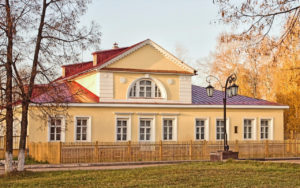
Pyotr Ilyich Tchaikovsky was undoubtedly a man of the world in the broadest sense. He first heard English as a child in Votkinsk, where English technology was used and English engineers were employed. According to the composer’s brother Modest, the Tchaikovsky home was ‘a gathering place for all of Votkinsk’ frequented by the refined and educated English families associated with the factory [2, 19], particularly often with the family of engineer Samuel Penn [1, 30-39].
In the household of his sister, Alexandra Davydova (née Tchaikovsky), the younger children were taught English by Martha Eastwood. Tchaikovsky’s archives preserve five of her letters from the years 1879–1893 [3, № 1372–1376]. Eastwood was so well-liked by the household that Pyotr Ilyich proposed in a letter from May 19–22, 1882 that his brother Modest write a story about her, suggesting a plot outline:
The story should be written in the form of letters to a friend in England, as if found and translated by the author. Miss Eastwood arrives in Russia. Everything seems somewhat funny and barbaric to her. She likes the family she joins, especially the children, but she cannot understand why there is no discipline, no inherent sense of Christian duty and propriety, which permeate English families. She respects this family but sees them as people of a different kind, and the gap between them widens as she gets to know them better. She retreats to her corner and stays there. Overwhelmed by boredom and melancholy, her sense of duty and the need to support her family keep her from despair. She is religious—in the English way, and she finds the Russian church and rituals both amusing and repugnant [4, 127].*
It is possible that such a portrayal of the composer was influenced by English literature. However, it was likely his personal impressions of English governesses that led to the depiction of the governess as English in the first staging of Tchaikovsky’s opera The Queen of Spades at the Mariinsky Theatre in 1890. The director of the production, Josef Paleček [5], indicated in his director’s score that in the second scene, the governess is English. Given that the composer was actively involved in preparing the production, this characterisation of the character was made not only with his consent but possibly even originated from him.
It is known that Tchaikovsky mastered the English language seriously only in his mature years. Whether he knew it earlier and to what extent is unknown. In 1879, the composer began to study English intensively and systematically, continuing until 1885. For instance, on August 16, 1879, in a letter to Nadezhda von Meck, he requested that she send him works by other authors, including Dickens, in Russian or French translations [4, 323].
Throughout his life, one of Pyotr Tchaikovsky’s favourite authors was Charles Dickens. In 1866, at the age of 26 and serving as a professor at the Moscow Conservatory, he wrote to his younger brothers Anatoly and Modest on January 30–31:
I laugh heartily at Dickens’ The Pickwick Papers with no one around, and sometimes the thought that no one can hear me laughing makes me even merrier. I advise you to read this work; if one must indulge in fiction, then one should at least choose authors like Dickens [4, 98].
In a letter to his brother Anatoly dated January 7/19, 1879, the composer expressed his admiration for Little Dorrit:
Tolya, have you read this supremely ingenious work? Dickens and Thackeray are generally the only people I forgive for being English. Shakespeare should be added to that list… [4, 31].
On July 22, 1880, Tchaikovsky wrote to his patroness about beginning systematic studies of the language with the aim of reading his favourite English authors in the original:
Did I tell you, dear friend, that I have been studying English little by little? My studies here are going very correctly and successfully. I hope that in about six months I will be able to read fluently in English. This is my only goal; I know that at my age, it is impossible to learn to speak fluently. But to read Shakespeare, Dickens, and Thackeray in the original will be a delight of my aging life [4, 211].
In the autumn of 1883, Tchaikovsky realised his dream, as he reported on October 22 of that year:
Imagine, dear Nikolushka [Nikolai Konradi], that in my old age I have seriously started to study English and have progressed to the point where I am reading David Copperfield in the original. This gives me indescribable pleasure [4, 266].
Apparently, his studies were intermittently paused and then resumed, a trait characteristic of Tchaikovsky’s nature. Thus, on November 1, 1883, Tchaikovsky wrote to Nadezhda von Meck:
…I took it into my head to resume studying English; and it would be fine if I were to do my self-set lessons little by little, at leisure. No! I was seized by an irresistible desire to learn quickly enough to freely read Dickens, and so I dedicate several hours to this pursuit, such that literally, apart from meals and obligatory walks, I spend not a minute otherwise than straining with all my might, rushing to finish something [4, 271].
The composer continued his intensive study of the English language in 1884, and eventually, he noted with not a little pride:
…my progress has been very significant; now I can read Dickens without difficulty and without constantly looking up words in the dictionary. The novels, in the original, have acquired a new charm for me. Now I read David Copperfield with the greatest pleasure [4, 437].
William Thackeray was another of Tchaikovsky’s favourite English authors, although, unfortunately, no editions of his works remain in the composer’s library. It is only known that Tchaikovsky repeatedly read and reread the novel Pendennis. Tchaikovsky saw reflections of his own life in some of the novel’s events, and the character of the main hero reminded him of his friend Nikolai Kondratyev. Tchaikovsky wrote:
I return around 8 o’clock, and we have tea. I write letters (with great difficulty), read the newspaper ‘L’Italie’ or Pendennis… I became sad, drank some brandy, cheered up, started reading Pendennis, and one episode so reminded me of Kondratyev that I felt compelled to write to him, which I did. I wrote him a very unpleasant letter. The next day I regretted it and sent an apology [4, 287].
Tchaikovsky’s deep attachment to English literature inevitably found its way into his creative output, as evidenced by his compositions based on the works of Shakespeare and Byron. Tchaikovsky’s known compositions inspired by Shakespearean plots include:
- Romeo and Juliet Overture (1870, revised in 1880 and 1884)
- Fantasy for orchestra based on the drama The Tempest (1873)
- Hamlet Overture-Fantasy (1888)
- Incidental music to the tragedy Hamlet (1891)
Shakespearean themes such as The Tempest and Romeo and Juliet were areas of intense interaction between Tchaikovsky and the ideologues of the Mighty Handful, Vladimir Stasov and Mily Balakirev. Besides these themes, in 1876 Stasov sent Tchaikovsky a scenario for an opera based on Othello in a letter dated December 13, 1876, sparking immediate interest. Next to the description of the second act in the letter, Tchaikovsky wrote,
Iago, left alone, expresses his hatred for Cassio and Othello and speaks of his suspicions, among other things, about the handkerchief [4, 99].
In his reply to Stasov (dated December 19, 1876), Tchaikovsky shared his suggestions for the scenario [4, 97-99]. Despite this, the Othello concept, which directly preceded Eugene Onegin, was never realised.
Shakespeare’s tragedy Romeo and Juliet was a lifelong theme for Tchaikovsky. He first approached it at the very start of his creative career. The overture has three versions, each differing significantly from the others and reflecting the evolution of Tchaikovsky’s creativity. The surviving sketch of the Romeo and Juliet duet is connected to another attempt to use this Shakespearean plot as an opera. The concept dates from 1878-1881, a period following Eugene Onegin and The Maid of Orleans, but apparently, the thought of this opera lingered with the composer until the end of his life. The existing duet sketch uses themes from his early Romeo and Juliet overture. After Tchaikovsky’s death, the manuscript was discovered by Sergei Taneyev, the duet was restored, published, and entered performance practice [3].
The plot of Shakespeare’s Hamlet also attracted the composer’s attention for an opera: in a 1885 blotter, Tchaikovsky sketched a draft in E-flat minor with the subtext of the famous monologue’s opening words, ‘To be or not to be’ [3, 4]. The sketch was not used. Ultimately, Tchaikovsky realised this Shakespearean plot in the 1888 orchestral overture Hamlet and in music for a French theater production in St. Petersburg in 1892.
Among Tchaikovsky’s manuscripts in Notebook No. 4 are sketches and draft sheets from the autumn of 1887 (i.e., earlier than the ‘operatic sketch’), which are now interpreted as materials for a proposed programmatic symphony on Hamlet [3]. A few months later, these sketches became part of the thematic material for the first, second, and fourth movements of Tchaikovsky’s Fifth Symphony, yet they were not included in the later-written Hamlet overture. Given some sketches were labeled ‘Hamlet’, it’s safe to say there was an original connection between the concept of the Fifth Symphony and the Shakespearean tragedy.
There were also unrealised operatic concepts based on English literary sources. These include Ivanhoe based on Walter Scott (concept from 1872) and The Castle of Chillon based on Byron’s poem and its Russian version. The latter plot was discussed with playwright Fedotov at the very end of Tchaikovsky’s creative path, in 1892, after he had composed his last opera, Iolanta [3].
Tchaikovsky’s personal acquaintance with Great Britain was limited to just four visits over 32 years, with 27 years between the first and second visits. Initially, the future composer, a recent law school graduate and a 21-year-old employee of the Ministry of Justice, visited Great Britain in 1861, accompanying engineer Vasily Pisarev as a translator. According to letters, Pyotr Ilyich was not impressed by London, which left him with ‘gloomy feelings in the soul’, particularly due to the weather.
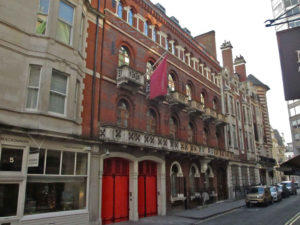
In 1888, Pyotr Ilyich arrived in London during his grand tour as a global celebrity. He stayed at the luxurious Dieudonne Hotel, now the site of Christie’s auction house. His music and conducting at St James’s Hall were met with universal acclaim. During this visit, Cambridge University awarded Tchaikovsky an honorary Doctor of Music degree. However, the doctoral robe remained at the university as it had to be purchased, which the Russian composer declined to do. It was only in 2018 that patrons facilitated the transfer of this robe to the composer’s museum in Klin.
These are just some of the main aspects of Tchaikovsky’s dialogue with British culture, through which the breadth and multilayered nature of this phenomenon is clearly visible, permeating the composer’s entire life. On one hand, this dialogue was a reflection and continuation of the centuries-long interaction between two cultures, and on the other, it was an important part of the composer’s spiritual world, whose life and work were intimately connected with Great Britain and its culture.

(photographed by Florence Maitland)
[1] Gajewski, Evgeny. 1983. Pyotr Ilyich Tchaikovsky and Master Samuel Penn. In P.I. Tchaikovsly and Ural, 30-39. Votkinsk: State House Museum of P.I. Tchaikovsky in Votkinsk Publishing Press.
[2] Tchaikovsky, Modest. 1903. The Life of Pyotr Ilyich Tchaikovsky. Moscow, Leipzig: Peter Jurgenson.
[3] The State Memorial Musical Museum-Reserve of P.I. Tchaikovsky.
[4] Tchaikovsky, Pyotr. 1953. Complete Works: Literary Works and Correspondence. Moscow: Muzgiz.
[5] Josef Iosifovich Paleček (1842–1916) was a Czech singer (bass), educator, and director at the Mariinsky Theatre. The score of the opera The Queen of Spades with directorial annotations by Paleček was completed by the director after the end of the first season of the production and sent to Tchaikovsky.
[6] Davidov, Karl, Vladimir Protopopov, Nadezhda Tumanina, eds. 1958. Tchaikovsky’s Musical Heritage: From the History of his Works. Moscow: Publishing house of the USSR Academy of Sciences.
[7] Alekseyev, Nikolay. 1970. Tchaikovsky and foreign musicians: Selected letters of foreign correspondents. Leningrad: Muzyka.
*All translations of Tchaikovsky’s letters were made by the author.

Author: Stacy Jarvis
PhD student studying Musicology a the UoB View all posts by Stacy Jarvis