
My name is Lucy Snow, and this year I will be completing my MA in English Literature, the culmination of four years of studying at the University of Birmingham. My project, in collaboration with Dr Emily Wingfield and Dr Liv Robinson, is interested in the redesign of the Meeting Medieval Manuscripts module offered as part of the English Literature Masters course. Having chosen this module myself, during my degree, I jumped at the chance to contribute to its development for students in future years. Predominantly aiming to introduce students to the basics of palaeography and transcription, the module incorporates various aspects of the collections in the Cadbury Research Library, the archive on Birmingham’s campus, in order to offer hands-on experience with object handling. This project aims to foreground the archive’s collection in the workings of the module, using these manuscripts as the basis of the teaching and assessment that will take place.
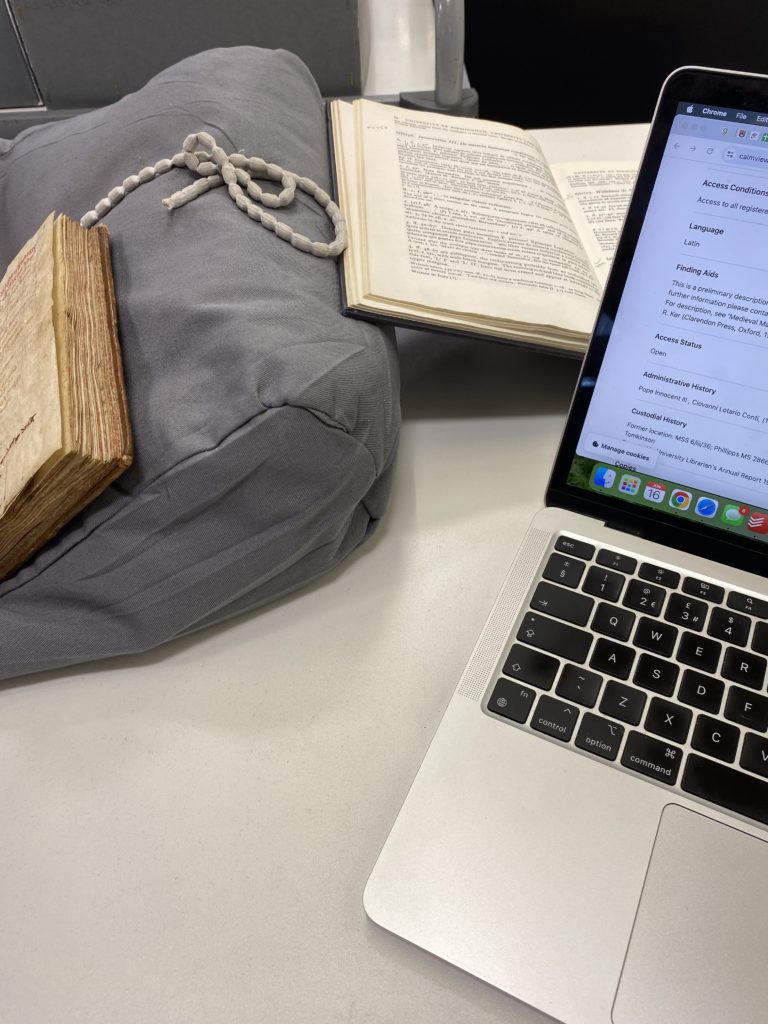
My primary task, during this internship, was to spend time becoming familiar with the collection of medieval manuscripts that the Cadbury Research Library plays host to. From collated sermons to Books of Hours, the sheer range of manuscripts in the archive was wonderful to behold. Each manuscript offers its own distinguishing features, its own signs of use and indications of time passing, with generations of readers each engaging with the same text in different ways. I inputted my findings into a spreadsheet, noting the quiring, evidence of catchwords, or the number of lines on a page. I even had time, following the recommendations of the archivists, to explore some of the early printed material that the Cadbury Research Library holds, which offered a great insight into the continuation of manuscript practice into the printed age.
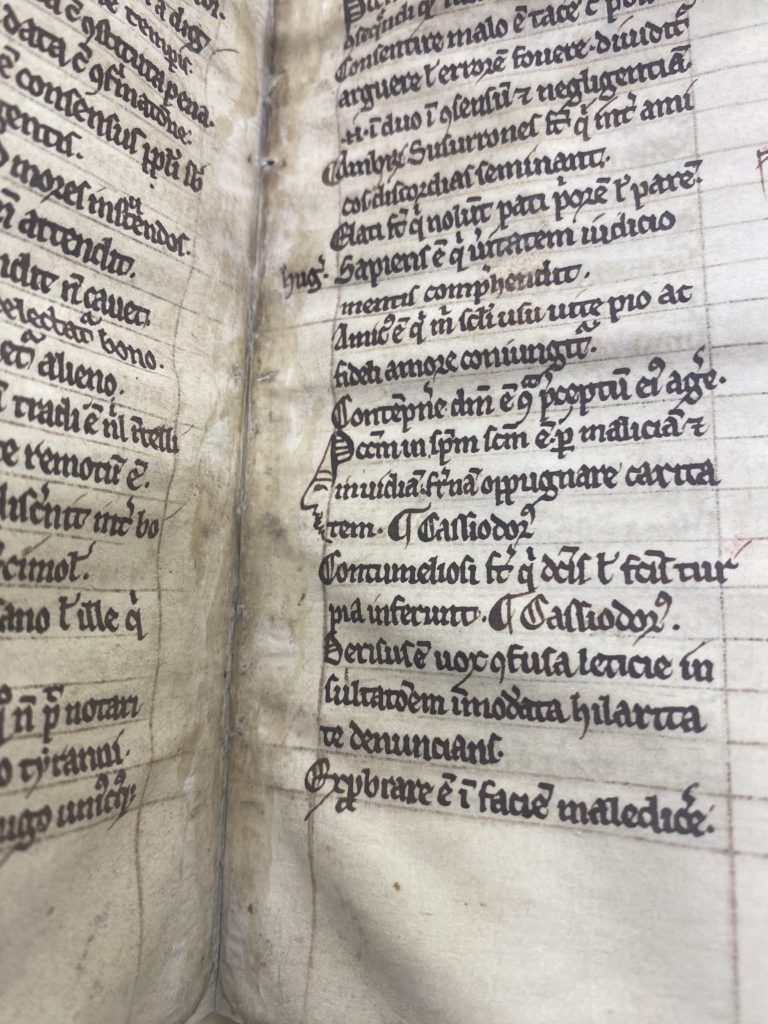
While I have spent time in the Cadbury Research Library before, this experience was incredibly new and insightful in its introduction to the processes of cataloguing, as I attempted to input as much detail as possible about each of the manuscripts. The most richly illuminated manuscripts were my personal favourites, including MS878, a Book of Hours which features eighteen full page illuminations depicting scenes from the Bible, vines and flowers twirling through the margins. In another – MS440 – an unknown hand has added a note in the margin of their Book of Hours, stating, in Latin, that ‘while we have time, let us do good’. Despite being written hundreds of years ago, this thought continues to resonate with us today, a reminder of our connection to the previous owners of these manuscripts.
Thank you, Emily and Liv, for your invaluable support on this project, and throughout my time at university. Taking part in this internship has granted me skills in archival work and cataloguing that will definitely be put into use as I begin my PhD in September. I would wholeheartedly recommend a Collaborative Research Internship to anyone interested in pursuing further education or a career in academia.