
My name is Leila, and I’ve just finished my first year studying French and English Literature. This summer, I had the exciting opportunity to investigate the collection of Golden Age Children’s Literature at Winterbourne House, as part of a Collaborative Research Internship led by Dr Emily Wingfield and Henrietta Lockhart. Working from books dating back to this period (roughly 1865-1926), I was fortunate enough to pursue my own research interests on the theme of gender. I focused on three core, Victorian texts by female novelists – Vera’s Trust by Evelyn Everett Green (1892), The Heroine of Brookleigh by Edith C. Kenyon (1886) and Wuthering Heights by Emily Brontë (1847) – to sample the wider contemporary debates around the dichotomous place of women.
One of the most interesting aspects of this project was working with novels that had fallen out of mainstream publication and scholarly interest – rarely an occurrence in a university English syllabus! For The Heroine of Brookleigh and Vera’s Trust, this meant that there was little to no secondary criticism or information about them online, nor about their authors. Whilst it was sometimes more challenging to build legitimate conclusions from these texts, this made me feel as if I was contributing to really distinctive literary research, with insights into Victorian culture that hadn’t been noticed in this way before. This helped me think about academic projects in more innovative way, and to trust in myself more in the process, which I am looking forward to applying to my work next year and beyond.
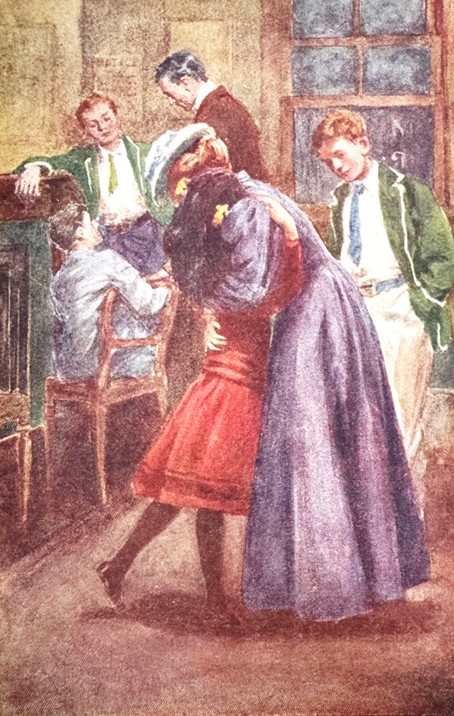
Besides literary content, I also dedicated time to look at illustration. For younger readers, pictures are vital to reinforcing a book’s key, narrative moments, stimulating their imagination and deepening their comprehension and engagement. I found these to reinforce phenomena and dynamics I picked up on in the texts. For example, the illustration below from Vera’s Trust is staged in the aftermath of a harrowing event at sea for the children, and despite some emotion being elucidated from the boys in the text, this image expressly emphasizes traditional female sentimentality and male stalwartness and nonchalance.
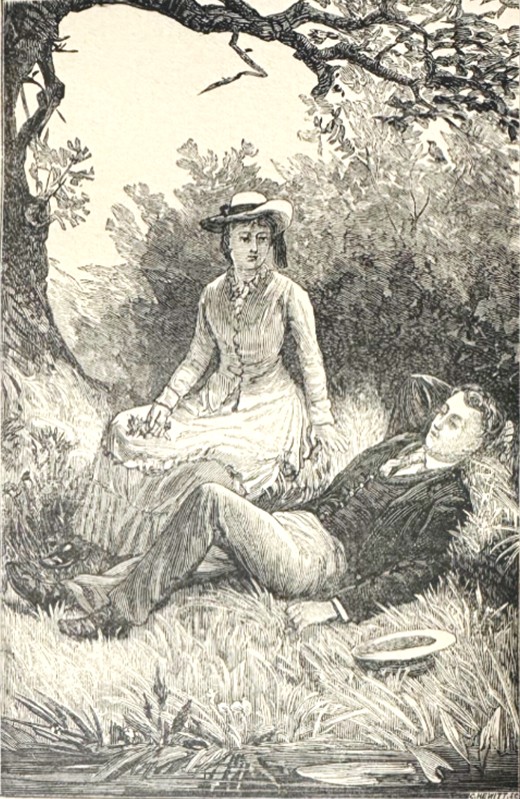
Additionally, this illustration from The Heroine of Brookleigh evinces wider dynamics within the novel, whereby Queenie (the female protagonist) lives on the sidelines to serve and support the realisation of others’ dreams.
Whilst my core focus in this project was on the early Golden Age, I ended it by examining The Girl’s Own Paper for the years 1900 and 1901. Inherently, a magazine offered a more comprehensive array of cultural beliefs, which had of course also progressed from those interwoven into the aforementioned novels. As an English Literature student, I typically focus only on novels, rarely considering other written media beyond secondary criticism. This final element of my internship has definitely diversified my view of what a literature research project can be, especially one geared toward gaining cultural insights.
I would wholeheartedly recommend anyone interested in academia to apply for the CRI programme next year, it is a fantastic opportunity not to be missed!