
Hello, my name is Andreia, and I am doing an MA in International Heritage Management at the University of Birmingham.
When I heard about the opportunity to do a CRI internship, I didn’t think twice. I was very excited. All the internships sounded incredibly interesting, and it was hard to choose the one where I felt I would be the best fit. These are great opportunities to gain or improve new skills, and I’m really glad that the university provides such chances for students.
I chose to work with the Film and Television Archive because I’m a film photography enthusiast, and I also wanted to gain experience in archival work. I wasn’t feeling very confident when I applied, as I don’t have a background in film and I only take pictures as a hobby (and not very well, to be honest!).
The waiting time felt long, and I knew there had been a high number of applications, which left me feeling a bit unmotivated. However, I was happy to find out that I was one of the selected candidates.
Carleigh and Nina were very welcoming. They gave an overview of the archive, explained the work involved, and outlined the challenges currently being faced.
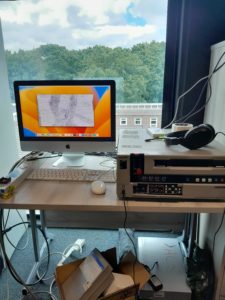
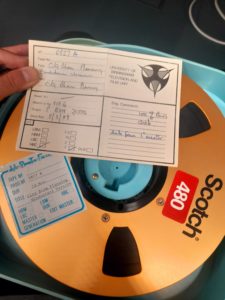
In previous years, interns had already completed some work, and an Excel file was available as a model for adding information about the tapes. This file included the assigned reference codes along with other relevant details such as title, keywords, or any notes found inside the tape boxes. The codes consisted of the date, department, and media format. If a tape didn’t have a clear date, “UK” was used in place of the year.
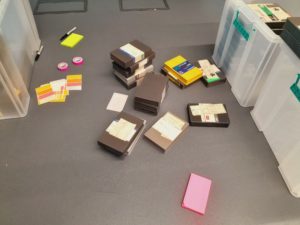
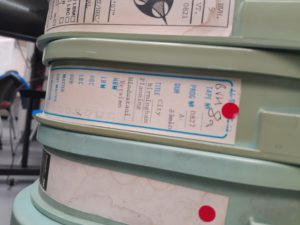
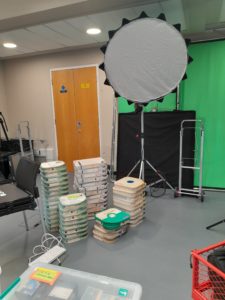
The tapes were temporarily stored in boxes grouped by decade. There were various formats, some of which I wasn’t familiar with or had never seen physically before. That was one of the challenges. I often looked online for more information about the formats and the approximate years they were released, though, of course, that didn’t necessarily mean the video on the tape was recorded at that time.
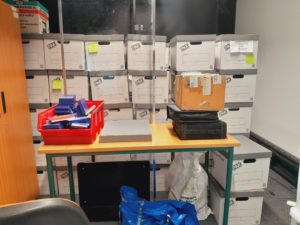
Sometimes, inside the tape boxes, there were brochures or flyers, especially if it was a musical or concert recording. These gave useful clues about the content or date of the material.
Another challenge I faced, and something I think many non-British students working with historical contexts might experience, was feeling a bit disconnected or less knowledgeable about local or national history. That can feel discouraging at times, but I found that online research and reading helped me gain more context and feel more included in the process.
Teamwork also plays a big role in a project like this. It requires clear communication and a good deal of flexibility, especially when working with people who may have different approaches or working styles.
I really hope this archive receives the support it deserves because the information it holds has the potential to be used in cross-disciplinary research. For example, imagine finding a tape about mining, but noticing that only men are shown. That could be interesting for gender studies. Or looking at how AIDS was portrayed in the 1980s. There is real potential for social and cultural insights.
To finish, I’d say this experience offered valuable insight into public history and archiving. I learned how to handle sensitive topics and materials, how archives are organised, and how cataloguing works. Perhaps it will support me in my future career in the heritage field.
Andreia Marujo
MA in International Heritage Management