
Place-based research partnerships are complex ecosystems. They bring together universities, local authorities, community organisations, and businesses to tackle real-world challenges. But complexity needs structure, and that’s where professional standards come in.
Yet standards alone don’t deliver impact. They need people who can translate principles into practice, navigate governance, and build trust across sectors. Enter the PRISMs: Professional Research Investment and Strategy Managers.
Professional Standards: The Framework for Collaboration
The LPIP Hub’s Professional Standards for Place-Based Research Partnerships is working to provide a roadmap for effective collaboration. Setting out expectations for:
- Roles and Responsibilities: Who does what, and how accountability is shared
- Governance and Decision-Making: Structures that enable joint leadership
- Capacity Building: Ensuring all partners have the skills to contribute meaningfully
- Ethics and Integrity: Embedding fairness and transparency at every stage
These standards are essential for partnerships to thrive. But implementing them requires expertise, and that’s where PRISMs make the difference.
Insights from the PRISM Conference: Why This Matters
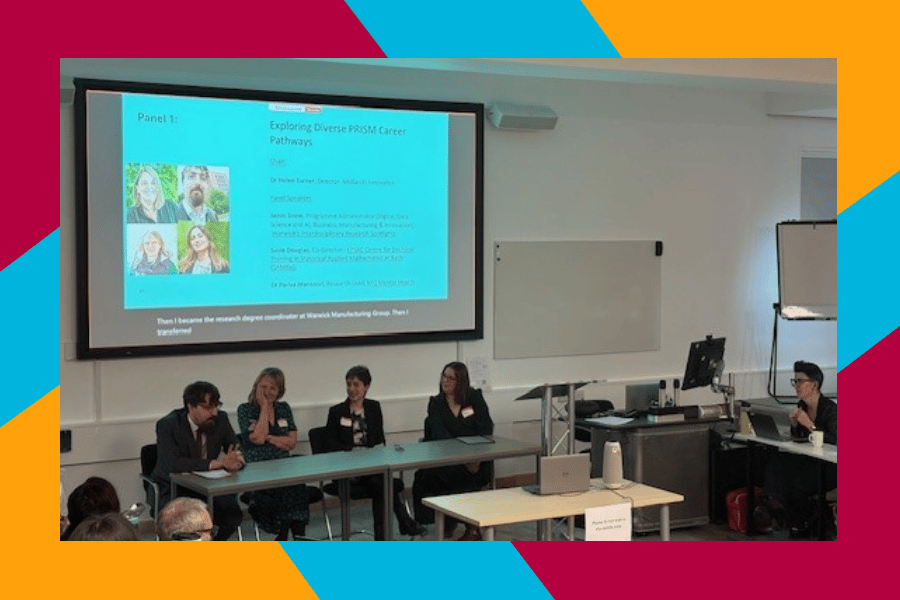
I recently attended the PRISM Network conference, and the sessions reinforced why PRISMs are critical to embedding professional standards.
- Dr Marie Sams’ Reflection on Mosaic Careers
Her powerful message about careers being mosaics, shaped by bright highlights, cracks, and hidden pieces, resonated deeply. Place-based partnerships are similar: they’re built from diverse experiences and contributions. PRISMs help bring these pieces together into a coherent whole, ensuring standards aren’t just aspirational but operational. - Panel on Enablers and Barriers to Progression
We explored challenges such as imposter syndrome, unclear career pathways, and balancing part-time roles with full-time expectations. These barriers mirror what can happen in partnerships without clear standards because both situations create uncertainty, misaligned expectations, and gaps in recognition. When individuals lack clarity about their roles or career progression, they often feel undervalued or unsure of their contribution, just as partners do when collaboration frameworks are vague. In both cases, assumptions fill the gaps, leading to inequity and tension. PRISMs advocate for clarity, equity, and recognition to counter these dynamics, embedding principles that strengthen both individual experiences and partnership practices. - Tanya Liguori’s Session on Reflection and Coaching
Her practical tools for embedding reflection, including micro-reflections, learning logs and mindful transitions, are invaluable for partnership work. Professional standards set the “what”; reflection helps PRISMs deliver the “how,” ensuring continuous improvement and adaptive leadership. - PRISM Strategy for 2026
The strategy’s goals of recognition, job security, and professional development align perfectly with the ambitions of our standards. Both aim to create a research culture that values collaboration, transparency, and sustainability.
Shared Ambitions: Standards and PRISM Roles
Without professional standards, partnerships risk fragmentation. Without PRISMs, standards risk becoming aspirational rather than operational. When both are embedded, we see:
- Better governance: Decisions made collaboratively and transparently
- Stronger relationships: Trust built through clear roles and shared accountability
- Greater impact: Research that reflects local priorities and delivers real-world change
Looking Ahead
Professional standards give partnerships a roadmap. PRISMs make sure we reach the destination. By embedding both into research culture, we can build collaborations that are robust, inclusive, and impactful.
This blog was written by Elizabeth Goodyear, Programme Manager at City-REDI, University of Birmingham.
Find out more about the Local Policy Innovation Partnership Hub.
Disclaimer:
The views expressed in this analysis post are those of the authors and not necessarily those of City-REDI or the University of Birmingham.