
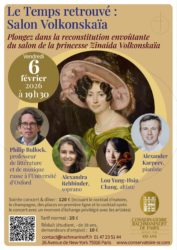
On 6 February 2026, in the elegant surroundings of the Conservatoire Rachmaninoff in Paris, the past felt startlingly close. Le Temps retrouvé: Salon Volkonskaïa was not simply a concert, but a carefully crafted reanimation of an early nineteenth-century world: the salon of Princess Zinaida Volkonskaya — writer, composer, singer, intellectual and one of the most … Continue reading “Le Temps retrouvé: Reanimating Princess Zinaida Volkonskaya’s Salon in Paris”
Reflections on Boris Godunov at the Royal Opera House
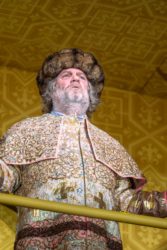
Attending Boris Godunov at the Royal Opera House in February 2026 felt less like witnessing a revived production and more like undergoing a prolonged psychological examination. This staging presented Mussorgsky’s original 1869 version, performed without an interval or the later additions that softened or expanded the opera’s architecture. The result was an uncompromising, concentrated experience … Continue reading “Reflections on Boris Godunov at the Royal Opera House”
UoB Research Students Take the Stage at the BFE/RMA Research Students’ Conference 2026
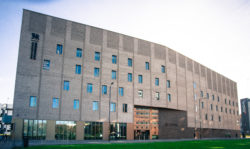
In early January 2026, Birmingham became a vibrant meeting point for emerging music scholars and creative practitioners, as the British Forum for Ethnomusicology and the Royal Musical Association welcomed researchers from across the UK and beyond for the BFE/RMA Research Students’ Conference (6–8 January 2026). Hosted at Royal Birmingham Conservatoire, the three-day event offered an … Continue reading “UoB Research Students Take the Stage at the BFE/RMA Research Students’ Conference 2026”
Princess Zinaida Volkonskaya’s Romanesque estate: a cultural paradise in 19th-century Europe
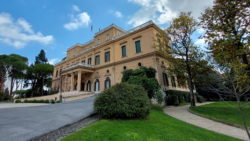
Princess Zinaida Alexandrovna Volkonskaya (1789–1862) is a prominent figure in early 19th-century Russian cultural history, known not only for her talent as a singer and composer but also for her role as a salon hostess and patron of the arts. After many years of active cultural activity in Russia and Europe, Volkonskaya finally settled in … Continue reading “Princess Zinaida Volkonskaya’s Romanesque estate: a cultural paradise in 19th-century Europe”
Women, Archives and Forgotten Legacies: SEEM Conference Illuminates Eastern European Musical Voices
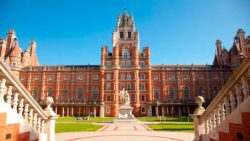
On 25 October, scholars from across Europe gathered at Senate House in London for the annual conference of the Study Group for Slavonic and East European Music (SEEM), held under the auspices of BASEES. The study day offered a compelling glimpse into the rich and often overlooked musical cultures of Eastern Europe, with a particular … Continue reading “Women, Archives and Forgotten Legacies: SEEM Conference Illuminates Eastern European Musical Voices”
Rossini in Love: Passion, Voice, and the Art of Bel Canto
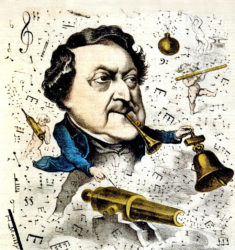
In September 1815, Italy’s most influential impresario, Domenico Barbaja, summoned the young Gioachino Rossini to Naples with a mission: This audience needs to be stunned! There are no subtleties—only No tenderness— only boiling passion. No nuances—sing at full power. And with that command, Barbaja offered a final suggestion: “I recommend Isabella Colbran to you.” There … Continue reading “Rossini in Love: Passion, Voice, and the Art of Bel Canto”
Intimate Space in Classical Music
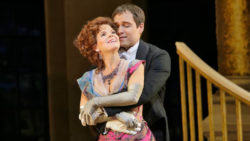
What does it mean for music to be intimate? Is it a matter of small form, quiet volume, or introspective content? Or is it something more elusive — an atmosphere, a feeling of being allowed into someone’s emotional world? Romanticism ushered in a new focus on subjectivity and introspection. Unlike literature, where intimacy could be … Continue reading “Intimate Space in Classical Music”
The Expansive Canvas: Rethinking Large-Scale Form in the Music of 19th-Century Women Composers

Between 25–28 August 2025, Dublin became the stage for one of the most important gatherings in current musicological research: The Expansive Canvas: Large-Scale Form in the Music of 19th-Century Women Composers. Co-hosted by Trinity College Dublin and the Royal Irish Academy of Music, the conference brought together scholars, performers, educators, and industry leaders to examine … Continue reading “The Expansive Canvas: Rethinking Large-Scale Form in the Music of 19th-Century Women Composers”
Reimagining Nineteenth-Century Music: Reflections from York
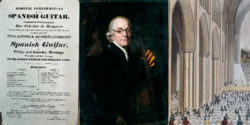
At the end of July, the University of York played host to the 14th Biennial International Conference on Music in Nineteenth-Century Britain — an event that has become a highlight in the calendar for anyone working in this field. I was delighted to attend this year not only as a delegate but also as a … Continue reading “Reimagining Nineteenth-Century Music: Reflections from York”
Clementi House: London’s Hidden Salon of Musical Legends

Nestled on Kensington Church Street in west London, 128 Kensington Church Street—the Georgian townhome once belonging to Muzio Clementi (1752–1832)—is a remarkable living tribute to one of music history’s unsung innovators. Known as the ‘Father of the Pianoforte’ Clementi composed, taught, and built his name here between roughly 1811 and 1824. Today, the house remains … Continue reading “Clementi House: London’s Hidden Salon of Musical Legends”