
‘What is so special about student publications (SP)? Who writes them and who reads them? Can’t we just read news from the BBC and The Guardian?’ These are some of questions that I researched with my supervisor Dr Tom Cutterham during my Collaborative Research Internship (CRI). Read on to find out more!
Introduction to Campus Journalism
Campus journalism has a long legacy of representing students and staff at universities around the world since the late 1800s. The University of Birmingham’s own SP Redbrick has been reporting on a multitude of topics since its establishment in 1936 including: life on campus, issues with university services, lecturer strikes, disputes with landlords, local crime and safety, national politics and international affairs.
But campus journalism isn’t just about investigative stories! Food, music, sport, celebrities, reviews etc. are also important elements of an SP. And of course, being a student journalist is an incredible and fun experience that also develops key employability skills.
So, as you can tell, certain topics are best understood and reported by university students rather than external journalists – which is why campus journalism is important. If you are curious, I highly recommend you take a look at the Redbrick archives! They could end up inspiring another interesting research project like this one…
Step 1: Identify the Challenges
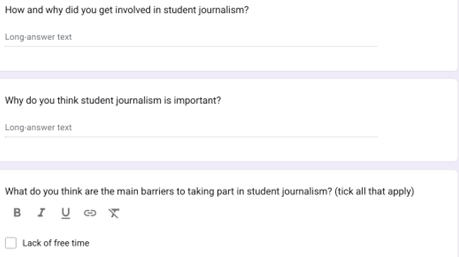
My initial task for this CRI was to find out why so many SPs in the UK have been at risk of closing down in the past few years despite the importance they hold in university life. To do so, I surveyed many SPs and interviewed student journalists and the Student Publication Association (SPA) with my supervisor. Talking to them helped us identify the main challenges campus journalism is facing, and it was great to see how passionate they are about campus journalism!
Step 2: Literature Review and Archival Work
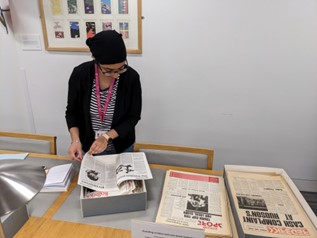
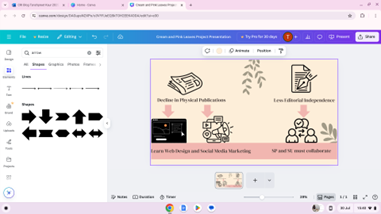
Afterwards, I did a literature review and archival work at the Cadbury Research Library to learn about the origins of student journalism and how it has evolved over the decades. I have summarised the two of the biggest changes and realistic ways to tackle them in the Canva infographic below.
Step 3: Output
All this research is feeding into a policy report my supervisor and I are writing to recommend ways in which student journalists, student unions (SU), universities and the SPA could help sustain campus journalism. The focus is on obtaining consistent funding options and defining the relationship between SUs and SPs through a contract.
We hope that this research will enable campus journalism to represent the values and interests of university communities for a long time to come. Thank you for reading this blog and good luck with your CRI application!