PPROTEX has been busy for the last few months! In February, we took part in a summit of biocodicology projects in Cambridge, organised by Professor Matthew Collins. As biocodicology is a new discipline, it was fascinating to see how experts from very different disciplinary backgrounds came together to speak a common language. The development of common standards and protocols for data composition and handling is a very important exercise.
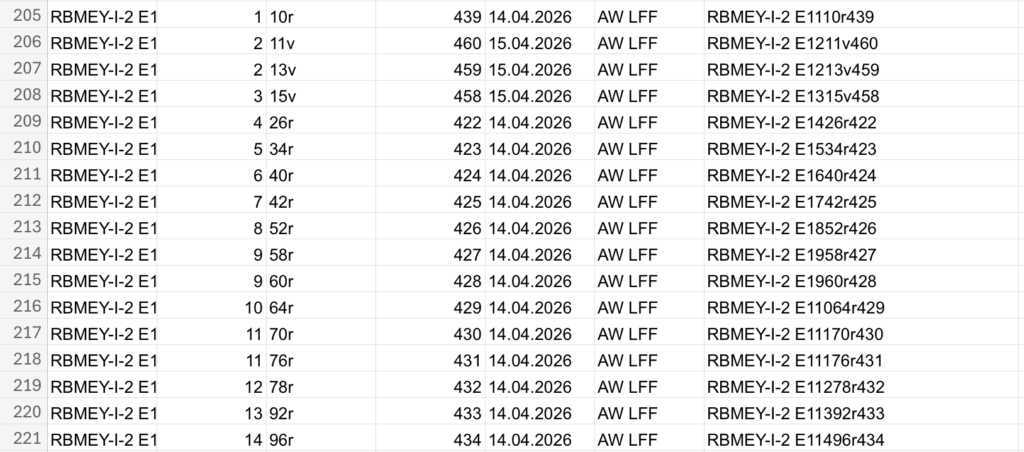
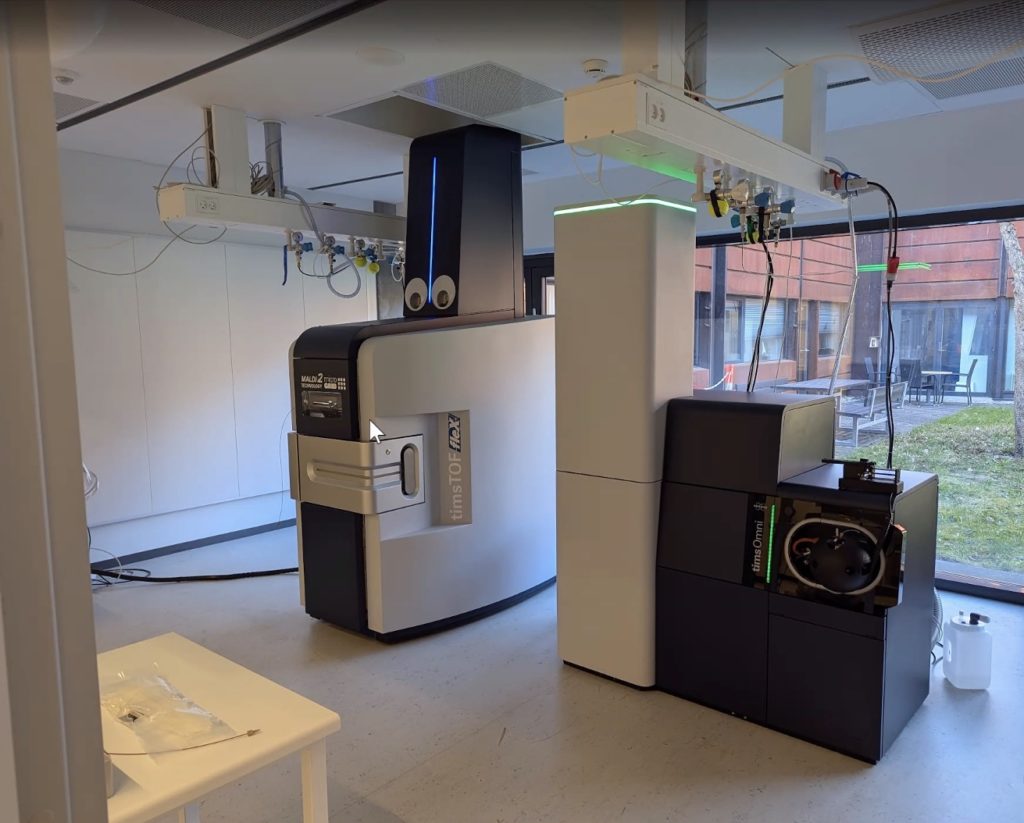
PPROTEX uses a form of data recording which is based on the system developed by Professor Jo Story for the INSULAR project. It has been an interesting exercise to think through the categories of data which will be of use to us in future, and how best to organise these. One of the agreements of the Cambridge summit was to develop protocols for recording data – in the near future all samples will be barcoded and photographed in situ, thus creating a single way of associating data and manuscript across all projects. In PPROTEX, we have numbered (in advance) all of the Eppendorf sample tubes. Our unique numbers for samples (in the final column below) are rational and readily interpretable by a human, as they are made up of the library/manuscript reference, the quire number, the folio number and the number of the Eppendorf tube. Bespoke solutions like this are very useful in the context of an individual project, and of course, we are only dealing with about 500 samples, so this is not especially complex – but it is easy to see how inconsistencies can arise – for instance, not all of the references are the same length, it is easy to introduce whitespaces when doing this manually etc. But when dealing with a much greater number of samples, and from different projects, such bespoke solutions are not a good idea, and our samples will be barcoded when they are processed in Copenhagen to be sent through the impressive-looking machine below anyway. Perhaps the most interesting element of all of this was to see how we each think of data in our own disciplines in the first place, and how we can develop a common language to make sure we are all talking about the same thing!
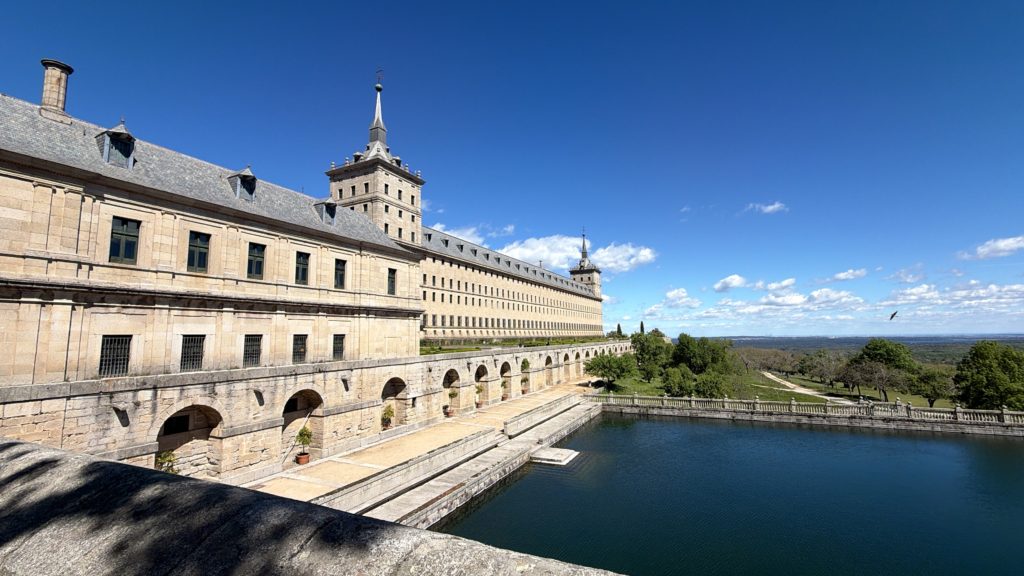
We were then back in Spain to collect more non-invasive samples from the corpus of Alfonsine manuscripts – this time to the Real Monasterio de San Lorenzo de El Escorial where we were able to examine all 7 scriptorium manuscripts. We are espcially grateful to Laura Fernández Fernández of the Universidad Complutense de Madrid and to the Director José María del Valle, as well as to Jaime Sepulcre Samper, Paz Fernández Rodríguez and all at the Library for the extraordinarily warm welcome and open spirit of collaboration. The RBME is a wonderful place to work and it is always a privilege to be there.
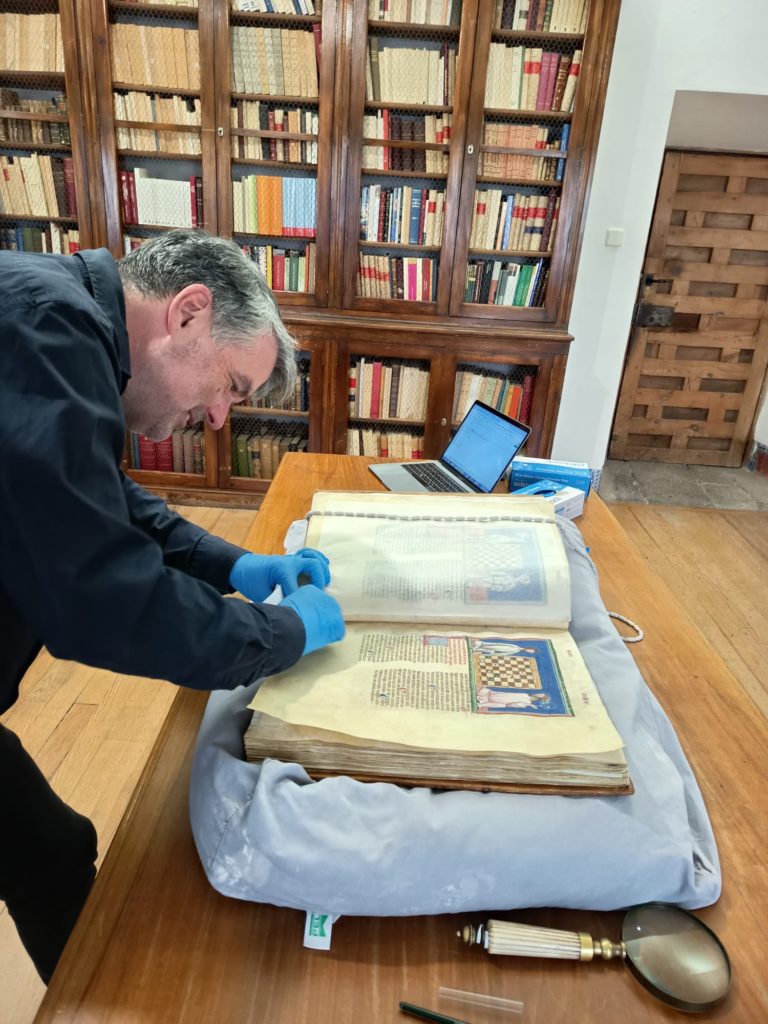
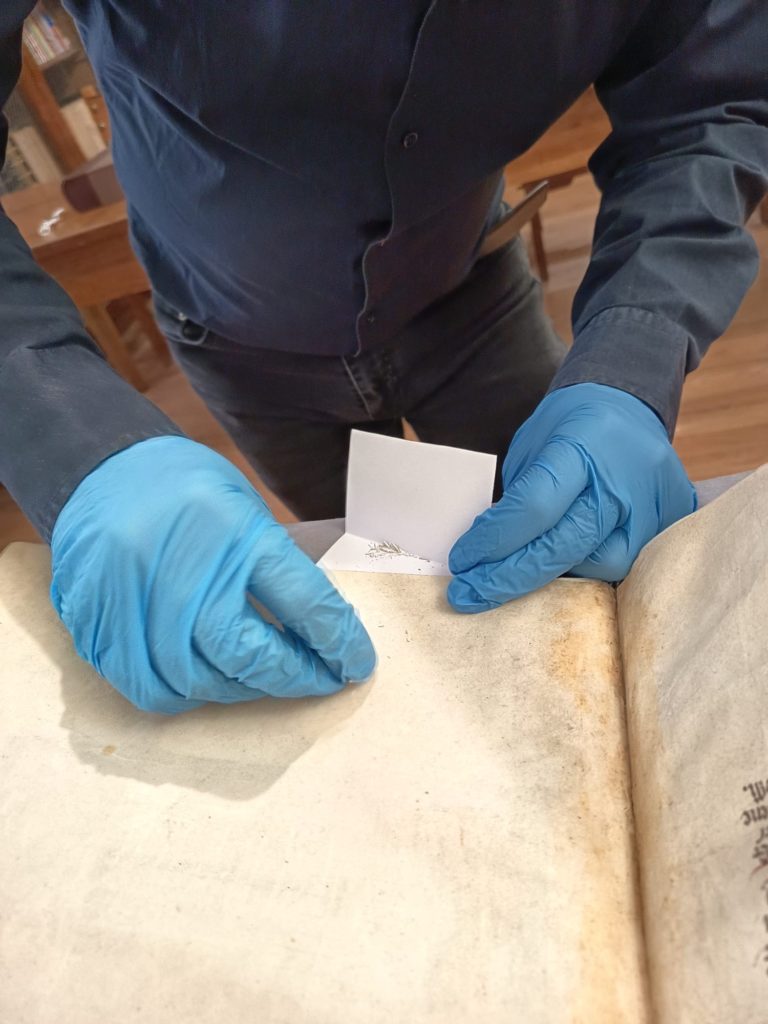
We have now collected a total of 373 samples across the entire corpus. The proteomic analysis will take place soon in Denmark (thank you Vacek, Zandra, Laura and Matthew) and then the results will be processed by the amazing Yun Chiang. We may also be able to conduct genomic analysis on about 34 of these. Proteins can tell us about the species (hence the picture of the merino sheep…) and the quality of the parchment (PQI) but DNA can tell us additional things about the animals (sex, grade of relationship for example). So this is now an exciting time as we wait for the data to come in and be processed.
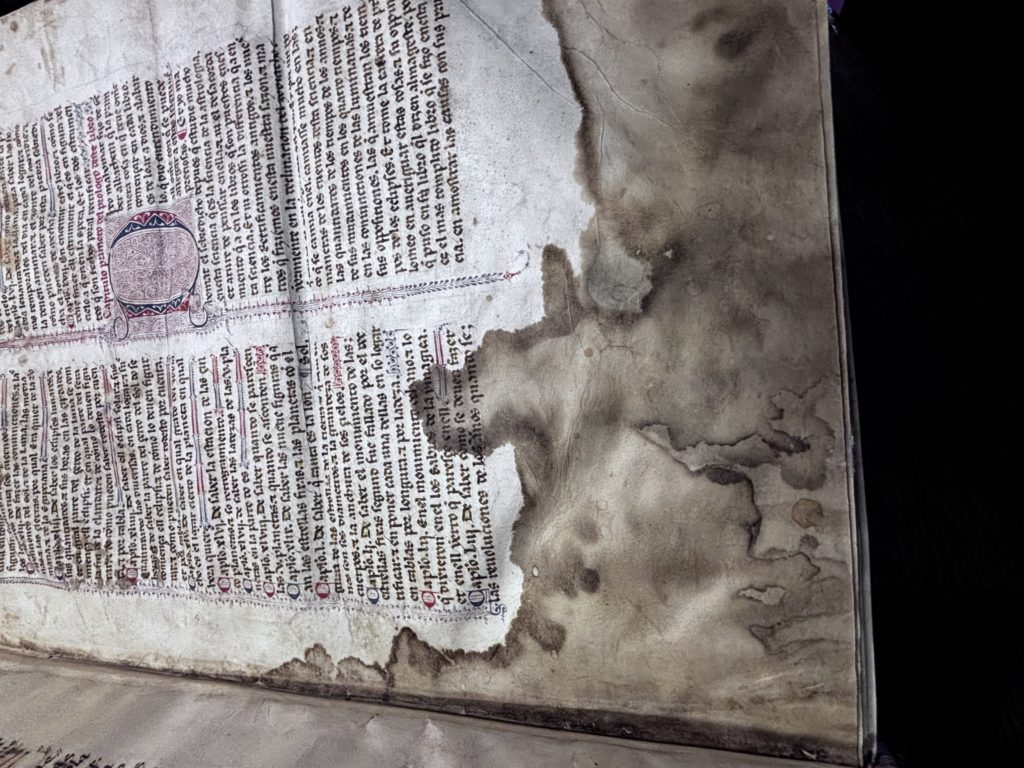
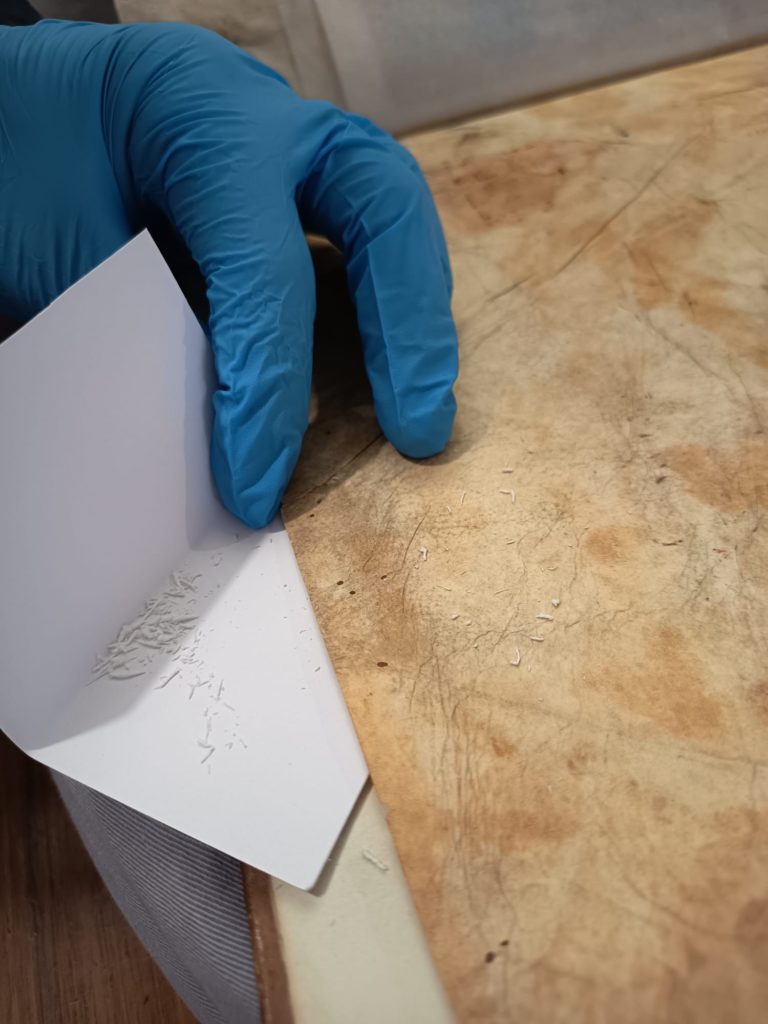
In addition to the Alfonsine manuscripts, and thanks to the initiative of Luz Díaz Galán, we also examined BNE 10131/10134, which are examples of Fernández de Heredia’s Grant Crónica de Espayña. These codices were not in the original research proposal, although of course they use Alfonsine texts as a source. As they were probably composed in Avignon, it is likely that they are calfskin, rather than sheepskin parchment. As you might be able to see from the image, in places they are damaged, probably by water, and so it is of great interest to the conservators in the BNE how the chemical composition of the manuscript might have changed as a result of this – we would hope to have some idea of this from the PQI (Parchment Glutamine Index – also known as Parchment Quality Index). If we can detect useful differences, then it may help the conservators in thinking about how best to treat (in both senses) the manuscript in future. This additional element of the research is one of the best indications of how research practice can add to our knowledge in unanticipated ways.