
By Jack Blyth and Jamie Kyte
Over the past year, I have worked as an Academy Match Analyst at Stoke City Football Club while completing my final year of undergraduate studies. Throughout university, I explored various volunteering roles within football to find my niche, and was drawn to Performance Analysis (PA), particularly its use of both subjective and objective data to inform feedback.
The opportunity to work in a Category One academy provided the perfect platform to launch my career in the industry and build a solid foundation of knowledge and skills. It was essential for me to familiarise myself with the dynamics and complexities of professional football, as well as the inner workings of regular Performance Analysis practices within the academy setting. Aware that I still had much to learn, I shifted my perspective, viewing the role not just as a job, but as a valuable learning opportunity to further my own development, rather than simply assisting the football club.
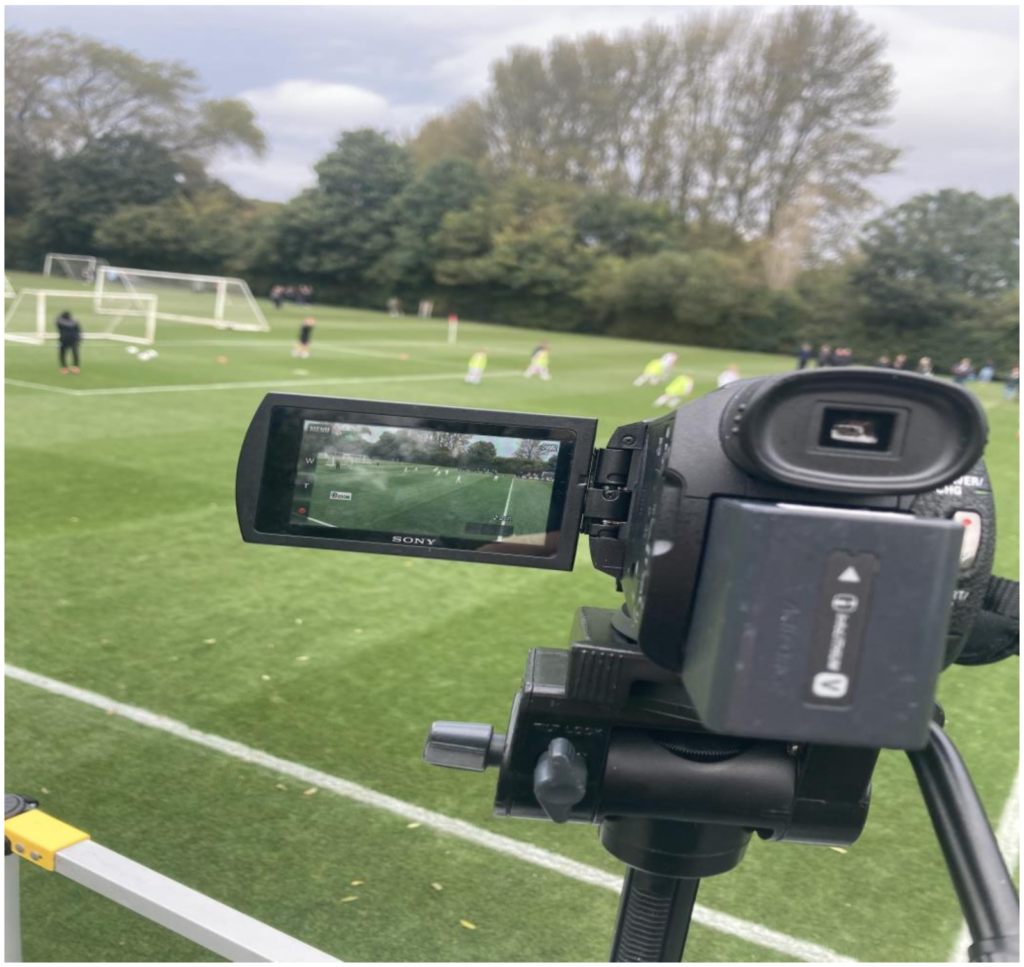
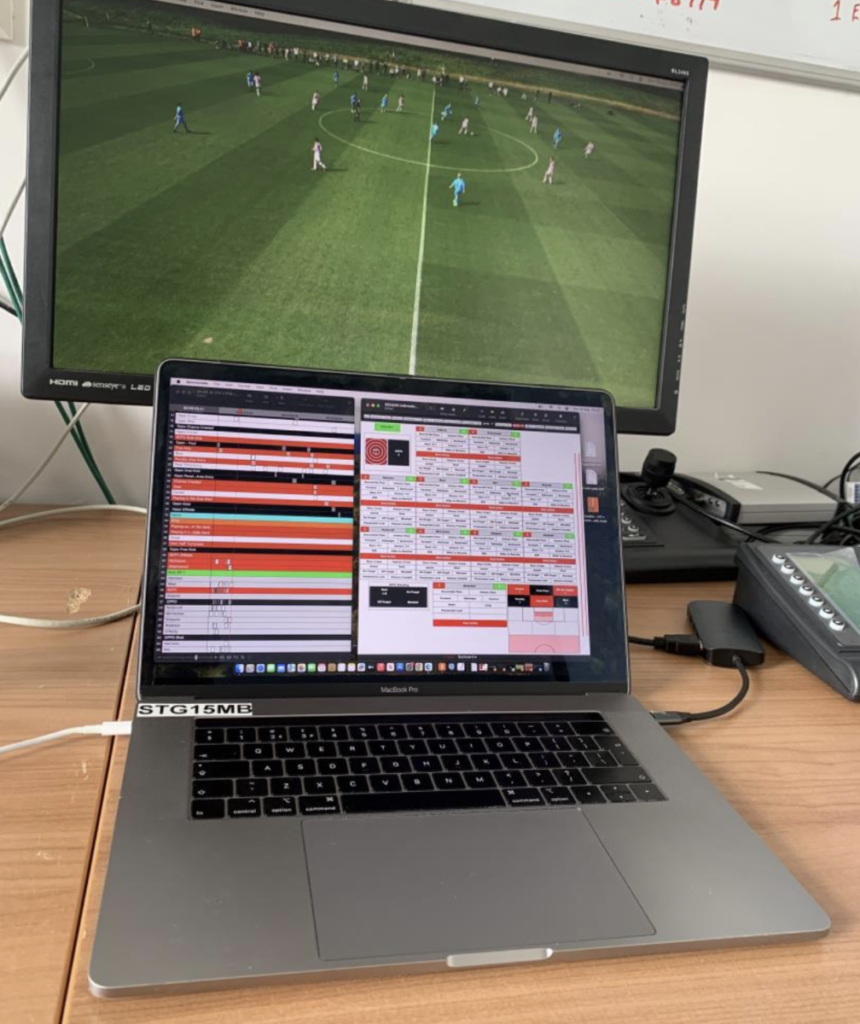
My role at the club involved supporting the filming and post/live coding of academy matches, as well as collecting best practice clips for analysis presentations. The academy’s analysis procedures are carried out using Hudl Sportscode, which requires proficiency with Apple Mac products. This presented a challenge, as I had never used a MacBook before, but I was eager to learn and quickly became competent.
Juggling Work and Final Year Studies
The biggest challenge I faced this year was balancing the demands of my degree, coaching the university’s 1s football team, and working at SCFC. Each commitment was vital for developing the skills and experience necessary for a full-time career in professional football, so I was determined to make it all work, despite the risk of burnout.
Maintaining a focus on my long-term goal kept me motivated and driven to perform consistently across all three roles. A key factor in managing my workload was the ability to combine these experiences to cover multiple areas at once. For instance, I used my university dissertation to investigate the effectiveness of Performance Analysis at Stoke City’s Academy, allowing me to complete my major degree project while also building rapport with players and coaches at the football club. Cultivating meaningful relationships in the sport is essential, and I made a deliberate effort to learn from, and exchange ideas with, more experienced individuals in the field; I was constructing knowledge from others, helping me grow my skillset and better my understanding of the discipline and its processes.
I have had to sacrifice personal time to ensure I fully commit to my responsibilities without compromising the quality of my work. I carefully plan each week’s tasks in writing, focusing on maintaining a consistent routine across all three areas. This list would be in order of priority, so I can focus on completing areas with most importance first. This consistency throughout the year has helped me develop strong time-management skills and work more efficiently to meet tight deadlines, without any overwhelming pressure.
Drawing from Previous Experiences
What helped me navigate the world of professional sport were the experiences I had previously engaged in. They gradually guiding me toward the field of Performance Analysis. My experience coaching children in schools since 2020 helped me adapt my communication style to suit players of different age groups, I could draw upon this skill while working across U9s-U16s at Stoke City. Likewise, I was able to build on my strong foundation of football knowledge, developed over 15 years as a player in both youth and early adult football. These experiences prepared me for the competitive industry of sport, teaching me valuable lessons of adaptability, resilience and leadership.

Key Takeaways
I have learned countless lessons from working in professional sport while completing my final year of university. One of the most important shifts was in perspective—viewing my role at SCFC not just as a demanding job, but as a learning opportunity. This mindset gave me the motivation to show up each week, ready to grow. Being open to learning from others was essential. I significantly improved my IT skills, particularly with Mac systems and Hudl Sportscode, learning how to navigate complex code windows and workflows. The chance to develop in both a professional and academic environment allowed me to build a broad skill set. While university sharpened my critical thinking, time management, and attention to detail, the workplace experience strengthened my practical, technical, and interpersonal abilities.
Advice for Others Taking a Similar Path
My biggest advice to anyone taking a similar path is to lean into discomfort. Growth often comes from the moments that stretch you the most. Remember, you’re there to develop yourself—so manage expectations, embrace mistakes, and stay open to feedback. Keep track of the skills you gain, and the knowledge shared by others. It’s a great reminder that you are making progress, even when it feels tough. You’re at the beginning of a long journey. Trust that you’re moving in the right direction and commit to it fully.
Comment from Jamie Kyte – Applied Sport Scientist in PA:
Jack is a brilliant example of how being proactive during your university journey can set you up for success in the industry. He’s consistently demonstrated a willingness to go above and beyond, putting in the maximum effort at every stage. His dedication to learning, improving his skills, and seeking out meaningful opportunities has truly paid off. Jack’s ability to integrate his academic and practical experiences is a testament to the benefits of an active, determined approach to both education and career development. I wish him all the best as he moves on to his next experience at Nottingham Forest FC as part of his master’s in Performance Analysis.

J.L.Kyte@bham.ac.uk