
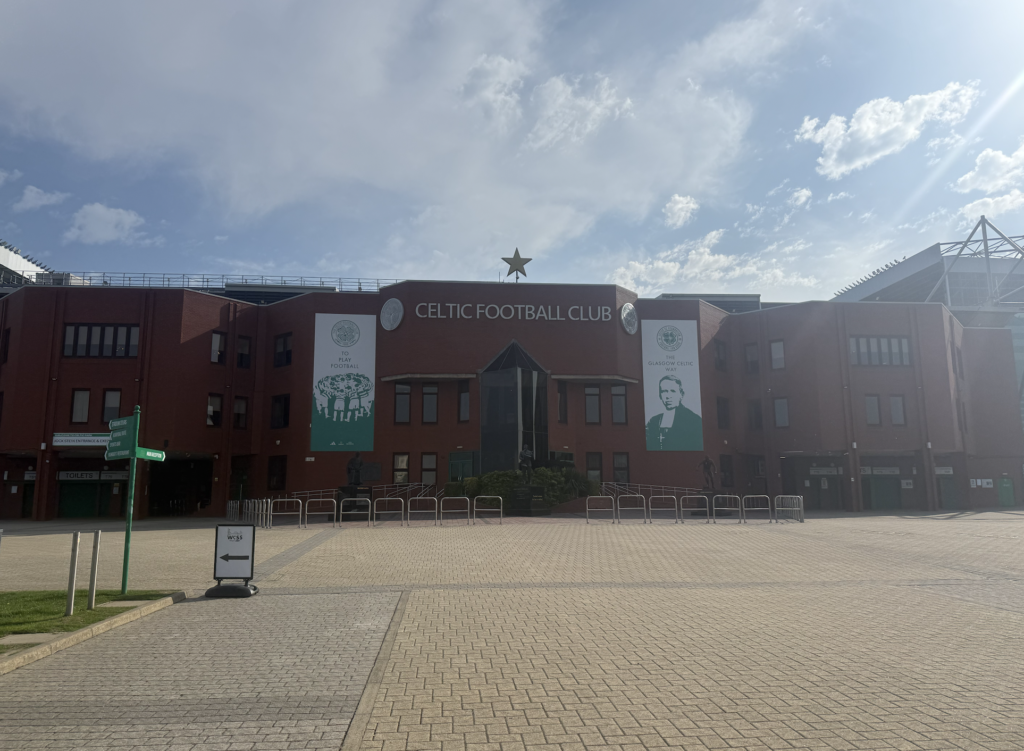
Last month, I had the privilege of attending the World Congress of Science and Soccer (WCSS) 2025 in Glasgow, representing the GSSPP and the University of Birmingham alongside Professor Barry Drust. The Congress was held at Ibrox and Celtic park, 2 of the worlds most prestigious football stadiums and brought together academics, practitioners, and industry leaders from across the globe, who’re all focused on one shared goal: advancing our understanding of football through applied research.

One of the true highlights of the Congress for me was seeing five of our PhD students from the University of Birmingham who are all embedded within professional football clubs present their research. Each presentation demonstrated both the depth of their work and the relevance of their topics to the current needs of the professional game:
- Michael Cornes (Norwich City FC) presented his work on understanding recovery strategies in professional football, offering new insights into how players recover between matches and training sessions.
- Amy Gore (Nottingham Forest FC) explored the transitions between age groups within professional sport an area crucial for managing talent development and athlete well-being.
- Lauren Horner (Nottingham Forest FC) showcased innovative approaches to analysing data within professional football, pushing the boundaries of how we understand performance through analytics.
- Finn Wood (Nottingham Forest FC) shared his investigation into players perceptions of strength and conditioning perceptions in elite professional football.
- Sean Groom (Nottingham Forest FC) shared some of his investigation into defensive performance in the English Premier League, helping to unravel the complexities of team defending at the highest level.
Each of them did a fantastic job representing the University and demonstrated how our research is contributing meaningfully to the sport science community. It was a proud moment to witness the next generation of football researchers taking centre stage and generating discussions that will no doubt shape future practices.
Looking ahead, we’re already excited for what Liverpool will bring in 2027. With new research projects on the horizon and a continued commitment to applied science, the University of Birmingham will be ready to contribute once again to this global gathering of football minds.

L.Anderson.4@bham.ac.uk