
By Lauren Horner (Physical Performance Coach and PhD Student @ Nottingham Forest FC)

Photo credit: Nottingham Forest FC
In September 2024, I took a leap straight from an undergraduate degree to the more ‘chaotic’ world of research in professional football. Not the most natural route for academic progression but having spent most of my university years volunteering in different sporting environments, I knew this was an opportunity too good to miss out on.
When I first began my role as a PhD student working with the physical performance team, my primary focus was to understand my new environment and the people in it.
It was important for me to get a feel for the dynamics of the professional football setting and figure out how I could make an impact all whilst keeping up with the demands of research. It’s a contrast that presents its own set of challenges, but also a unique opportunity to find balance, build relationships, and learn how to manage both your time and emotions appropriately.
One thing that made it easier to balance both worlds was the fact that my role as a PhD student was officially part of my job title. This made it much simpler to justify setting aside time during the workday for my research. Everyone understood that my role wasn’t just about supporting the performance team but also advancing the club’s knowledge through my academic work.

Photo credit: Nottingham Forest FC
Transitioning to Full-Time Staff
When I was presented with the opportunity to take on a full-time position as a Physical Performance Coach at the start of the 2024-25 season, my mindset shifted slightly. While my PhD still held significance, it was no longer one of my main priorities; it instead became something more of a responsibility. It’s now down to me to keep my research moving forward without taking too much focus away from the importance of my day-to-day work at the club. This means setting my own deadlines, ensuring progress, and making sure that key stakeholders are kept in the loop with my work behind the scenes.
I’ve found that I’ve become much more dependent on the relationships I have built with my colleagues. A supportive team is essential when you’re working in such a high-pressure, fast-paced world. With so many things demanding your time, it’s crucial to have a core group of people who understand the importance of what you’re doing and are willing to help make it happen. Collaboration and mutual support have become key to managing my workload and ensuring I can keep both my professional responsibilities and research moving forward.
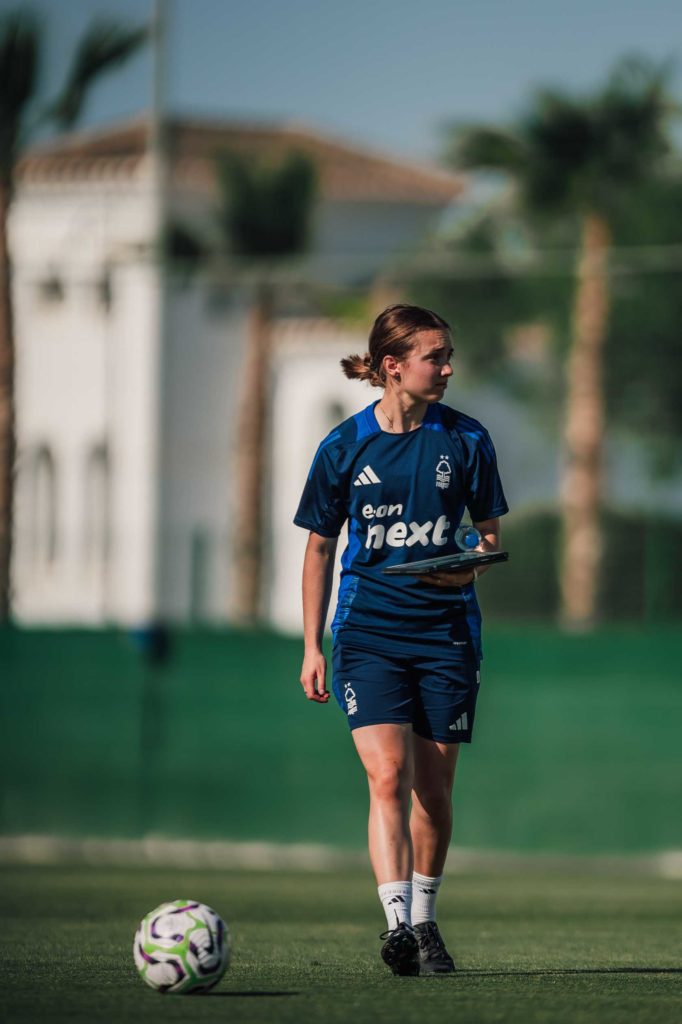
Photo credit: Nottingham Forest FC
Utilising Previous Experiences
I’m fortunate to have had placements and voluntary work alongside my previous university studies, which have prepared me for the world I now find myself in. These experiences gave me a solid foundation for balancing work and research, teaching me valuable lessons in time management, adaptability, and resilience. Despite these preparations, however, there are still times when balancing it all feels overwhelming. To make it work, I’ve had to accept that I may need to sacrifice some of my personal time and become more intentional about how I plan my research tasks. The reality is that there will be moments when the PhD work doesn’t flow as easily as expected, and time dedicated to it won’t always be as productive as planned. But rather than trying to put aside large chunks of time for concentrated work, I’ve found that small, consistent efforts often generate better results. It’s better to tackle tasks in smaller, manageable pieces and steadily make progress than to sit staring at a screen, waiting for inspiration to strike.
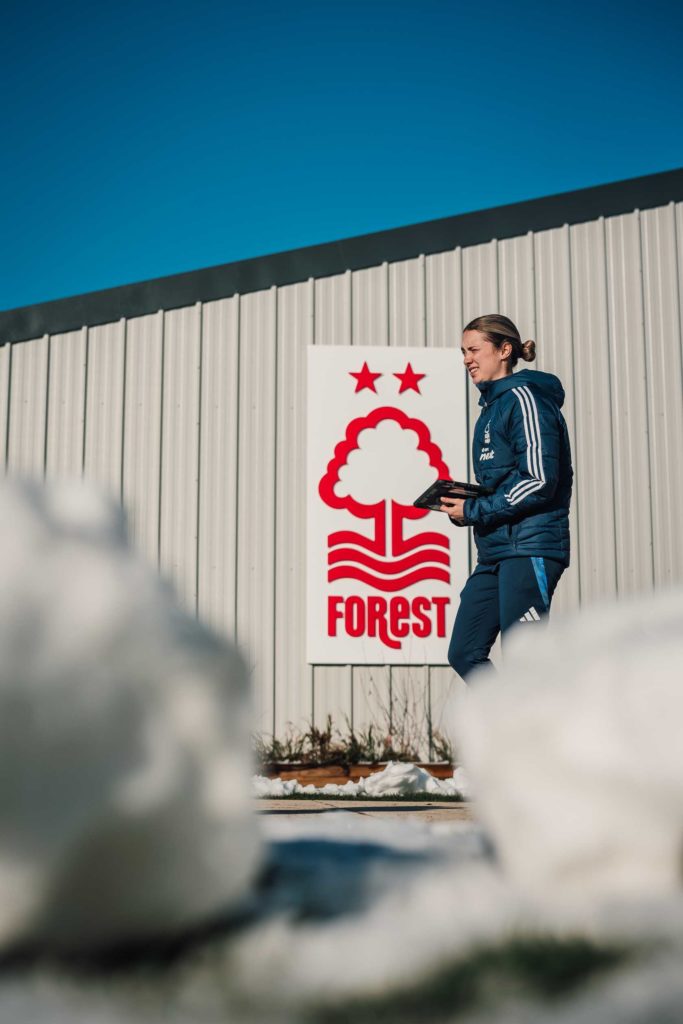
Photo credit: Nottingham Forest FC
Key Takeaways
I’ve learned a few lessons transitioning from an undergraduate degree to a full-time position within professional football. Most importantly, I’ve learned how to balance the demands of research and work, even when both worlds seem to be pulling you in different directions. This balance doesn’t have to be perfect—sometimes, the PhD work will take a backseat, and that’s okay. The ability to adapt, stay organised, and lean on the support of others is important to keep progressing in such a dynamic environment. I’m a big believer that this support is only possible if you’re willing to ‘leave your ego at the door’ and stay open minded in both roles.
For anyone thinking of taking a similar path, remember it’s all about finding your own rhythm, managing expectations, and being comfortable with the fact that things will rarely go as planned. The journey of a PhD can be overwhelming at times, but it’s a rewarding process of learning, growing, as both a practitioner and individual, all whilst contributing to the field of research in football. Keep moving forward, no matter how small the steps might seem, and things will get done.

L.Anderson.4@bham.ac.uk