
In the first of a series of blogs looking at place leadership, Jamie Ounan and Abigail Taylor explore why understanding and supporting the often-invisible leaders shaping England’s towns, cities and regions is more important than ever in a new era of devolution and place-based governance.
As part of the Local Policy Innovation Partnerships (LPIP) research programme, we have been looking into Place Leadership as a role, as a skillset, as a vital capacity for our places to change and evolve to meet local needs and respond to global shifts. As Andy Burnham prepares to make the transition from Mayor of Greater Manchester to Prime Minister, the whole of Britain finds itself talking about place leadership.
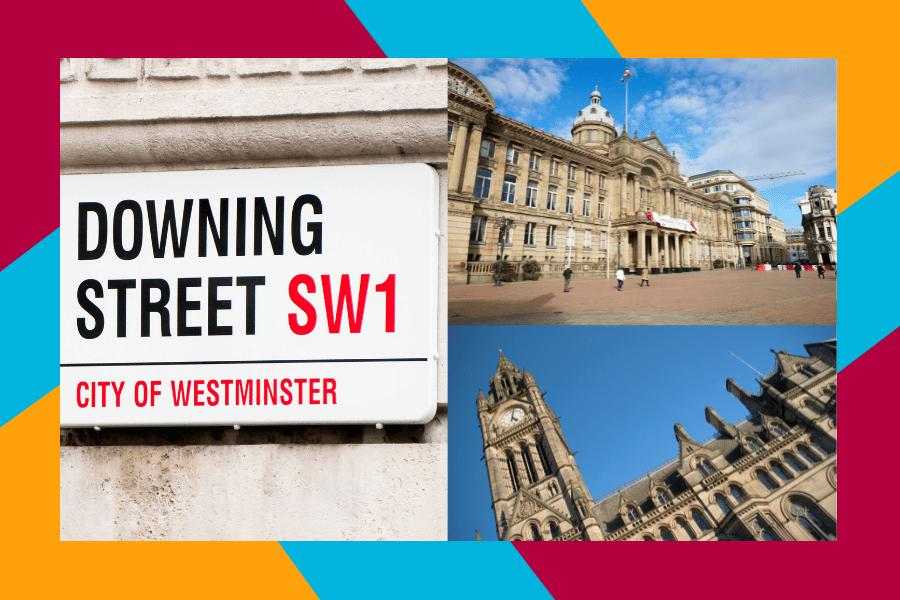
At the LPIP Hub, we can and have learned from abroad. But we can also learn from familiar stories close to home. Arguably the founder of the University of Birmingham, Joseph Chamberlain was an example of a place-based leader transition to head of state. With it, he expanded his social municipalism model to transform our country, our cities and towns. Before entering Downing Street, Boris Johnson used London’s directly elected mayoralty as a platform to promote investment in London through boosterist projects like the Olympic Games, which has left a long legacy thanks to its inclusive growth-led legacy plans. During his premiership, “levelling up” sought to harness the power of places to reduce regional inequalities, although its impact ultimately fell short of its ambition.
The Rise of England’s Mayoral Model
Now, attention turns once again to what successful place leadership can achieve. The rise of directly elected mayors is changing the landscape of public leadership in England. It’s a tried-and-tested model of governance borrowed from Europe, the US and South American cities. Over the past decade, several of England’s mayors have become powerful advocates for their cities and regions, securing investment, shaping transport systems, attracting business, leading regeneration and giving places a stronger national voice. Evidence strongly suggests that devolved leadership improves decision-making, strengthens local accountability and enables policies that are better tailored to local economies and communities.
The Invisible Leaders Behind Successful Places
Our understanding of place leadership shouldn’t stop with the politicians we see on our television screens. Behind every successful mayor or council leader sits a much broader ecosystem of leaders working across local government, the NHS, universities, business, policing, housing, culture and the voluntary sector. These leaders rarely appear in newspaper headlines, but they are the people who translate political ambition into lasting change (or not).
These place-leaders build partnerships where no one organisation is in charge. They navigate competing priorities, limited resources and complex governance. They maintain momentum through political cycles. Despite their importance, the public knows surprisingly little about them.
What Makes an Effective Place Leader?
What exactly is “place leadership”? Is it collecting the bins on time, or is it responding to a crisis, or is it orchestrating the infrastructure and homes we need for our future generations?
Who becomes a place leader, and what motivates them? You can hardly accuse them of leading with their ego when there’s little to no wider recognition of their impact.
What skills distinguish those who successfully lead across organisational boundaries from those who struggle? Just running your own organisation well is not enough, and old methods of top leader command and control are long gone. They are leaders amongst leaders, creating space for others to thrive.
How do these leaders develop their capabilities over the course of a career? Especially when training budgets are slashed during austerity, yet in a sense, leaders can learn from every interaction they have, every day if they get the headspace to process it.
Preparing Leaders for the Challenges Ahead
A big question is whether today’s leaders are equipped for the challenges and opportunities that places will face over the next decade – from fiscal pressure and a need for economic growth to climate adaptation, AI and widening inequalities.
At the LPIP Hub, we believe these questions matter because the expectations placed upon place leaders continue to grow. And crucially, we are at an inflection point in history. Increasingly, governments look to places to solve national challenges. Economic growth, healthier communities, housing delivery, net zero, public service reform and resilience all depend upon effective local leadership.
Invisible leadership can easily become undervalued. Hence, we have set about understanding these roles and open-sourcing the learning throughout place-policy innovation platform.
A New Programme of Research
Over the coming months, our research team will begin sharing findings from one of the largest studies of senior place leadership undertaken in England. Drawing on extensive interviews we have conducted with chief executives and senior civic leaders across different local authorities in the UK, we will explore what place leadership looks like in practice, how leaders develop, the capabilities they rely upon, and how the role is evolving in response to an increasingly uncertain world.
In short, if we want stronger places, we need stronger place leadership. That begins with understanding and supporting the people who make it happen.
This blog was written by Jamie Ounan, Executive Chair & Founder of Inner Circle and Dr Abigail Taylor, Research Fellow, City-REDI, University of Birmingham. Jamie and Abigail are part of the LPIP Hub Leadership Team.
Find out more about the Local Policy Innovation Partnership Hub.
Disclaimer:
The views expressed in this post are those of the author and not necessarily those of City-REDI or the University of Birmingham.