
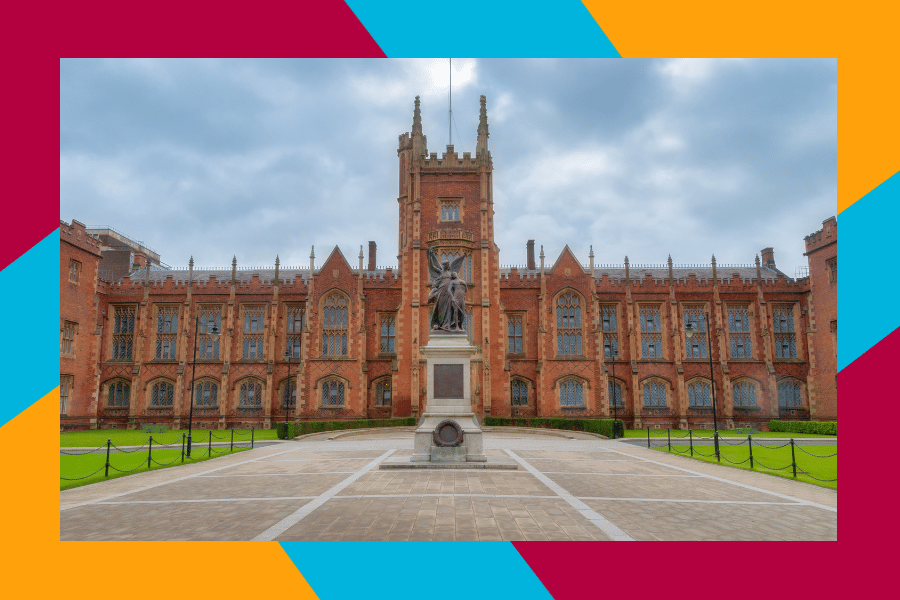
Professor Kathryn Higgins and Dr Andrew Grounds show how QCAP demonstrates that effective civic engagement requires long-term institutional investment and system-level change in funding and incentives.
Universities across the UK are under increasing pressure to demonstrate their civic role. Place-based partnerships, community engagement strategies and social value promises feature prominently in institutional strategies, and while rhetorically adopted, are weakly embedded. So, what needs to happen to make this work in practice? And what shifts in the current funding and incentive environment are required to sustain civic engagement and make it genuinely viable?
QCAP, Queen’s University Belfast’s community-academic partnership programme, has been working on that question in Belfast since 2021. Professor Kathryn Higgins and Dr Andrew Grounds presented their findings and challenges to the Local Policy Innovation Partnership Hub in June 2026, contributing to a national conversation about what place-based university engagement can and should look like.
The Structural Problem Facing Academic Institutions
Universities have well-documented tendencies toward extractive engagement: entering communities to gather data, producing outputs that serve academic careers and institutional metrics, and moving on when the grant ends. This is not simply a cultural failure. It is a structural one, produced by REF incentives that reward publications over sustained relationships, short grant cycles that make multi-year community investment difficult to justify, and the absence of institutional rewards for the kind of community-based working that genuine partnership requires. QCAP was designed as a deliberate institutional response to each of these pressures.
The Development of the QCAP Model
Now in Phase 2 with core institutional support secured until 2029, QCAP operates across six inner-city Belfast communities with a team of 23 research and professional services staff. The model rests on six pillars: community grounding and co-production; applied research and evidence infrastructure; strategic network positioning; policy influence and advocacy; organisational sustainability; and teaching and learning. The pillars are worth naming, but the more important point for a policy audience is what makes them real rather than aspirational. Co-production here means community partners co-authoring research questions and accountability structures from the outset, not being consulted after the fact. Action Working Groups bring academic and community staff together around specific challenges on a sustained basis. The longitudinal Growing Up in the Market study and the Grid Square Data Product are research tools built to serve community needs as much as academic ones, generating evidence that communities can own and deploy independently.
The QCAP Model
Six strategic pillars driving civic engagement at scale.
| 1 – Community Grounding & Co-Production Co-designing research with communities through co-located roles, dedicated action working groups and partnership as an active methodological achievement built through deliberate practice. |
| 2 – Applied Research & Evidence Infrastructure Managing a diverse research portfolio that serves both academic and community needs. Examples include the longitudinal GUiM Study and the Grid Square Data Product. |
| 3 – Strategic Network Positioning & Income Converting QCAP’s network membership into UKRI/PEACE research income, policy influence and aiming for the adaptability of the QCAP model across Northern Ireland and beyond. |
| 4 – Policy Influence & Advocacy Translating co-produced evidence and data into local and national policy change through other UKRI investments such as the LPIP Hub, ERSC C4 Centre and the BCRIN (UKRI). |
| 5 – Organisational Sustainability & Capability Building the personnel, skills, governance, investment support and systems to sustain the QCAP model at scale. E.g., core institutional funding, hybrid roles across professional services and academic team and embedding QCAP across all core business of QUB. |
| 6 – Teaching & Learning Connecting research to education, QCAP modules, widening participation, increasing access to community partners through summer schools, PhD’s and placement opportunities. |
Programmes, Governance and Community Impact
The programmatic work, covering harm reduction, data literacy, youth STEAM education and community wellbeing, reflects priorities identified by residents. The more significant point is not just what the programmes do but how they are governed: co-designed, community-led in delivery and evaluated with academic rigour. On the capital side, QCAP evidence and advocacy are helping to unlock long-term community-owned assets, including the Market Arches Regeneration Project, the Market Heritage Hub and Hosford Community Homes, a new model of community-led housing targeted at supporting homeless populations in the inner city.
Return on Investment and Value Creation
The return on institutional investment has been for every £1 invested, QCAP has generated £5.95 in leveraged research income across ESRC, AHRC, Innovate UK and Peace Plus, with gross research income of £17.6 million to date. £17.5 million in community investment has been secured across partner communities, including £4.5 million to the Market Development Association, funding dedicated staff posts, physical regeneration and programmes that continue independently of any single grant. The leverage ratio matters because it makes the case that sustained institutional investment in civic infrastructure is not a cost to be justified but a return to be made.
Questions for the Sector and Future Directions
The presentation poses some important questions for the wider LPIP networks. Most universities want to do this work. Fewer have found ways to make the institutional conditions stick. QCAP has made real progress on that over four years, but it has required sustained core funding, a community partner with genuine organisational capacity and the willingness to treat community-based work as a legitimate institutional investment rather than a byproduct of grant activity.
If place-based civic engagement is to become a genuine feature of how universities operate rather than a strategy document commitment, what needs to change in how such work is funded, evaluated and incentivised at a national level? The QCAP model offers one set of suggestions developed in one place. Whether it travels, and what it needs to travel well, depends less on replicating the programmes of work and more on understanding the institutional and community conditions that made them possible. How do we focus on institutional redesign, not more activity and find ways to align funding and metrics from UKRI and others with a long-term partnership? Finally, how do we broaden definitions of impact beyond short-term outputs and into long-term measurable change?
This blog was written by Professor Kathryn Higgins, QCAP Director and Dr Andrew Grounds, QCAP Deputy Director.
Disclaimer:
The views expressed in this analysis post are those of the author and not necessarily those of City-REDI or the University of Birmingham.