
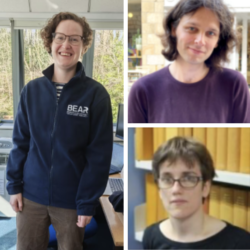
Birmingham Environment for Academic Research (BEAR) Newsletter As we head into summer, we have a busy events season starting this week with the HPC-SIG in Cambridge, the Thesis Submission event for PGRs, and the BEAR Conference. Hopefully you will have seen that our summer programme of BEAR training workshops (being held online) has now been released, and you can … Continue reading “May 2025 BEAR Newsletter”
Month: May 2025
RSE Midlands 2025
Senior Research Software Engineers James Tyrrell and Gavin Yearwood led the organisation of RSE Midlands 2025, and below James gives a summary of this successful event. The Advanced Research Computing team hosted the Research Software Engineering (RSE) Midlands 2025 Annual Conference at The Exchange on Monday 7 April, 2025. Sponsored and supported by our partners … Continue reading “RSE Midlands 2025”
RNA sequencing analysis made easy with BEAR
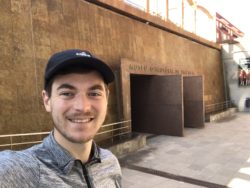
In this case study we talk to Jonny Lewis (researcher in Inflammation and Ageing) about how BEAR helps in understanding changes in the cells lining blood vessels when blood flow is not linear and smooth – altering what they release and communicate with. The sound of a computer, working at its limit, the fan desperately … Continue reading “RNA sequencing analysis made easy with BEAR”
Extraction and Analysis of Hydrological Spatial Data

In this case study, we hear from Chenlu Yang, a PhD student in the School of Geography, who has been leveraging BEAR (Birmingham Environment for Academic Research) to study flood behavior and hydrological extremes My research focuses on analyzing trends in flood behavior and hydrological extremes across the UK using high-resolution gridded datasets and long-term … Continue reading “Extraction and Analysis of Hydrological Spatial Data”
Utilising BEAR workshops for Multimodal Analysis in Cognitive Translation Research

In this case study, we hear from Mingjie Zhang, a postgraduate researcher in the Department of Languages, Cultures, Art History and Music (LCAHM), who has been leveraging BEAR workshops to apply digital humanities methods in her project “Translating between Minds: Cognitive Insights of the Dao De Jing.” By integrating tools such as R, Python, Matlab, and GitHub—learned … Continue reading “Utilising BEAR workshops for Multimodal Analysis in Cognitive Translation Research”