
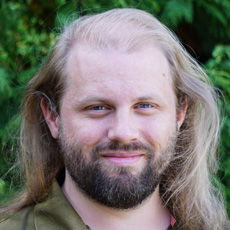
In this case study, we hear from Andrew Quinn, a researcher in Psychology, who uses BEAR to understand how brain activity changes through the adult lifespan. We investigated how brain activity changes through the adult lifespan. This has been studied in previous publications, but the overall literature presents a mix of results. Measures of brain … Continue reading “How does brain function as we age? Developing robust methods for neuroscience with BlueBEAR”
Category: User case study BlueBEAR
From health records to better maternity care: MuM-PreDiCT and BEAR
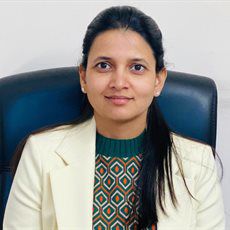
In this case study, we hear from Megha Singh, a researcher in Applied Health Sciences, who uses BEAR to understand the impact of multiple long-term conditions (MLTC) in pregnancy. Dr Megha Singh is a health data scientist and project manager on the MuM-PreDiCT consortium at the University of Birmingham, where she studies how routinely collected … Continue reading “From health records to better maternity care: MuM-PreDiCT and BEAR”
Accelerating Next-Generation Optical Neuroimaging with Machine Learning
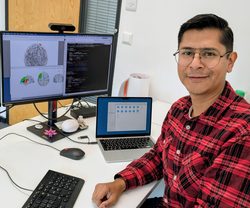
In this case study, we hear from Samuel Montero Hernandez, an Assistant Professor of Computer Science, who uses BlueBEAR to develop methods for better understanding how the brain responds to complex, real-world stimuli. I am an Assistant Professor in Computer Science at the University of Birmingham, where my research focuses on analysis and methodological development, … Continue reading “Accelerating Next-Generation Optical Neuroimaging with Machine Learning”
Exploring the First Stars with the Next Generation of Gravitational-Wave Detectors
In this case study, we hear from Krishnendu Naderi Varium, a Research Associate in Physics and Astronomy, who uses BlueBEAR to investigate how characterising black-hole binaries formed from the remnants of the very first stars in the Universe. In my recent work, carried out in collaboration with Dr Patricia Schmidt and Dr Geraint Pratten from … Continue reading “Exploring the First Stars with the Next Generation of Gravitational-Wave Detectors”
From Prototype to Proof of Concept: A Research Software Success Story
When you’ve got a promising research idea but lack the engineering bandwidth to make it production-ready, knowing where to turn for help can be challenging. Anas Rana, a researcher from the Institute of Cancer and Genomic Science discovered that partnering with dedicated Research Software Engineers from the Advanced Research Computing Team (ARC) within IT Services, … Continue reading “From Prototype to Proof of Concept: A Research Software Success Story”
Following ions and electrons through battery materials with BlueBEAR
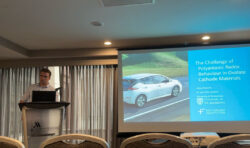
In this case study, we hear from Alexis Manche, a Research Associate in the Scanlon Materials Theory Group in the School of Chemistry, who uses BlueBEAR to investigate how atomic-scale defects and charge transport affect next-generation battery materials. I am a computational materials chemist working in the Scanlon Materials Theory Group at the University of … Continue reading “Following ions and electrons through battery materials with BlueBEAR”
Leveraging BlueBEAR to study the gut microbiome in health and disease
Hannah Trivett is a Research Fellow in Prof Lindsay Hall’s research group in the Department of Microbes, Infection and Microbiomes, where she studies how long-read metagenomic sequencing can be used to understand how microbes within the gastrointestinal ecosystem contribute to health and disease. Most recently, I explored this in patients with advanced chronic liver disease … Continue reading “Leveraging BlueBEAR to study the gut microbiome in health and disease”
From Everest Base Camp to Birmingham: can wearable sensors predict altitude sickness?
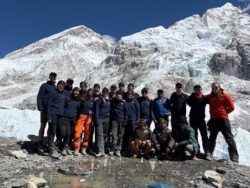
In this case study, we hear from Dr Kelsey Joyce, a Research Fellow in the School of Sport, Exercise and Rehabilitation Sciences, who is working to understand whether wearable sensors can help predict acute mountain sickness in trekkers at high altitude. For thousands of trekkers every year, the journey to Everest Base Camp is the … Continue reading “From Everest Base Camp to Birmingham: can wearable sensors predict altitude sickness?”
Python to the Rescue: A New Tool for Space Weather Scientists
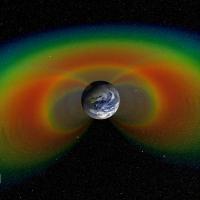
Oliver is an Assistant Professor in the Department of Electronic, Electrical and Systems Engineering, and is part of The SERENE Group at the University of Birmingham, a multidisciplinary space environment and radio engineering team led by Professor Sean Elvidge. They specialize in upper atmosphere modelling, ionospheric science, and space weather forecasting. Ever wondered how scientists … Continue reading “Python to the Rescue: A New Tool for Space Weather Scientists”
Beyond the head: tail-aware sperm segmentation using fine-tuned AI computer vision models
In this case study, we hear from Sina Shafiezadeh, a postdoc in the Department of Metabolism and System Sciences, who is working to track and analyse the details of sperm motility from video microscopy. Accurate and informative assessment of sperm motility is essential for diagnosing male infertility and optimising Assisted Reproductive Technologies (ART) such as in vitro fertilisation (IVF). While Computer-Aided Sperm Analysis … Continue reading “Beyond the head: tail-aware sperm segmentation using fine-tuned AI computer vision models”