
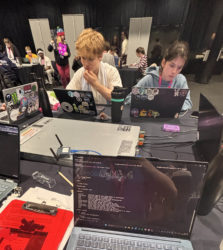
Below we hear from the Beariables team in their own words about their experience going to Computing Insight UK and winning the national cluster challenge. Authors: Team Beariables – Harry Vicaradge, Jamie Cline, Ewan Hallatt, Sereya Mee, Adam Wilson and Arthur Baverstock In December, our team the Beariables🧸 attended the Computing Insight UK Conference, where … Continue reading “Students’ journey from HPC newcomers to international competitors”
From BEAR Challenge to research innovation: A student’s journey into HPC
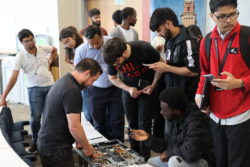
We previously heard from several participants of BEAR Challenge 2025 how they had enjoyed attending the event and the skills they developed (see blog post here), with one team going onto win the national CIUK challenge. In this blog post, we hear from undergraduate student David Adesoye-Amoo on how the challenge helped him navigate a … Continue reading “From BEAR Challenge to research innovation: A student’s journey into HPC”
Modelling Birmingham’s Cultural Ecology and Urban Oral History Using BlueBEAR

In this case study, we hear from Jack (Wei-Chieh Tsai), a doctoral student from History of Art and Geography who examines how cultural intermediaries, including artists, curators, and cultural organisations, have contributed to urban development. My PhD research examines the role of artistic interventions in transforming post-industrial Birmingham between 1986 and 2016. The project examines how cultural … Continue reading “Modelling Birmingham’s Cultural Ecology and Urban Oral History Using BlueBEAR”
Binary classification of lung tissue immunofluorescence images by deep learning
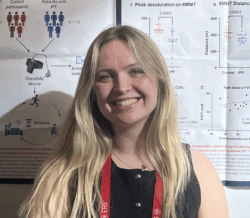
In this case study we hear from Ellen Jenkins, a postdoctoral student from the Institute of Inflammation and Ageing. Ellen is looking into developing a deep learning model to automatically differentiate the tissue from the air space. There is an ongoing project in the respiratory research group (CMH, IIA) which utilises samples of human lung … Continue reading “Binary classification of lung tissue immunofluorescence images by deep learning”
March BEAR Newsletter

Birmingham Environment for Academic Research (BEAR) Newsletter You may have noticed that there was no February newsletter and there was a good reason for this! We were awaiting the release of the exciting news that the University has won funding from UKRI to provide a National Compute Resource (NCR). There are several new posts to support … Continue reading “March BEAR Newsletter”
We’re recruiting! Four new Grade 8 posts in Advanced Research Computing

Following the award of a multi-million‑pound UKRI grant to deliver the National Compute Resource (NCR) GPU‑accelerated system, Baskerville NCR, the University of Birmingham’s Advanced Research Computing (ARC) team is expanding. We are recruiting four new Grade 8 roles to help shape and support this ambitious national-scale project, offering the chance to work with cutting‑-edge‑ technology, … Continue reading “We’re recruiting! Four new Grade 8 posts in Advanced Research Computing”
Research Software Group 2025 Report
We’re delighted to share that the Research Software Group’s 2025 Annual Report is now live on Zenodo! It’s our yearly snapshot of what we’ve been up to in the Research Software Group (RSG) within Advanced Research Computing at the University of Birmingham. The report captures the many ways we have supported research projects this year … Continue reading “Research Software Group 2025 Report”
Your chance to shape funding into national AI and HPC infrastructure
The Department for Science, Innovation and Technology (DSIT) are seeking members of the researcher community using AI to provide their expertise and experience to help shape the UK’s future AI compute infrastructure. Below is the letter inviting contributions: The survey should take around 20 minutes to complete and can be found via the link here: … Continue reading “Your chance to shape funding into national AI and HPC infrastructure”
BEAR Champion activities in 2025

The BEAR Champion team continues to expand its reach across the University, with ten new BEAR Champions joining the voluntary team in 2025. Our BEAR Champions help us spread the word at the University of Birmingham about all the BEAR (Birmingham Environment for Academic Research) services that are available to support their research. We currently … Continue reading “BEAR Champion activities in 2025”
We’re recruiting! Two Graduate System Engineer posts
If you want to make a difference and are fascinated by how technology works, come and join a leading team responsible for supercomputing and allied services at the University of Birmingham! The Advanced Research Computing team that runs Birmingham Environment for Academic Research (BEAR) services is looking for two graduates (recently graduated or in final … Continue reading “We’re recruiting! Two Graduate System Engineer posts”