

The Research Software Group’s mission is rooted in the observation that most current research requires software, often written by researchers themselves, and that the application of a few core software engineering principles leads to more effective research. This is neatly captured by the Software Sustainability Institute‘s tag line: “better software, better research”. A core technology … Continue reading “The value of version control”
Month: November 2025
Digital Research Committee working groups

Authors: Carol Sandys and Stephanie Thompson, Advanced Research Computing Some of you may be aware of the exercise that IT Services is undertaking to refresh the Digital Strategy and consider future investment in digital initiatives across the board, including for research. To contribute to that exercise, Pro-Vice Chancellor for Research, Professor Rachel O’Reilly, has asked … Continue reading “Digital Research Committee working groups”
Investigating the Alternative Lengthening of Telomeres (ALT)
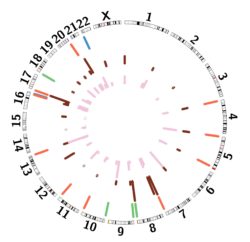
In this case study we hear from Ronan and Anubrata, both research staff in Cancer and Genomic Sciences, who have been using BlueBEAR to find therapeutic targets and biomarkers for the diagnosis of ALT-reliant cancers such as high-grade glioma. Our lab is investigating the Alternative Lengthening of Telomeres (ALT) process; a molecular mechanism used by … Continue reading “Investigating the Alternative Lengthening of Telomeres (ALT)”
HPCwire Award 2025 winners!

For the third year running (see previous awards), we are pleased to announce that a research group who use our advanced computing facilities has been recognised as award-winning in the HPCwire 2025 awards! Advanced Research Computing is very proud to provide Birmingham Environment for Academic Research (BEAR) to support high-impact research at the University, which … Continue reading “HPCwire Award 2025 winners!”
Molecular simulations of small peptides as a means to interpreting mass spectra
In this case study we hear from Edwin, a PhD student in Biochemistry,who has been using BlueBEAR to evaluate the effectiveness of different Molecular Dynamics (MD) simulation protocols at assigning structural information to Ion Mobility data Ion Mobility Spectrometry (IMS), Traveling Wave Ion Mobility Spectrometry (TWIMS) and High-Field Asymmetric Wave Ion Mobility Spectrometry (FAIMS) are … Continue reading “Molecular simulations of small peptides as a means to interpreting mass spectra”