
It has been nearly two years since the last Pro-Vice Chancellor for Research (PVC-R) ‘IT Needs of Active Research Survey’ was released, and as we prepare for the next survey, we wanted to update you on some actions that IT Services has taken since we analysed the results of the 2024 survey. You can find a summary of the results and some preliminary progress here.
In June 2025, we won funding from the Digital Strategy to deliver additional workshops over the next five years to support researchers’ needs around computing
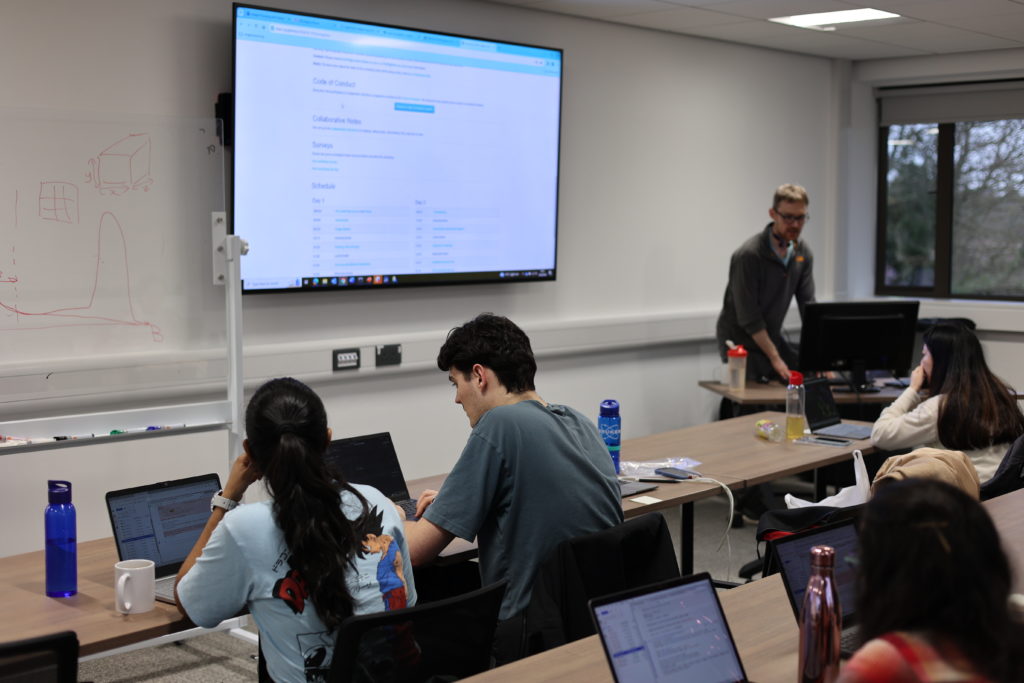
Results from the survey were used to build a business case for expanding the training program, and resultant funding from the Digital Strategy has led to four new workshops being delivered so far, with another four more in development for delivery this academic year. The funding is also supporting a Training Coordinator post, which is enabling the delivery of the increased number of workshops.
The provision of additional beginner-level training workshops has increased our reach to areas less comfortable with computing (e.g. College of Arts and Law [CAL] and the College of Social Sciences), resulting in higher engagement with our training. In 2025, we delivered 32 workshops to 532 attendees, with 143 (37%) more attendees attending training workshops than in 2024. Training webpages have been refreshed, with the addition of sections to aid findability, and each page has information on relevant online training for distance learners.
We have increased our engagement across the University
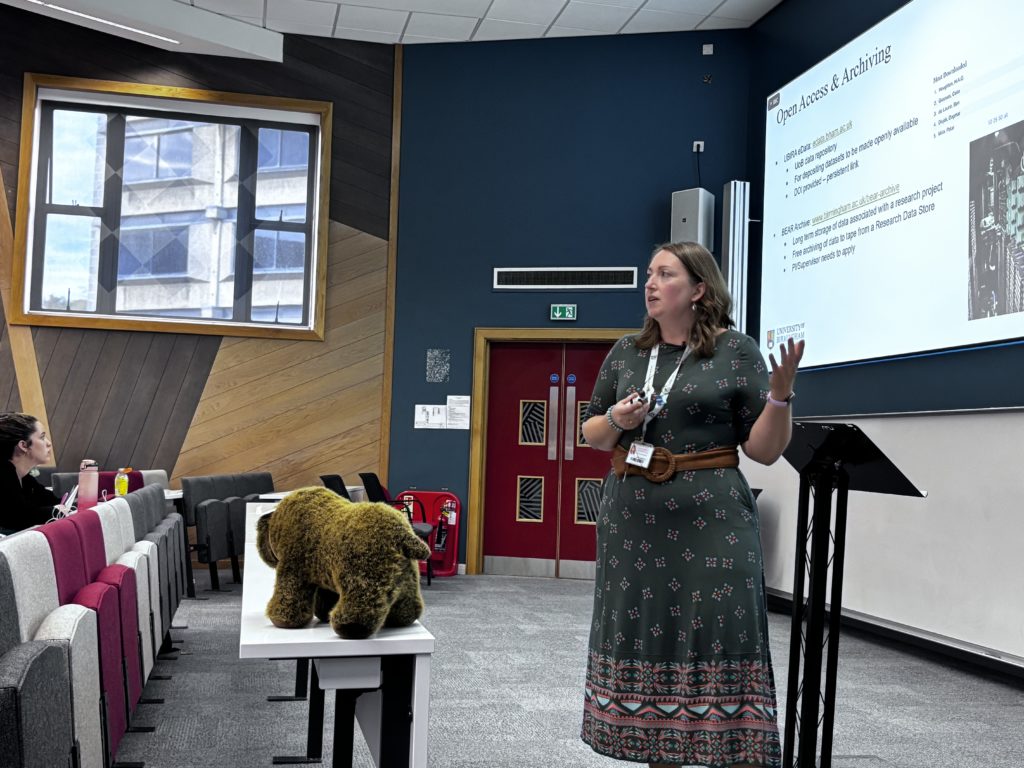
Advanced Research Computing (ARC) staff and volunteer time spent on outreach continues to increase, reaching over 1,500 people in 2025, with an additional 0.2FTE in the Researcher Engagement and Data Group (REDG), supported by an expanded team of 24 BEAR Champions that voluntarily spread the word about the benefits of BEAR (Birmingham Environment for Academic Research) services to researchers in their area. Last term, we reached out to Directors of Research and Heads of School across the University to directly advertise the relatively new Research Data Science service, which generated invitations to speak at five School/Research Committee meetings. We also gave a talk to CAL PGR students at their induction day, to encourage them to develop digital skills to support their research. You can read more about engagement activities in 2025 via the REDG Annual Report.
We will soon be providing resilient storage, with two active copies of your research data
Over 2025, we have replaced around half of the hardware that underpins the Research Data Store (RDS) and increased capacity from around 8PB to 14PB. The next phase is to enable cross-site replication of data – the primary goal being to improve our Disaster Recovery position, but a secondary benefit is that if maintenance and downtime is required in one data centre only, data should still be available via the second data centre. You can read more in the blog post on work to improve resilience of the RDS.
We have increased the availability of Research Software Engineering support
In the 2024-25 financial year, Research Software Engineers (RSE’s) in ARC were bought out for funded work totalling over £650k.
We have increased the availability of Research Data Scientists adding an additional 0.8FTE…
… in partnership with the Institute for Data and AI and the Centre for AI in Government.
We have added thousands of new CPU cores to BlueBEAR…
… with 30,000 cores regularly in use. Peak usage has approximately doubled from the peak of 18,000 seen in 2023.
We have raised the limits for individual users for CPUs from 864 to 1344 cores…
… in use simultaneously (across all running jobs) – that is equivalent to the processing power of 336 laptops (standard spec).
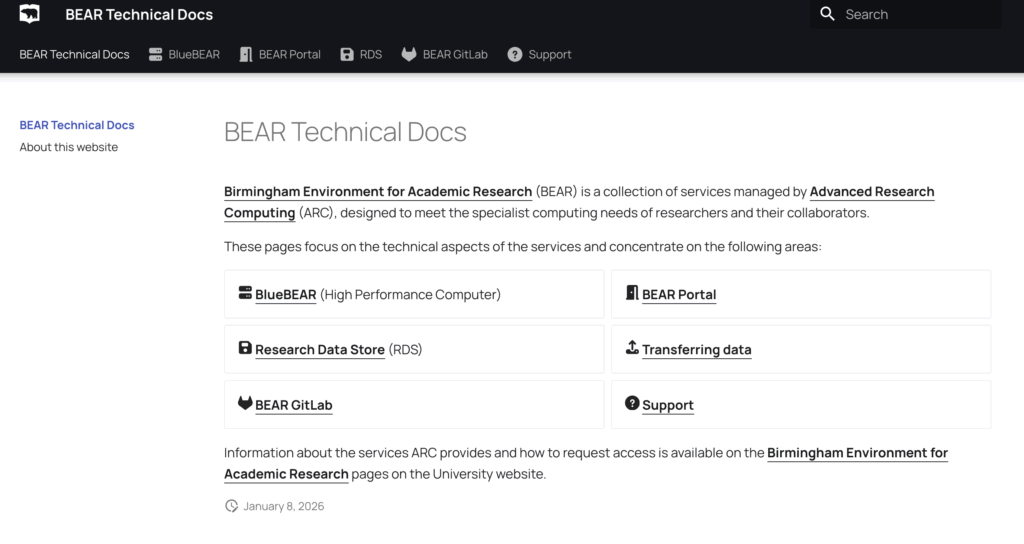
We have enhanced, updated, and refreshed the BEAR Technical Docs site, which provides information on using the services we provide for researchers.
IT Needs of Active Research Survey 2026

The 2026 IT Needs of Actice Research Survey is now live! Whilst many questions remain unchanged to allow comparison with previous surveys, we have updated some questions to reflect changes in services and support provided, as well as revising the layout of the survey in response to feedback.
We need as many researchers as possible to complete the survey, to make the data meaningful and to ensure roadmaps reflect researchers’ needs. Therefore, please complete the survey when you see the relevant email, either from Professor Rachel O’Reilly, your PGR College Director/Lead or via the various networks we are using to spread the message. Please contact Stephanie Thompson (s.e.m.thompson@bham.ac.uk) for the survey link if needed, we are not providing it here due to this blog site being available externally.