
By Professor Michael Saren
Department of Marketing, Birmingham Business School, University of Birmingham
The US Government has rebranded their Department of Defense as the Department of War. President Trump says this change “demonstrates our ability and willingness to fight and win wars on behalf of our Nation at a moment’s notice, not just to defend”.
Clausewitz said war is extension of politics by other means; nowadays perhaps the brand is an extension of war. NATO has a brand identity manual recognising that “brand unity, coherence and consistency will contribute to increasing public awareness and understanding of NATO, help build familiarity and trust, and sustain high public support for the Organization”.
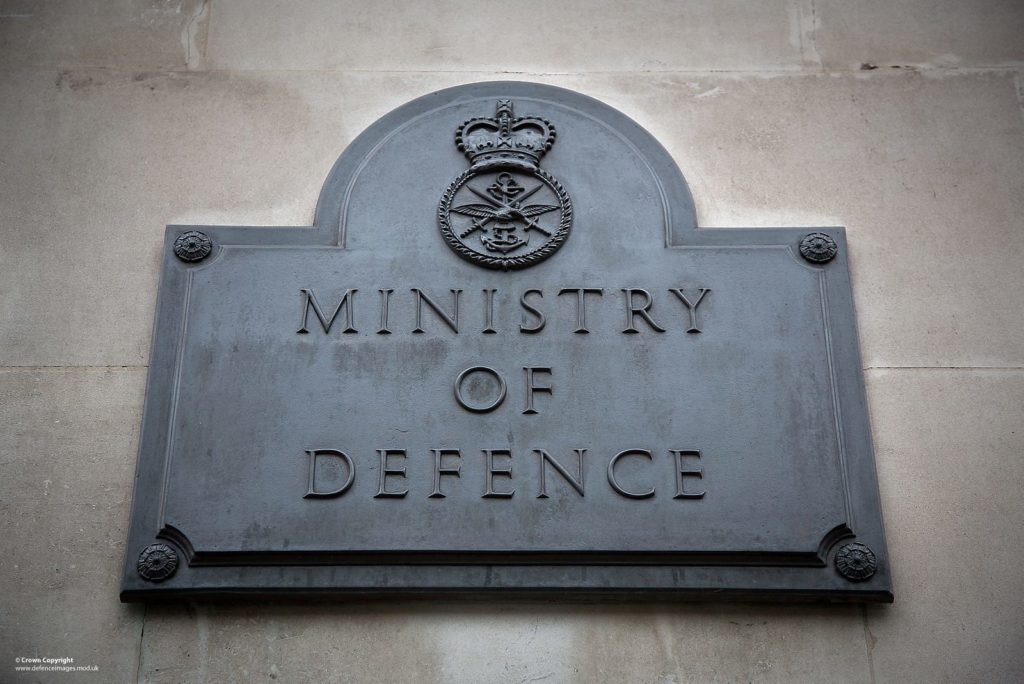
One question arising from the US re-brand is should the UK government consider rebranding the newly re-funded and re-strengthened Ministry of Defence? After all, prior to 1964 the UK had the ‘War Office’ (founded in 1684).
Conversely, as an overused metaphor for all sorts of disputes – wars on shoplifting, speeding, drugs, illegal immigration, culture wars – the term ‘war’ no longer restricted to military or national conflicts.
I will consider what the purpose of rebranding defence might be, what it might entail and what simply changing the name of the department might achieve.
Branding and Rebranding
Branding is far from new. It originated in the branding – or burning – of animals, cattle, sheep and slaves to identify who owned them. Nowadays, it seems that everything can be branded, and the word itself has become ubiquitous.
Simply put, branding is about communicating identity and image through signs, symbols and narratives. Success depends on what the objectives are, the intended audience and how recognisable, memorable, retweet able the brand is. Possible audiences include customers, employees, potential customers, competitors, regulators, politicians, social media, journalists, ’lead’ customers and influencers.
The record of success of re-branding companies and products is mixed with many expensive and awkward miss-steps including the much-mocked ‘Aberdn’ rebrand recently abandoned for the conventional spelling Aberdeen. Many rebrands follow a merger or takeover where a combined corporate name is required (Nationwide from Nationwide Anglia, Royal Bank of Scotland to RBS to NatWest) or to simplify it by adopting the initials, like HSBC and ‘EE’ for ‘Everything Everywhere’. Rebranding also occurs in non-commercial fields like UK politics and trade unions, e.g. ‘LibDem’ from Liberal and Social Democrats and ‘Unite’ from ‘TGWU’.
Military Brands
A lot of military branding exists in the names and historical titles of military regiments and formations. Many weapons and missile systems are branded, for example:
Storm Shadow (UK) Popeye (Israel) ,Crystal Maze (Israel & India), Blue Spear and Sea Serpent (Israel’s & Singapore), Exocet (‘flying fish’, France), Delilah (Israel), Ghadr-110 (‘intensity’ , Iran), Flamingo (Ukraine) , Donfeng (‘east wind’ China), Oreshnik (‘hazel tree’ Russia).
Branding government departments is a different matter. The question is whether rebranding the Ministry of Defence (MoD) as War Office would improve their identity, message, communication, reach and image with their audiences, personnel and other stakeholders. MoD audiences are different and wide-ranging, e.g. public, voters, military establishment & personnel, defence contractors, national enemies, geopolitical competitors, military allies.
Is the War Office brand better?
My view is that reviving the War Office name in place of the MoD is not suitable as a brand because it doesn’t align with defence thinking, strategy and operations for the future. There are several aspects to this.
As the UK Strategic Defence Review 2025 (SDR) has documented, the nature and form of defence and warfare itself has changed significantly since the post-Cold War ‘peace dividend’ era. It has broadened in scope to encompass civil defence, cyber-war, data security, undersea and battlefield communications, critical resource security, infrastructure sabotage, drone warfare, procurement efficiency and value-for-money, military R&D, inter-service, technology budgeting & strategy.
Rupert Smith (2006) argues that war in the 20th century involving ‘battles in a field between men and machinery’ has been superseded by new forms and theatres of violence. The objective in this new war paradigm is how to use various types of force (armed, communications, psychological, cyber, economic) to achieve a desired and stable international and/or national outcome. Warfare is now multidimensional, not just ‘fighting’, but also varying degrees of non-violent conflict.
Establishing a Ministry of War might be regarded by some (even if mistakenly) as another sign of Britain’s transition from a welfare state to a warfare State like Israel or even a lesser extent like Switzerland or Norway.
It seems unlikely that Britain’s enemies will be deterred by the name adopted for the UK defence establishment, nor those for missiles and materiel. There is also little reason to assume a high degree of identification with the MoD per se on the part of British military personnel, politicians and citizens.
Renaming as the Ministry of ‘War’ might carry unintended political implications. The 2025 SDR recommendations accepted by the government include strategic goals of a NATO-first defence policy, “war-fighting readiness” as the “armed forces’ central purpose”, and a fully trained strategic reserve, “ready to mobilise at any time”. Establishing a Ministry of War might be regarded by some (even if mistakenly) as another sign of Britain’s transition from a welfare state to a warfare State like Israel or even a lesser extent like Switzerland or Norway.
What is the point of a rebrand then, should the MoD name remain?
Although reviving the War Office brand is not a good idea, this doesn’t necessarily mean that the MoD should retain its existing name. The case for rebranding the MoD is precisely because of these developments in wars and warfare and the consequent changes in MoD structure, processes and management being undertaken by the Secretary of State John Healey. A new designation could align better with changes in the requirements of national defence and the new defence capabilities recommended by the SDR and signal Britain’s new geopolitical role in a world of multidimensional forms of warfare.
More appropriate and up-to-date suggestions might be Ministry of National Defence; Integrated Defence Office; Coordinated Defence Office; Ministry for Collective Defence. There are others. Perhaps the real battle isn’t over what we call defence, but how we define it.
References
Operations and Tactics in a Comprehensive Context’, Journal of Strategic Studies 29(6): 1151–70.
Smith, R. (2006) The Utility of Force: The Art of War in the Modern World. London: Penguin.
Von Clausewitz, C. (1984 [1832]) Vom Krieg [On War] (ed M. Howard and P. Paret). Princeton, NJ: Princeton University Press
-
- Read more about Professor Michael Saren
- Back to Social Sciences Birmingham
The views and opinions expressed in this article are those of the author and do not necessarily reflect the official policy or position of the University of Birmingham.