

In 2022, we took part in the University’s Sustainability Town Hall and published a blog post highlighting Advanced Research Computing’s efforts in sustainable computing over the previous decade. Since then, we’ve continued to explore and develop initiatives in this space. With growing concerns around the energy demands of data centres – such as a recent article from the FT indicating that they now consume one-fifth of Ireland’s electricity supply, a figure projected to rise to one-third by 2026 – and a renewed wave of interest from the research community, we decided it was time to share an update.
Our services are used by a large number of researchers, from across the University
Back in 2022, our storage (BEAR Research Data Store) was used by over 4,000 researchers and contained around 3.5PB of active data, with provision of ‘supercomputing’ capacity to more than 2,500 researchers via our supercomputer, BlueBEAR. Updated figures for August 2025 are that the RDS is now used by over 4,800 researchers with around 6.5PB of active data, and over 3,000 researchers have access to BlueBEAR. It is great to see a 20% increase in the numbers of researchers using both of these central services, with research groups no longer needing to run their own servers for compute and storage, many of which would have had low levels of utilisation, leading to wasted energy, costs, and resources.
If data no longer needs to be accessed, we move it off to tape to prevent it consuming power
Over the past three years, the number of researchers using the RDS has increased by 20%, but the volume of data stored has nearly doubled. This mirrors the global trend in data production, which rose from 97 zettabytes in 2022 to an estimated 181 zettabytes in 2025 (https://scoop.market.us/data-science-statistics/). Storing data in the RDS consumes significantly more energy than storing it in the BEAR Archive, which uses tape-based storage (see video below). To promote sustainable data practices, we actively manage researchers’ storage by requiring project re-registration every two years and a review of project members and facility access every six months. Researchers are asked to assess whether their data is still actively used and needs to remain accessible, and if not, whether it can be deleted or moved to the more energy-efficient BEAR Archive for long-term storage. Discussions with other Russell Group universities suggest that our approach to active data management is ahead of the curve, with a lower amount of data stored given the amount of users on the storage system (0.7TB per user).
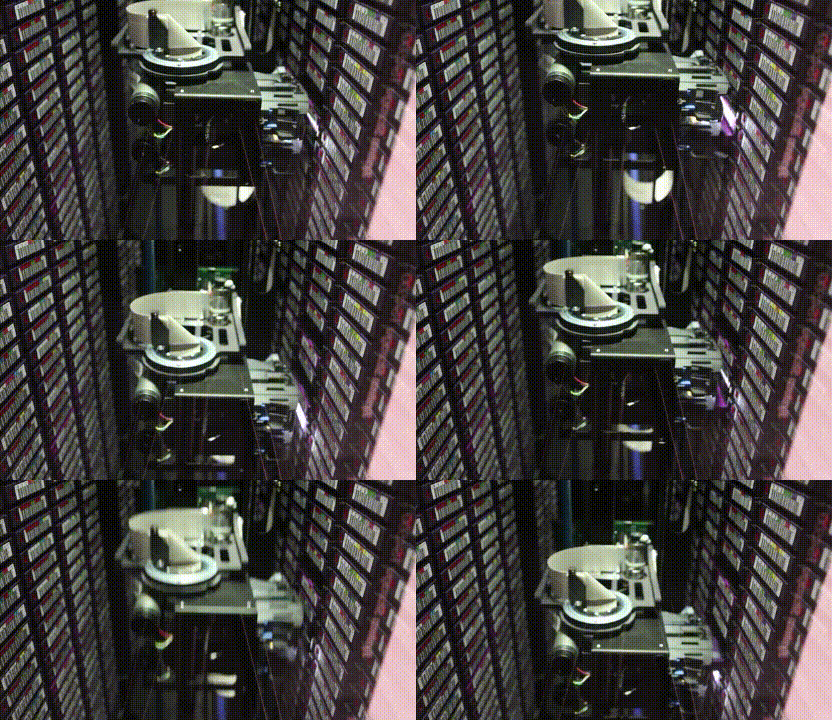
IBM tape library in the Park Grange Data Centre – the robotic arm allows access to tapes to routinely check for data integrity.
Open research/data
Advanced Research Computing has participated in the Open Research Board Operational Group since its establishment (and previously in the Open Data Advocacy Group), alongside other representatives from Professional Services. The group has contributed to policy development and advocacy for open research, particularly open data. One of its key outputs is the Open Research Statement, which includes links to resources and support available at the University e.g. the Canvas course ‘Open Researcher’, which is available to University staff and students via the self-enroll link here.
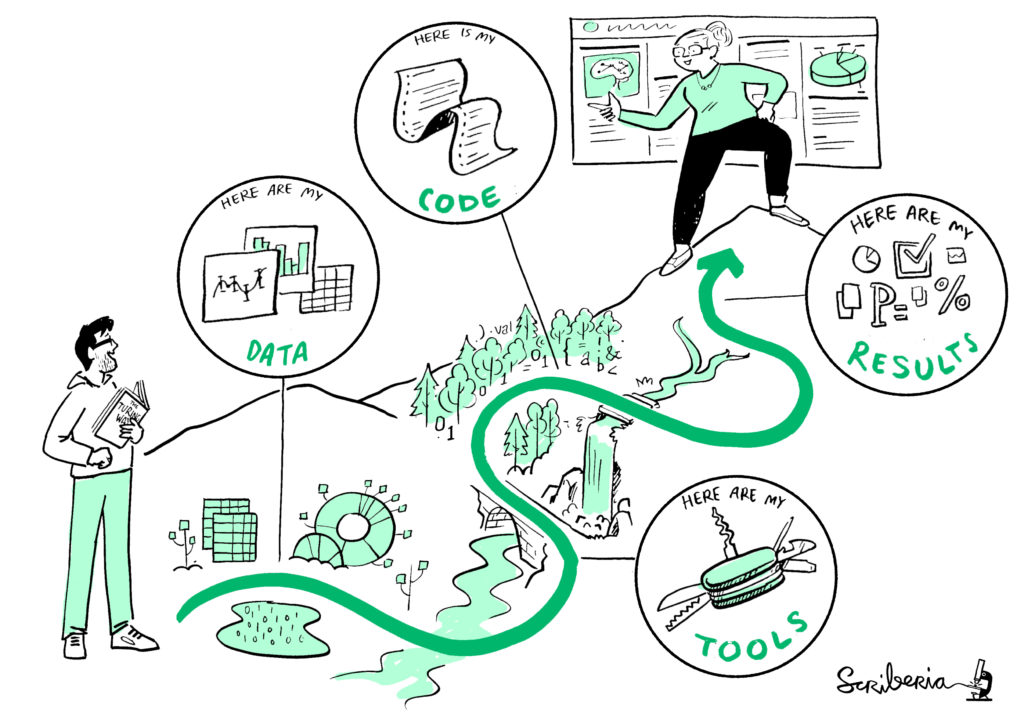
Open research practices (see figure below), especially open data, support sustainable computing. By sharing data, researchers can avoid duplicating the creation of research datasets through compute-intensive (and energy-consuming) processes. Additionally, storing data in repositories can reduce the need for local storage of large files by multiple researchers, such as in the case of BioBank data.
We train our users to write more efficient code and use the optimum software
Over the last two years, in addition to the 1:1 support that the Research Software Group provides, we have developed new training workshops to support use of computational facilities at the University and improve programming skills, so that researchers can write more efficient code. ‘Advanced BlueBEAR‘ covers Slurm usage to optimise how you schedule jobs on BlueBEAR. Intermediate Research Software Development is an extended course over 5 sessions, teaching a core set of established, intermediate-level software development skills and best practices for working as part of a team in a research environment. The course helps with sustainable computing by both giving techniques to improve the efficiency of code, and sharing efficient code with others, preventing duplication of effort and use of compute resource. All our training workshops can be booked via the BEAR training webpages.
We have also recently started providing a central UK location for the national compute service ARCHER2 to deliver workshops, and we are very pleased that they will be running the popular ‘Green software use on HPC’ course at the University on Wednesday 22 October. The course introduces environmental sustainability principles in the context of High Performance Computing (HPC) systems – for more details and to book a free place see the ARCHER2 webpages.
Raising awareness around sustainable computing
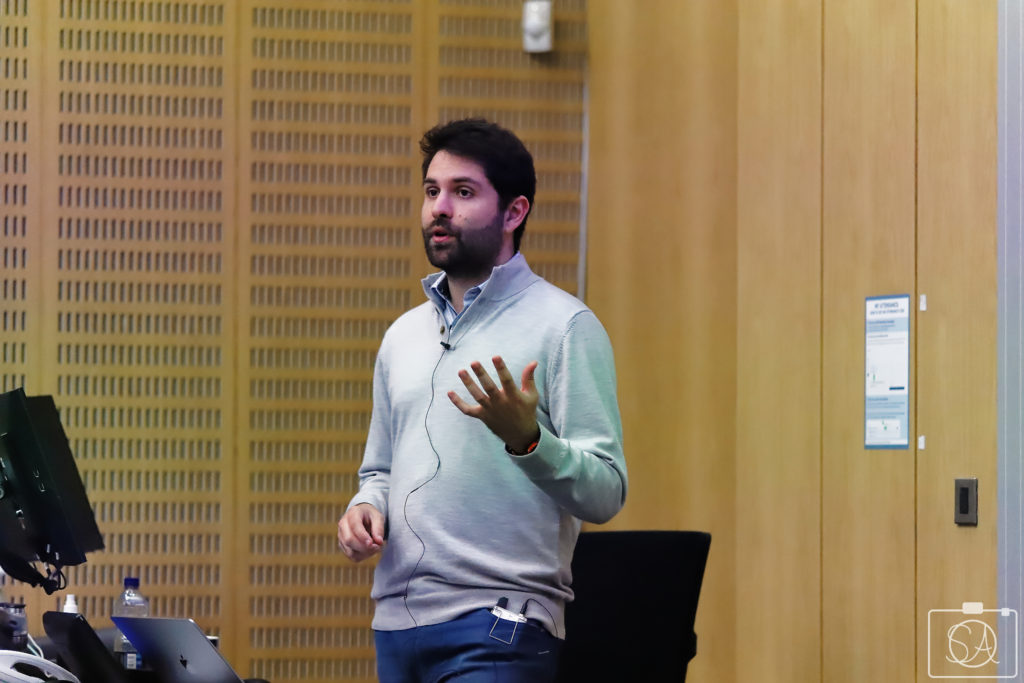
In December 2023, we hosted a Digital Research Conversation to raise awareness about sustainable computing. The event featured a guest speaker, Loïc Lannelongue from the University of Cambridge, who introduced the subject, followed by University of Birmingham researchers sharing perspectives from their own areas of expertise (summarised in a blog post here). Loïc presented the GREENER principles for sustainable computational science (published in Nature), emphasising that all stakeholders – from individual researchers to institutions – share a responsibility to monitor and reduce the environmental impact of computational research. One practical approach is to estimate and report the carbon footprint of computational activities.
In May 2025, the PGR Committee for the BEAR Conference invited Loïc back to the University to provide updates on his research and to help launch another sustainability-focused event: the BEAR Conference 2025. He shared developments on topics such as energy reporting tools and introduced the Green DISC scheme, a new certification initiative offering a roadmap for research groups and institutions aiming to address the environmental impacts of their computing practices.
Energy reporting for compute jobs
We have been exploring ways to report energy usage for jobs run on both BlueBEAR and Baskerville (our Tier 2 national supercomputer), and we are pleased to share that GPU energy reporting is now enabled on Baskerville. Guidance on how to generate your own energy usage reports and interpret them will be available very soon.
Unfortunately, BlueBEAR is a much more heterogeneous system than Baskerville, with a mix of CPU architectures and GPU types. As a result, the same energy reporting system could not be implemented successfully, and we are now investigating alternative methods to obtain this data. In May, Loïc Lannelongue highlighted the availability of a Slurm tool for Green Algorithms 4 HPC — relevant since BlueBEAR uses Slurm for job scheduling.
Update (16/10/25): The tool is now available on BlueBEAR – for details on how to run it see: https://docs.bear.bham.ac.uk/bluebear/jobs/#job-energy-usage
The goal of these energy reporting tools is to provide a rough estimate of energy consumption that can be used for comparison. For example, a job might initially consume XXX kWh of energy; after code optimisation, it runs more efficiently and consumes only XX kWh.
Green DiSC scheme for compute-focused ‘dry’ labs
The Green DiSC scheme is described as “an attempt at providing computational researchers and research-performing organisations with a roadmap on how to tackle the environmental impacts of their work, while giving recognition for all the good work done in this space!” As sustainable computing becomes an increasingly important part of funding applications – such as those from the Wellcome Trust – we anticipate growing interest from research groups in becoming certified.
Green DiSC offers a certification pathway for research groups working in ‘dry’ labs (computer-based research), similar to the Green Laboratory Accreditation Scheme for ‘wet’ labs, which is currently being launched at the University following a successful pilot. The existing Green DiSC certification for ‘central teams’ applies to IT Services at the institutional level; however, there are plans to develop a certification specifically for research computing teams, which would be more relevant to our facilities.
We are currently supporting a research group in their application for a Bronze Green DiSC award, providing them with relevant information throughout the process. Once certified, we plan to publish a case study detailing their journey to help guide other research groups interested in pursuing certification.

Sustainability roles within Advanced Research Computing
There is considerable interest in sustainability within the Advanced Research Computing team. The author has a research background in developing eco-friendly coatings to improve fuel efficiency in shipping, and has maintained this interest in their current role as Researcher Engagement and Data Group Leader by becoming a University Sustainability Champion, attending several workshops focused on sustainability themes, such as energy. Senior Research Software Engineer (RSE), James Tyrrell, has a keen interest in green software initiatives and making energy-efficient programming languages more accessible for researchers, and is on the Steering Committee for the Green RSE Special Interest Group, where he leads on the GREENER principle for sustainable computing of responsibility (discussed above). A third member of the team has a relevant role, this time in open research, with Senior RSE Warrick Ball being the Associate Editor-in-Chief for the Journal of Open Source Software. The journal publishes short papers describing software that has been reviewed to ensure that the code is open, (re)usable, and well-documented, as well as providing a means for researchers and RSEs to get recognition for their code writing via the traditional publication route.
Members of our governing group of academics, the Research Computing Management Committee, also have a keen interest in sustainability. Dr Liza Jabbour, College of Social Sciences representative, is Deputy Director for the Birmingham Institute for Sustainability & Climate Action (BISCA) and the BEAR User Group Chair, Dr Dietmar Heinke, is currently exploring whether there is sufficient interest in establishing a ‘Sustainable Computing Special Interest Group’.
Supporting a plastics recycling outreach project
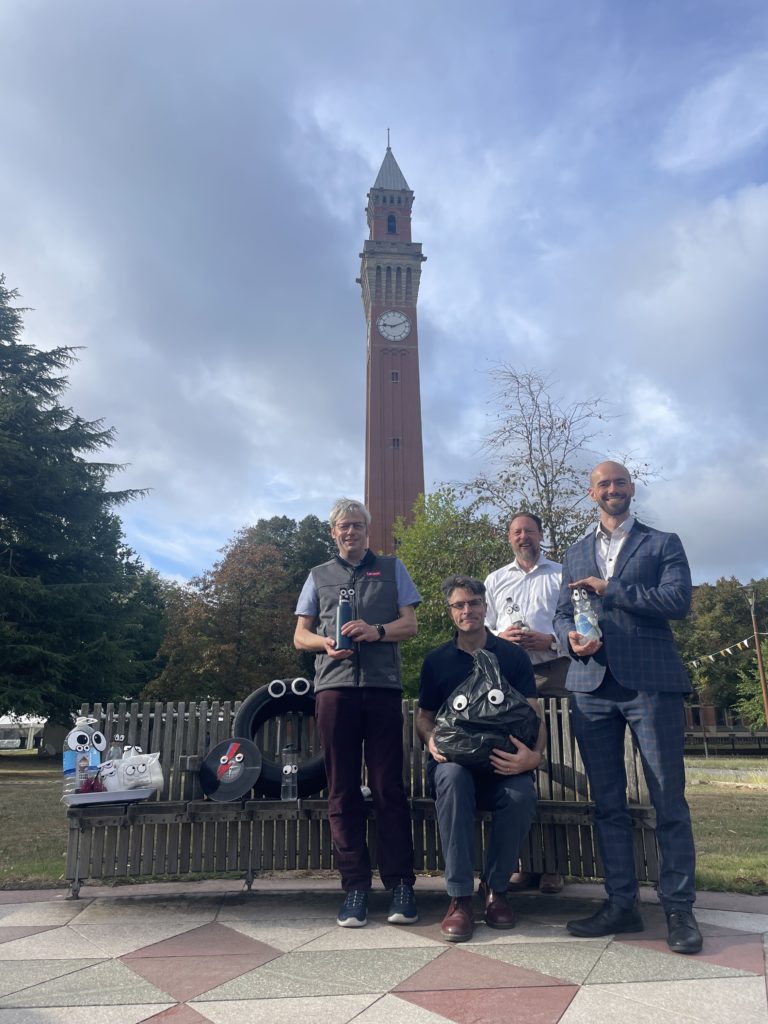
As part of our 2024 procurement process for a framework partner, we reached an agreement with our incoming supplier, Lenovo, to provide funding to support Professor Kit Windows-Yule in developing a theatre production exploring our relationship with plastic, together with the theatre company Stan’s Cafe. The resulting production has been touring Birmingham with ‘The Many Lives of PET #1‘, a performance designed to provoke discussion around plastic recycling. This initiative is part of a broader science communication effort linked to the Birmingham Plastics Network. More details are available in the University’s news article, and we were delighted to hear that the production has been shortlisted for a 2025 Green Gown Award, which celebrate sustainability excellence in education across the UK.
Our infrastructure will also support the recently announced EPSRC Prosperity Partnership project, ‘Mission Biodegradability: Foundations for the Sustainable Future of Formulated Polymers‘, led by Professor Andrew Dove. The project aims to design new biodegradable polymers, such as those used for thickening shampoos. For more information, see the UKRI article on Prosperity Partnerships.
Conclusion
We plan to continue developing the areas outlined above and raising awareness of sustainable computing among researchers at the University, particularly senior staff involved in sustainability initiatives. The University has recently become a signatory to the Concordat for the Environmental Sustainability of Research and Innovation Practice, which includes a section on ‘sustainable infrastructure‘. Many of the areas highlighted in that section are already being actively addressed, as described above.
We will provide updates on sustainability activities via our monthly newsletter but do get in touch (email bearinfo@contacts.bham.ac.uk) if you are interested in being involved in a potential ‘Sustainable Computing Special Interest Group’.
December 2025 updates
A lot has been happening in the sustainable computing space since this article was first written back in September, just two months ago:
- We are now part of a working group developing a certification scheme for ‘Research Computing Infrastructure’ for Green DiSC
- We are running a session for University Sustainability Champions on Wednesday 14 January on ‘Sustainable Computing’
- Loïc Lannelongue is coming to the University on Wednesday 4 February to deliver a LES supported session on ‘Green Algorithms, Green DiSC and GREENER principles: making computational science more environmentally sustainable’ – register your interest in attending here: Sustainable computing – Fill in form
- We are running an in-person workshop for researchers using HPC in their research (or planning to) for Green Week on Tuesday 17 March – booking is open via the Eventbrite link
- We now have a ‘Sustainable Research Computing SIG’ channel within the ‘Research Computing and Data Community’ on Microsoft Teams – the join code is zo6528n
Related resources
- Green software use on HPC Carpentries course material: https://carpentries-incubator.github.io/green-software-hpc/
- Green Software Practitioner training course: https://learn.greensoftware.foundation
- Sustainability training for University staff: https://bham.sharepoint.com/sites/sustainability/SitePages/Sustainability-Training-For-Staff.aspx (UoB login required)
- Green Algorithms 4 HPC: https://www.green-algorithms.org/GA4HPC/
- Green DISC: https://www.software.ac.uk/GreenDiSC
- Digital Humanities Climate Coalition Toolkit: https://sas-dhrh.github.io/dhcc-toolkit/
- Sustainability in Focus: A Year in Progress 2024/2025: https://www.birmingham.ac.uk/documents/university/00565-sustainability-report-2025-aw-full-spread.pdf
- Concordat for the Environmental Sustainability of Research and Innovation Practice (covers sustainable infrastructure): https://wellcome.org/about-us/positions-and-statements/environmental-sustainability-concordat#about-the-concordat-ac54