
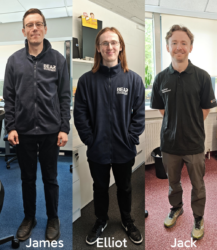
Birmingham Environment for Academic Research (BEAR) Newsletter This month’s Editor: Stephanie Thompson In Advanced Research Computing, we’ve been welcoming lots of new starters this month, some of whom will be supporting the Baskerville National Compute Resource, which was turned on for the first time last week! Find out how to be one of the first … Continue reading “Summer 2026 BEAR Newsletter”
Tag: BlueBEAR
Understanding recent BlueBEAR service disruptions – July 2026

Over the past few months, BlueBEAR users may have experienced periods of reduced service availability, planned maintenance, and interruptions to normal operations. We recognise that these disruptions can be frustrating, particularly when research projects depend on reliable access to High Performance Computing (HPC) resources. This blog post explains the factors behind recent outages and outlines … Continue reading “Understanding recent BlueBEAR service disruptions – July 2026”
June 2026 BEAR Newsletter
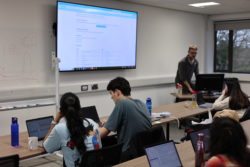
Birmingham Environment for Academic Research (BEAR) Newsletter This month’s Editor: Debbie Carter Last week we were excited to welcome 60 undergraduate and taught postgraduate students to BEAR Challenge 2026! Supported by many members of the ARC team, they experienced High Performance Computing (HPC) for the first time and heard about career opportunities in this field. The … Continue reading “June 2026 BEAR Newsletter”
Exploring the dynamics of alien solar systems with BlueBEAR

In this case study, we hear from Alix Freckelton, a PhD student in Physics and Astronomy, who is exploring transit timing variations (TTVs). My research focuses on transit timing variations (TTVs): these are tiny irregularities in the times that we see exoplanets transiting their host stars. TTVs are caused in multi-planet systems by the planets … Continue reading “Exploring the dynamics of alien solar systems with BlueBEAR”
AlphaFold protein structure prediction to study DNA replication
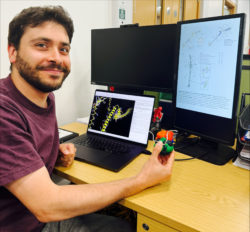
In this case study, we hear from Paolo Passaretti, a postdoc in Cancer and Genomic Sciences, who is investigating how cells copy and protect their genomes during DNA replication. I am a postdoctoral researcher in Prof Aga Gambus’ Laboratory, in the Department of Cancer and Genomic Sciences, where we study how cells copy and protect … Continue reading “AlphaFold protein structure prediction to study DNA replication”
De Novo Protein Engineering: Future-Proofing MRI Contrast Agents with BlueBEAR
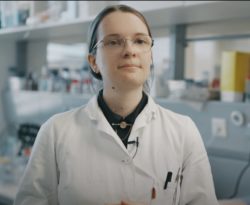
In this case study, we hear from Sarah Berger, a researcher working in Bioinformatics, who has been using BlueBEAR to develop proteins that can bind to metals. Magnetic resonance imaging (MRI) is an essential diagnostic tool, particularly powerful when combined with contrast agents. Most state-of-the-art MRI contrast agents are based on the metal gadolinium, which has intrinsic physical … Continue reading “De Novo Protein Engineering: Future-Proofing MRI Contrast Agents with BlueBEAR”
BEAR Research Software Group Hackathon 2026
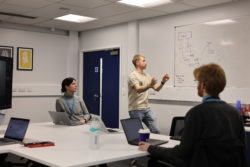
Author: Chris Greasley, Research Applications Specialist The Research Software Group (RSG) Hackathon returned for its third edition this April with a growing team and a new one-week format. Like previous editions, RSG members had time dedicated to taking part in a wide range of sessions. These covered everything from developing reusable container images for Continuous Integration (CI) pipelines to group discussions on career pathways. The broad range of sessions gave everyone the chance to work with others they don’t normally work with, which allowed the … Continue reading “BEAR Research Software Group Hackathon 2026”
Learning from Nature: Using HPC to Design Efficient Jet Propulsion
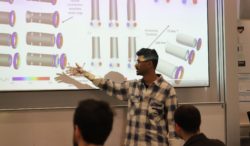
In this case study, we hear from Yukesh Karki, a doctoral student from Aerospace Engineering in the School of Metallurgy and Materials, who used BlueBEAR to identify the optimal three-dimensional nozzle geometry for hydrodynamic jet propulsion. He is also the winner of ‘best talk’ at the BEAR Conference 2026. Nature has already evolved highly efficient methods … Continue reading “Learning from Nature: Using HPC to Design Efficient Jet Propulsion “
GPU and BEAR Portal changes
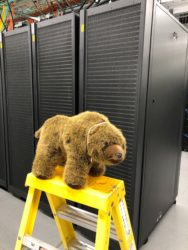
Dear BlueBEAR users, We have taken feedback from our user base regarding the time it takes for GPU jobs to start and have made changes with the aim of getting your jobs to start quicker. The changes we have made are as below: Our reasoning in making these changes are: BEAR Portal is intended for … Continue reading “GPU and BEAR Portal changes”
April 2026 BEAR Newsletter
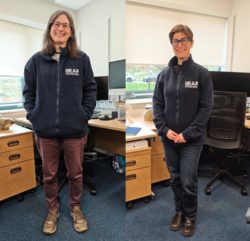
Birmingham Environment for Academic Research (BEAR) Newsletter This month’s Editor: Yajie Zhang April brings an exciting new chapter for the Advanced Research Computing team as we are delighted to welcome a new Head, Dr Andrew Edmondson (Ed), to lead the team into its next phase. Alongside this, we’re also delighted to have two new Research Software Engineers joining … Continue reading “April 2026 BEAR Newsletter”