
Birmingham Environment for Academic Research (BEAR) Newsletter
This month, we enjoyed meeting and speaking to over 200 staff members at the Staff Benefits Fair about the various BEAR services available, welcome to those who have joined our mailing list! November’s newsletter looks a little different as we’ve added some sections to help with navigation, do let us know if you have any other ideas for improvement. This will be our last newsletter for the year, so we would like to wish everyone who celebrates it a very Merry Christmas, and hope you all have a great break from work.
Included in this month’s newsletter:
- Digital Strategy Research Committee working groups
- Upcoming ‘IT Needs of Active Research’ survey – spring 2026
- BEAR training workshops – spaces available
- The value of version control
- Optimising/benchmarking research software on Intel CPUs: Expression of Interest
- Isambard-AI and Dawn AIRR supercomputers: Innovator route
- CaSDaR data stewardship funding
- Computing Insight UK
- Investigating the Alternative Lengthening of Telomeres (ALT) using compute from BlueBEAR
- EOI for case studies on open source codes and software impact
- BEAR drop-in session dates
- Meet the Data Scientists – online drop-in session
- HPCwire 2025 Awards – Best Use of AI methods for Augmenting HPC Applications
- Aerospace researchers win national image prize
News from the Advanced Research Computing team
Digital Strategy Research Committee working groups

Some of you may be aware of the exercise IT Services is undertaking to refresh the Digital Strategy and consider future investment in digital initiatives across the board, including for research. To contribute to that exercise, PVC-R Professor Rachel O’Reilly has asked the Digital Research Committee with the Research Computing Management Committee to convene working groups to consider ideas that could make a significant difference to the University’s research. You can find out more in the Digital Research Committee working groups blog post.
Upcoming ‘IT Needs of Active Research’ survey – spring 2026

In addition to the working groups mentioned above, we are preparing to run the biennial ‘IT Needs of Active Research’ survey in the spring. The survey will allow for all research staff and research students to provide their feedback on computing support for research, as well as suggest new ideas for IT Services to focus on.
BEAR training workshops – spaces available
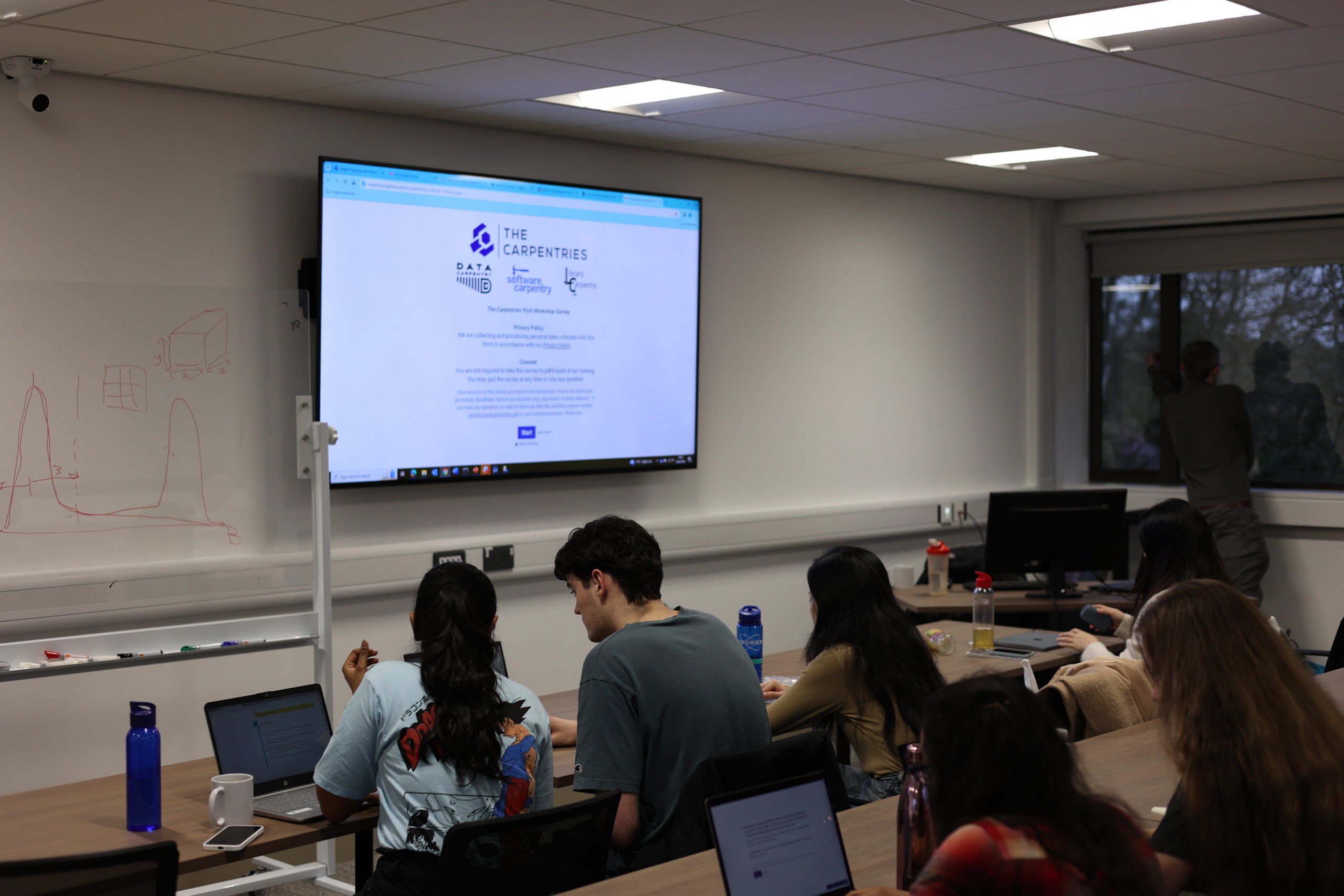
We have a few spaces available on upcoming training courses this term, including:
- NVIDIA Fundamentals of Accelerated Computing with CUDA Python (4 December)
- Software Carpentry – Git (10 December)
These sessions are ideal for researchers looking to deepen their skills in High Performance Computing (HPC) and domain-specific tools. For full details and to book, visit our training webpages.
The value of version control

One of our upcoming training workshops mentioned above is on using Git. Have you ever heard people mention Git and wonder what it is or how it could benefit your research? Senior Research Software Engineer, Warrick Ball, explains the benefits of using Git, and how he wished he had known about it many years before in his blog post on the value of version control.
Funding opportunities
Optimising/benchmarking research software on Intel CPUs: Expression of Interest (EOI)

The Research Software Group is offering support to optimise University research software using OneAPI on Intel CPUs. We have funding from Lenovo/Intel to compile research software with OneAPI, implement optimisations in, and benchmark the code to make use of features of different Intel hardware (Sapphire, Emerald, Granite Rapids). Find out more and register your interest via the EOI form (deadline Sunday 7 December).
Isambard-AI and Dawn AIRR supercomputers: Innovator route

Researchers from the University can apply for up to 150,000 Graphics Processing Unit (GPU) hours on the Isambard-AI and Dawn supercomputers for Artificial Intelligence (AI) related research and development projects. Find out more about the ‘Innovator route’ funding via the UKRI webpage.
CaSDaR data stewardship funding

Do you have a project that needs data stewardship support? The first funding call is currently live to provide support for data stewardship via the Careers and Skills Development of Data Stewards (CaSDaR) UKRI project. There are two funding streams for large (6-9 months) and mini (8-10 weeks) projects. One example could be to tidy up data from a research project to enable sharing via a data repository – see the CaSDaR website for details (deadline Thursday 22 January).
Upcoming conferences
Computing Insight UK

We are pleased to share that one of the student teams from BEAR Challenge 2025 has successfully gained a place in the live Cluster Challenge at Computing Insight UK Conference (CIUK2025) next week. Team ‘Beariables’ ranked 4th out of 17 teams and came in the top three for two of the online challenges. Good luck to the team in their upcoming challenges! You can follow their progress on social media via #CIUK2025.
Members of the Advanced Research Computing team will also be attending CIUK to showcase our Tier-2 national supercomputer, Baskerville, and to represent the HPC Special Interest Group (HPC-SIG). In addition, University researchers using BlueBEAR will also be well represented at the Conference, with two PhD students presenting posters, and Assistant Professor Chandan Bose will be taking part in the co-localised Computational Science Centre for Research Communities (CoSeC) Conference, as part of his CoSeC fellowship.
Case studies
Investigating the Alternative Lengthening of Telomeres (ALT) using compute from BlueBEAR
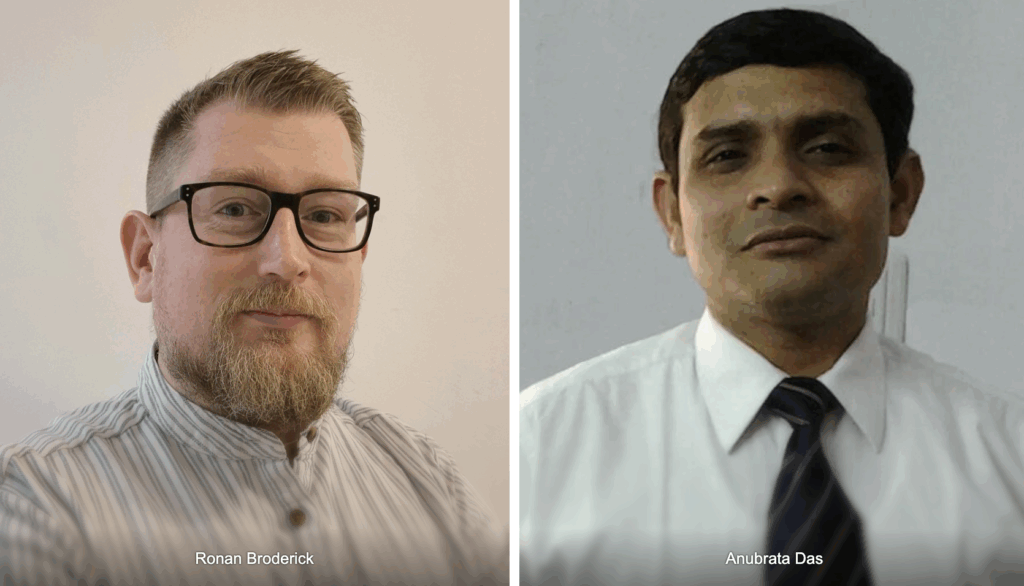
In this month’s featured case study, we hear from researchers Ronan Broderick and Anubrata Das (Cancer and Genomic Sciences), who explain how they use our supercomputer, BlueBEAR, as well as BEAR GitLab for collaboration, and BEAR Data Transfer for high-speed data transfer. The lab is investigating therapeutic targets and biomarkers for the diagnosis of ALT-reliant cancers, such as high-grade glioma. Have a read of Ronan and Anubrata’s case study to find out more.
EOI for case studies on open source codes and software impact

A Community of Practice dedicated to the advancement and impact of open-source codes and software is inviting Expressions of Interest (EOIs) to highlight the University’s open-source research projects. If you are interested in contributing, then please fill out the Open Source Code and Software Impact form.
Opportunities for 1:1 support
BEAR drop-in session dates

We are currently holding monthly in-person drop-in sessions on the first Wednesday of the month on the first floor of Staff House (formerly Café Aroma). We also provide additional virtual drop-in sessions via Zoom for those not on campus or who require specialist help – check the drop-in webpage for updates, as well as details on how to join the sessions. Currently scheduled dates are also listed below:
- In-person – Wednesday 3 December, 13:30-14:30 – Staff House, first floor (look for our banner)
- Via Zoom – Friday 12 December, 11:00-12:00
- In-person – Wednesday 7 January, 11:30-12:30 – Staff House, first floor (look for our banner)
- Via Zoom – Tuesday 13 January, 13:30-14:30
Meet the Data Scientists – online drop-in session
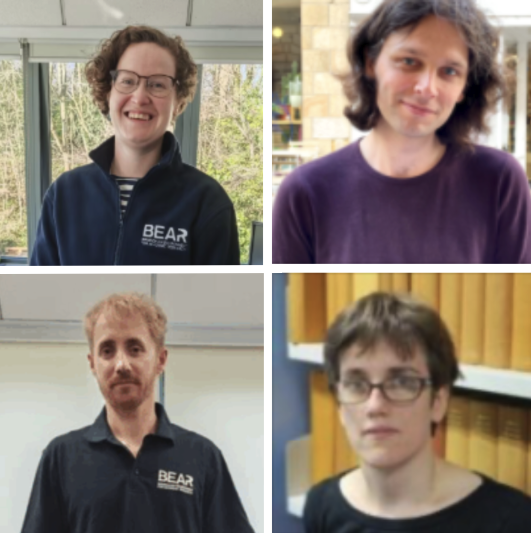
The Research Data Scientists are inviting interested researchers to their upcoming online drop-in session on Thursday 4 December at 14:00-15:00 (Joining link). This is a great opportunity to chat to our team of Research Data Scientists to find out more about the Research Data Science service, and discuss how they can support your research.
Awards
Lastly, we are delighted to announce that research conducted by University researchers using BlueBEAR and a national supercomputer have won awards:
HPCwire 2025 award – Best Use of AI Methods for Augmenting HPC Applications

Congratulations to researchers Luisa Orsini and Jiarui Zhou on winning the global HPCwire Award ‘Best Use of AI Methods for Augmenting HPC applications’. The award recognises the cutting-edge nature of their research using HPC and GPUs on BlueBEAR to develop real-time, high-resolution monitoring of biodiversity to tackle challenges in biodiversity loss and pollution. Find out more in the HPCwire award blog post.
Aerospace researchers win national image prize

Congratulations to PhD student Hibah Saddal, and her Supervisor, Chandan Bose, who have won a national image prize with their depiction of air flow over a morphing wing, created using high-fidelity simulations on the national ARCHER2 HPC system. To see the winning image and find out more, see the University news article.
Missed last month’s newsletter?
Find October’s newsletter here. Sign up to receive the newsletter direct to your inbox by joining our bear-updates mailing list here (UoB login required), or ask to join via email at bearinfo@contacts.bham.ac.uk