
Below we hear from the Beariables team in their own words about their experience going to Computing Insight UK and winning the national cluster challenge.
Authors: Team Beariables – Harry Vicaradge, Jamie Cline, Ewan Hallatt, Sereya Mee, Adam Wilson and Arthur Baverstock
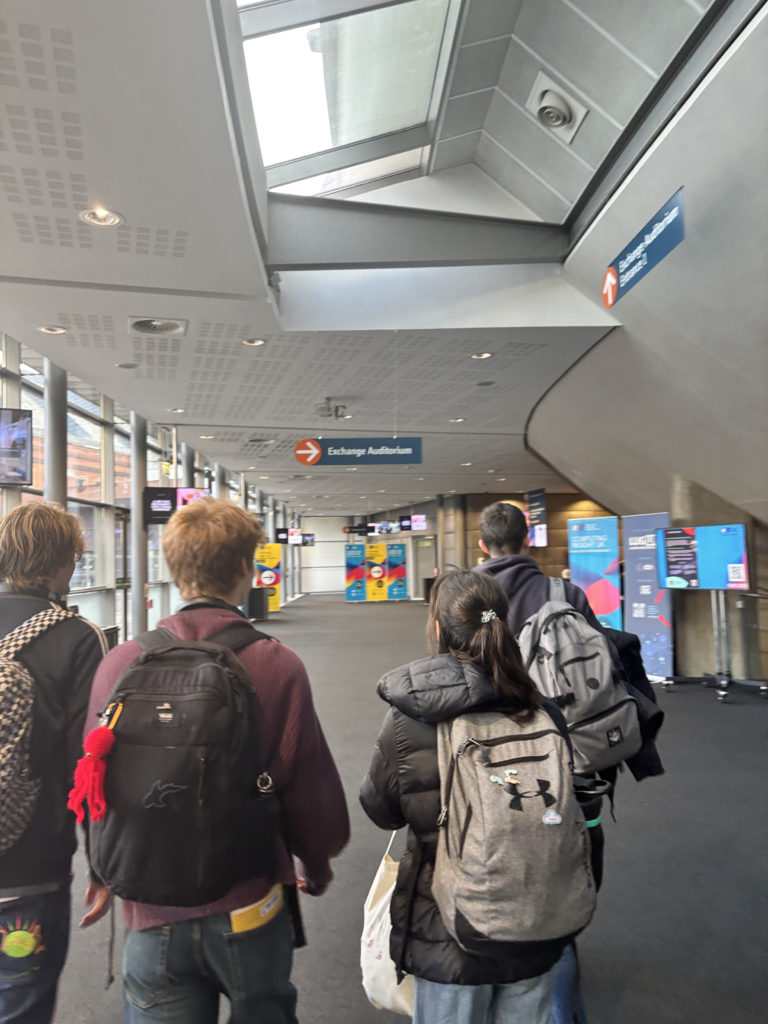
In December, our team the Beariables? attended the Computing Insight UK Conference, where we competed in the CIUK Cluster Challenge and placed 1st out of 17 teams. We are thrilled with the win, and so excited to represent CIUK at the ISC 2026 Student Cluster Competition in Hamburg this summer!
For most of us, this competition was our first experience with high-performance computing. A few months ago, many of us had never interacted with a cluster, and some of us had never even used Linux. Over the months leading up to the competition, we learned how HPC systems work, with help from the talented members of ARC, through the qualifying challenges from UCL, Durham, and Edinburgh University. This involved benchmarking with LIKWID for Durham and HPL/HPCG for Edinburgh whilst processing our job scripts using Slurm, as well as creating Streamlit dashboards from large Gapminder datasets. The tasks also involved analysing any data we obtained through testing the supercomputers, which certainly made us feel very important.
One of the things that made the experience particularly interesting was the mix of backgrounds within our group. Most of us do not study computing degrees; our team is mostly physics and maths students, so preparing for the challenge meant quickly learning new tools and concepts that were completely unfamiliar initially.
Two members of our group, Harry Vicaradge and Adam Wilson, had some experience with HPC, as they were originally part of the third placed team “Beariables” in the BEAR Challenge 2025, the University of Birmingham’s amazing internal HPC competition. Their experience helped guide the rest of us as we began learning how cluster systems work.
The challenges
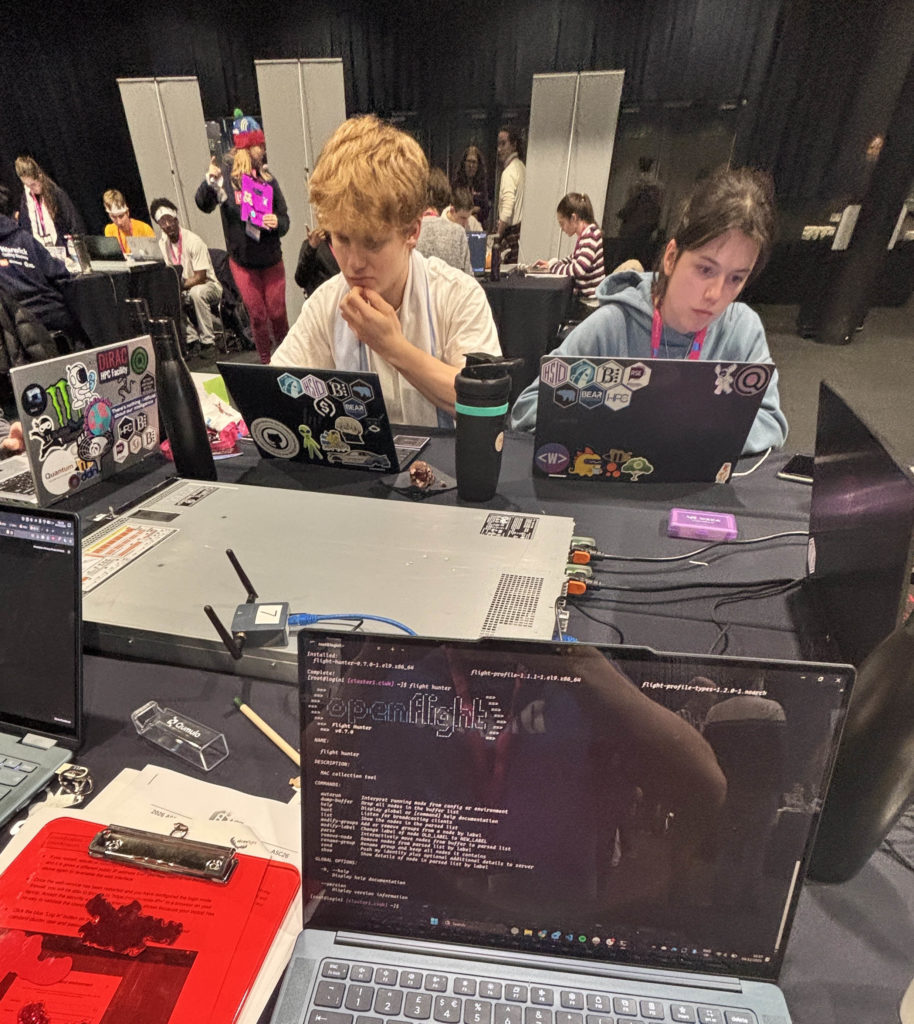
The CIUK Cluster Challenge consisted of two short, hands-on hackathons focused on different parts of HPC infrastructure.
In the first challenge, a Dell PowerEdge R630 server was dumped on our desk, and we were asked to turn it into a working cluster. We created and configured virtual machines using KVM and libvirt, next we used FreeIPA to create users with secure authentication for the system. Once the cluster was running, we used Apptainer and Slurm to run jobs on the system, including a simple machine learning program. There were also a few comedic tasks thrown in for us to get a few extra points, such as running jobs from other people’s computers, and getting random people at the conference to run jobs.
The second challenge focused on security and monitoring. We used Grafana to create a metrics dashboard on an AWS, using Prometheus and Loki to collect logs of SSH login
attempts and integrate with a slack bot to alert any suspicious behaviour. The goal was to create a system that could robustly monitor activity and provide alerts in real time.
What we took away
The biggest takeaway for us was just how much we learned in a short period of time. The time pressure forced us to dive into Linux, clusters, scheduling systems, and cloud infrastructure, often for the first time. The pressure meant we ended up breaking a lot of things but learning so much along the way!
We really think our teamwork made a huge difference in our success. Everyone picked up different parts of the tasks and communicated what they learned, comparable to the jobs that run on HPCs, which meant the whole group progressed much faster than any of us would have individually.
We are incredibly grateful to the Advanced Research Computing team at the University of Birmingham, especially Stephanie Thompson, Gavin Yearwood, and Leo Turnell-Ritson, for introducing us to HPC, mentoring and providing so much support leading up to the competition.
The conference itself was also a great opportunity to meet people working across the HPC ecosystem and learn about the technologies behind large scale computing systems.
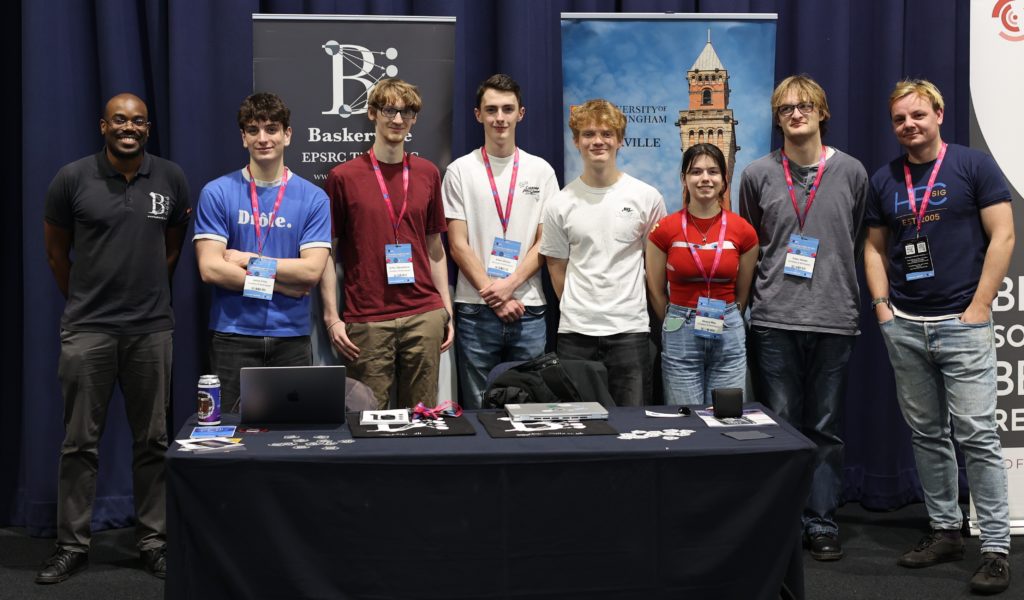
What’s next for the Beariables?
Winning the CIUK Cluster Challenge means we will now represent CIUK and the University of Birmingham at the ISC 2026 Student Cluster Competition in Hamburg.
For a group that only recently started learning about HPC, the opportunity to compete internationally is incredibly exciting. Over the coming months we will continue building our skills and preparing for the next stage of the competition, and we’re thrilled to be working with the ARC team to create one of the competitions for the 2026 BEAR Challenge!
Most of all, the experience has shown us how quickly you can learn when you jump into something completely new. A few months ago, we were a group of beginners, now we are heading to Germany for ISC2026. If you are reading this as a student, take part in the BEAR challenge!