
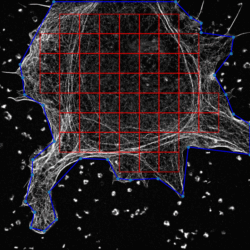
In this case study we hear from Ellen Jenkins, a postdoctoral student from the Institute of Inflammation and Ageing. Ellen is looking into developing a deep learning model to automatically differentiate the tissue from the air space. There is an ongoing project in the respiratory research group (CMH, IIA) which utilises samples of human lung … Continue reading “Binary classification of lung tissue immunofluorescence images by deep learning”
Tag: training
March BEAR Newsletter

Birmingham Environment for Academic Research (BEAR) Newsletter You may have noticed that there was no February newsletter and there was a good reason for this! We were awaiting the release of the exciting news that the University has won funding from UKRI to provide a National Compute Resource (NCR). There are several new posts to support … Continue reading “March BEAR Newsletter”
January 2026 BEAR Newsletter

Birmingham Environment for Academic Research (BEAR) Newsletter December was an exciting month for the team, as one of the student teams from BEAR Challenge won the national Computing Insight UK Cluster Challenge! Team ‘Beariables’ gave an amazing performance to beat 16 teams from across the UK, and now go on to represent the UK at the International Supercomputing Conference … Continue reading “January 2026 BEAR Newsletter”
Update – 2024 IT Needs of Active Research survey progress
It has been nearly two years since the last Pro-Vice Chancellor for Research (PVC-R) ‘IT Needs of Active Research Survey’ was released, and as we prepare for the next survey, we wanted to update you on some actions that IT Services has taken since we analysed the results of the 2024 survey. You can find … Continue reading “Update – 2024 IT Needs of Active Research survey progress”
Vibe coding: when programming becomes a feeling
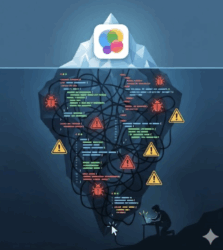
If you’ve ever wished you could build an app without learning to code, vibe coding might sound like the answer. Named Collins Dictionary’s Word of the Year for 2025, the term describes the process of creating a website or app simply by telling artificial intelligence what you’d like it to do — and letting the AI write the code for you. … Continue reading “Vibe coding: when programming becomes a feeling”
November 2025 BEAR Newsletter

Birmingham Environment for Academic Research (BEAR) Newsletter This month, we enjoyed meeting and speaking to over 200 staff members at the Staff Benefits Fair about the various BEAR services available, welcome to those who have joined our mailing list! November’s newsletter looks a little different as we’ve added some sections to help with navigation, do let us know if you have … Continue reading “November 2025 BEAR Newsletter”
Modelling accelerator-based neutron sources using the BlueBEAR cluster
In this case study we hear from Louis Butt, a doctoral researcher from Metallurgy and Materials, who has been using BlueBEAR to research accelerator-based neutron sources. I am a PhD student researching accelerator-based neutron sources in the School of Metallurgy and Materials. My work involves taking measurements with our source at the University’s MC40 Cyclotron … Continue reading “Modelling accelerator-based neutron sources using the BlueBEAR cluster”
The value of version control

The Research Software Group’s mission is rooted in the observation that most current research requires software, often written by researchers themselves, and that the application of a few core software engineering principles leads to more effective research. This is neatly captured by the Software Sustainability Institute‘s tag line: “better software, better research”. A core technology … Continue reading “The value of version control”
October 2025 BEAR Newsletter
Birmingham Environment for Academic Research (BEAR) Newsletter It’s been great to meet so many new PhD students at various college and school inductions over the last few weeks, and to see so much interest in the new training workshops that we are providing. To help spread the word about the many ways that BEAR services can help … Continue reading “October 2025 BEAR Newsletter”
September 2025 BEAR Newsletter
Birmingham Environment for Academic Research (BEAR) Newsletter We kicked off September with a BEAR Champion meetup, celebrating all the help that our expanding team of volunteers have given over the past academic year and going on a data centre tour to meet our supercomputer, BlueBEAR. As we head into the new academic year, we have updated our training homepage to accommodate … Continue reading “September 2025 BEAR Newsletter”