
In this case study, we hear from Mahdi Tavakol (based at University of Oxford, and visiting researcher), who has been utilising BEAR to study tooth mineralisation and demineralisation.
My name is Mahdi Tavakol. I am a computational scientist in the Department of Engineering Science at the University of Oxford and a visiting researcher and collaborator at the School of Dentistry, University of Birmingham. My work is part of a joint Oxford-Birmingham EPSRC-funded project entitled “Elucidating the Pathways for Human Tooth Enamel Mineralisation by 4D Microscopy and Microfluidics” led by Profs. Jin-Chong Tan and Alexander Korsunsky at Oxford, and Profs. Gabriel Landini and Dick Shelton at Birmingham.
My research is centred on the development of advanced computational methodologies within the field of biophysics, with a current emphasis on elucidating the molecular mechanisms underlying tooth mineralisation and demineralisation. These insights could lead the advancement of novel preventive and therapeutic approaches to enable next-generation dentistry.
In my research, I employ a diverse range of computational techniques, including molecular dynamics (MD) simulations, free energy calculations, constant-pH MD simulations, and advanced sampling methods. By applying these techniques, I aim to unravel the fundamental processes governing tooth mineralisation and demineralisation, shedding light on pathways that could pave the way for innovative preventive and therapeutic strategies.
The computational resources provided by the BlueBEAR HPC have been instrumental in advancing my research
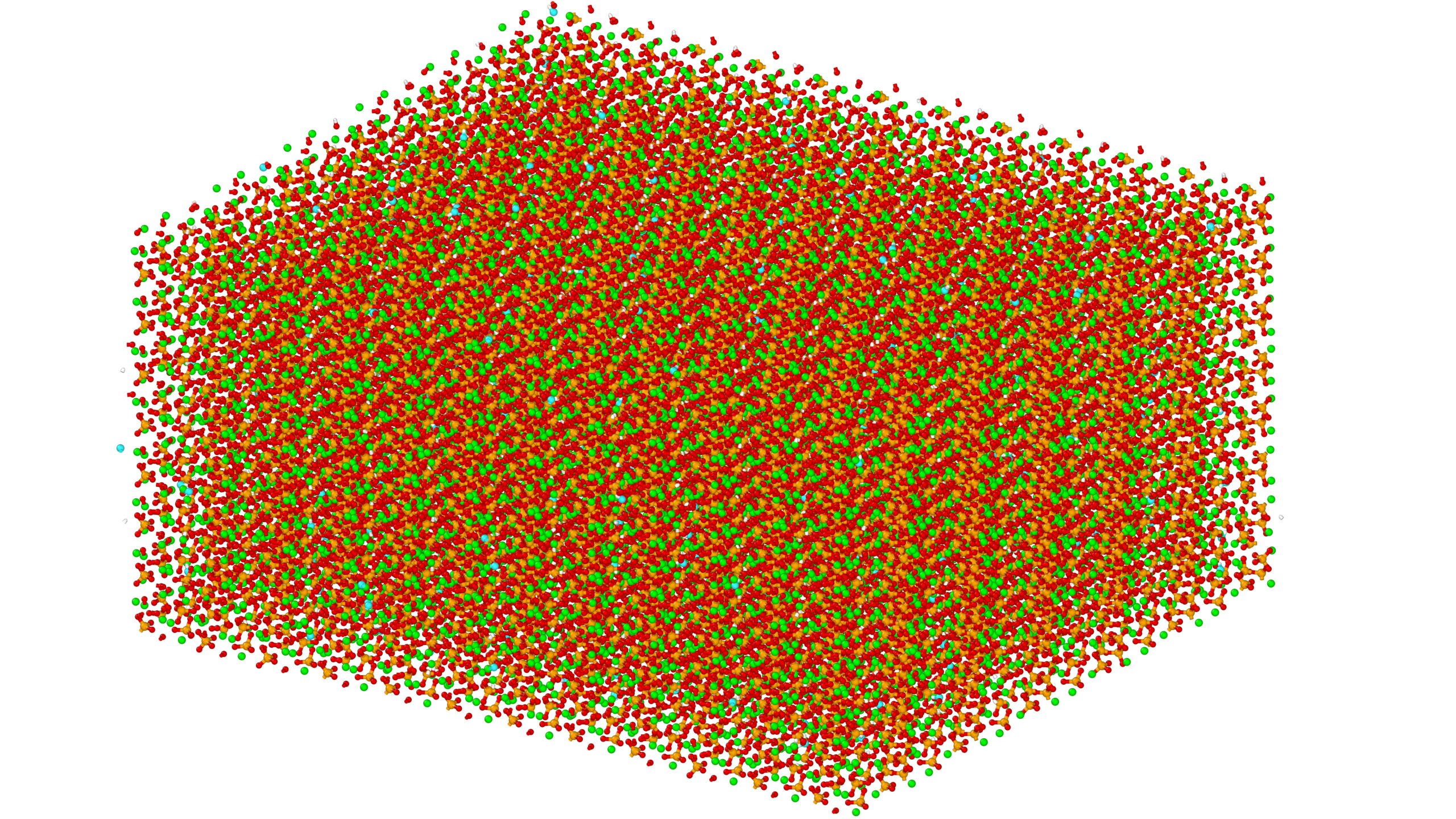
One key focus of my research is investigating the effects of ionic doping on the primary tooth mineral, hydroxyapatite (HAp), which consists of calcium, phosphate, and hydroxide ions (Figure 1). To explore this, I have utilized various computational tools to study how doping with ions such as fluoride, carbonate, and magnesium impacts HAp’s chemical and mechanical stability, both critical to its resistance to demineralisation.
Using conventional MD simulations, I discovered that doping with magnesium ions occurs only on the HAp surface, as void creation within HAp — a prerequisite for interior doping — requires extraordinary long timescales, as revealed by steered molecular dynamics (SMD) simulations and free energy calculations using the Bennet Acceptance Ratio (BAR) method. These findings underscore the necessity of demineralisation and remineralisation processes for effective interior doping.
To assess the chemical stability of doped HAp, I performed alchemical free energy calculations via thermodynamic integration (equation 1), identifying magnesium as the most promising ion for enhancing stability. This finding highlight magnesium as a leading potential candidate for preventive applications against tooth demineralization.
\[
\Delta G = \int_{0}^{1} \left\langle \frac{\partial U(\lambda)}{\partial \lambda} \right\rangle_{\lambda}
\]
(1)
Until now, I have made significant progress in identifying potential candidates for ion doping in the context of preventive strategies for tooth diseases. It has been determined that doping of the HAp interior is not feasible without the occurrence of HAp demineralisation and subsequent remineralisation. A comprehensive understanding of the molecular mechanisms underlying the HAp mineralisation and demineralisation pathways is therefore critical. Not only does this knowledge facilitate the development of more effective doping strategies — particularly for interior doping — but also informs the design of novel therapeutic approaches for dental diseases. Currently, the most prevalent treatment for tooth-related conditions involves the use of artificial fillers, rather than promoting the remineralisation of native HAp. Consequently, the ongoing step of my research focuses on elucidating the mineralisation pathway of HAp, the primary mineral constituent of teeth, with the aim of advancing our understanding of these processes and their therapeutic potential.
BlueBEAR facilitated large-scale mechanical stability simulations with periodic boundary conditions, where multiple box sizes were tested to ensure robust results — an often-overlooked factor in MD studies
Studying the mineralisation pathways of HAp are essential for understanding natural repair mechanisms and designing new therapeutic approaches. The mineralisation process spans multiple scales—chemical, molecular, and nanometric. On the chemical level, HAp mineralises according to the reaction:

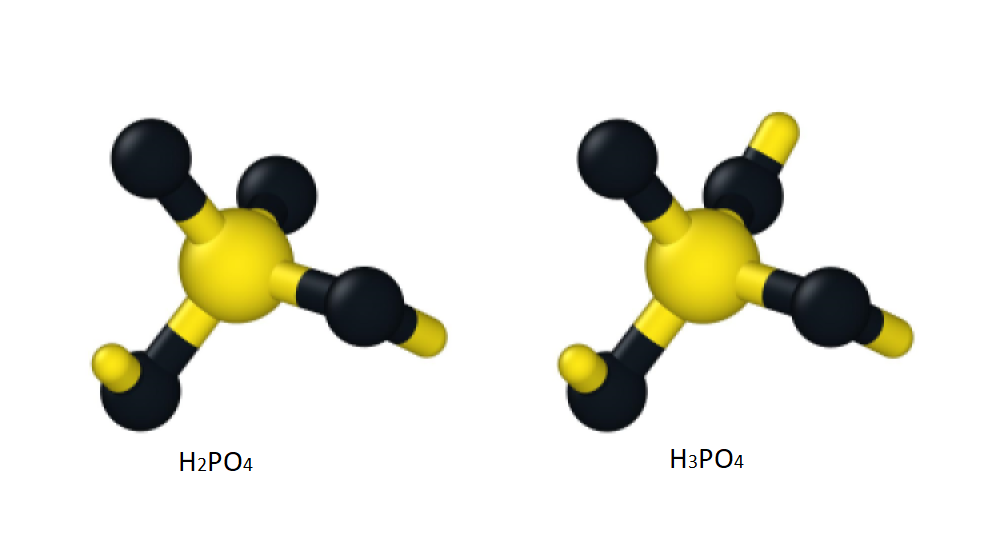
Given the limitations of conventional MD in modelling bond formation and breaking, I employed constant-pH MD simulations to capture protonation and deprotonation dynamics essential for this reaction.
On the molecular scale, phosphate ions undergo protonation or deprotonation upon joining or leaving the HAp surface. To track these events, I extended the LAMMPS code, enabling on the fly identification of surface and interior phosphate ions. On the nanoscale, I will apply well-tempered metadynamics to investigate the anisotropic growth rates of different HAp facets, an approach necessitated by the timescales of these processes, which exceed those accessible to conventional MD.
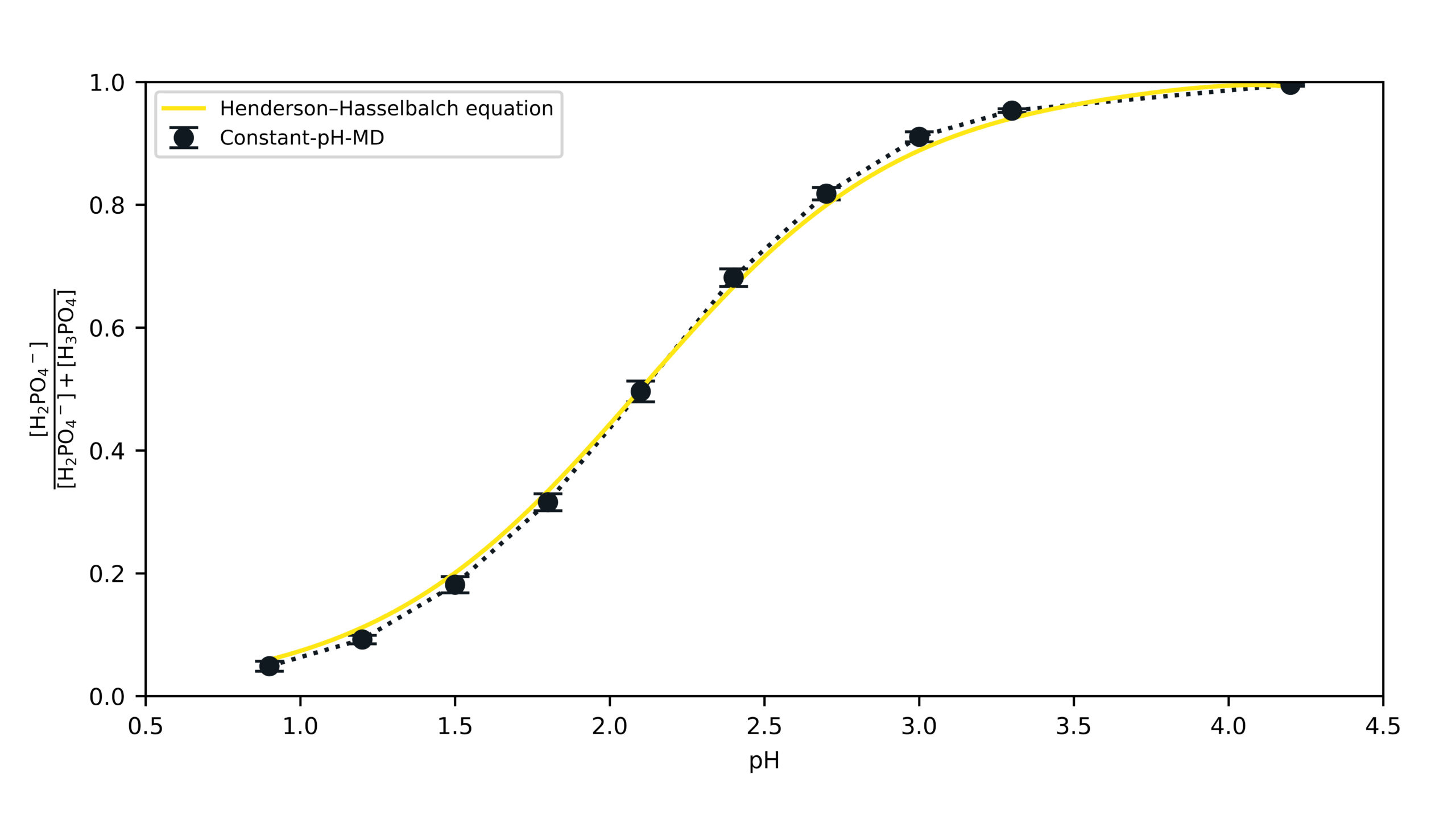
A significant milestone in my research has been the development of a novel LAMMPS package for simulating the pH-dependent mineralisation, now in the final stages of validation. Initial results, conducted on local workstations, confirm the correctness of this code (Figure 2).
The computational resources provided by the BlueBEAR HPC have been instrumental in advancing my research. The Intel CPUs on BlueBEAR significantly outperform the competitors for LAMMPS simulations, thanks to AVX512 vector operations, which enable dual-atom processing per core. Additionally, the relatively short queue time of BlueBEAR has greatly accelerated my research progress.
It also has enhanced the quality of my research in various occasions. For example, BlueBEAR facilitated large-scale mechanical stability simulations with periodic boundary conditions, where multiple box sizes were tested to ensure robust results — an often-overlooked factor in MD studies. Similarly, SMD simulations to explore ionic doping in HAp interiors were completed within a month using the BAR method on BlueBEAR, a process that would have taken over four months on alternative HPC systems.
Without BlueBEAR’s computational power, I would not have uncovered the critical role of demineralisation and remineralisation in facilitating ionic doping, nor would I have been able to design subsequent research steps on time.
In conclusion, the advanced computational resources provided by BlueBEAR have not only accelerated my research but also enhanced its depth and quality. The insights gained from my work will deepen our understanding of tooth disease pathologies and have important implications in the development of innovative preventive and therapeutic solutions in real-world clinical settings.
We were so pleased to hear of how Mahdi was able to make use of what is on offer from Advanced Research Computing, particularly to hear of how they have made use of BlueBEAR HPC – if you have any examples of how it has helped your research then do get in contact with us at bearinfo@contacts.bham.ac.uk.
We are always looking for good examples of use of High Performance Computing to nominate for HPC Wire Awards – see our recent winner for more details.