
In this case study we hear from Louis Butt, a doctoral researcher from Metallurgy and Materials, who has been using BlueBEAR to research accelerator-based neutron sources.
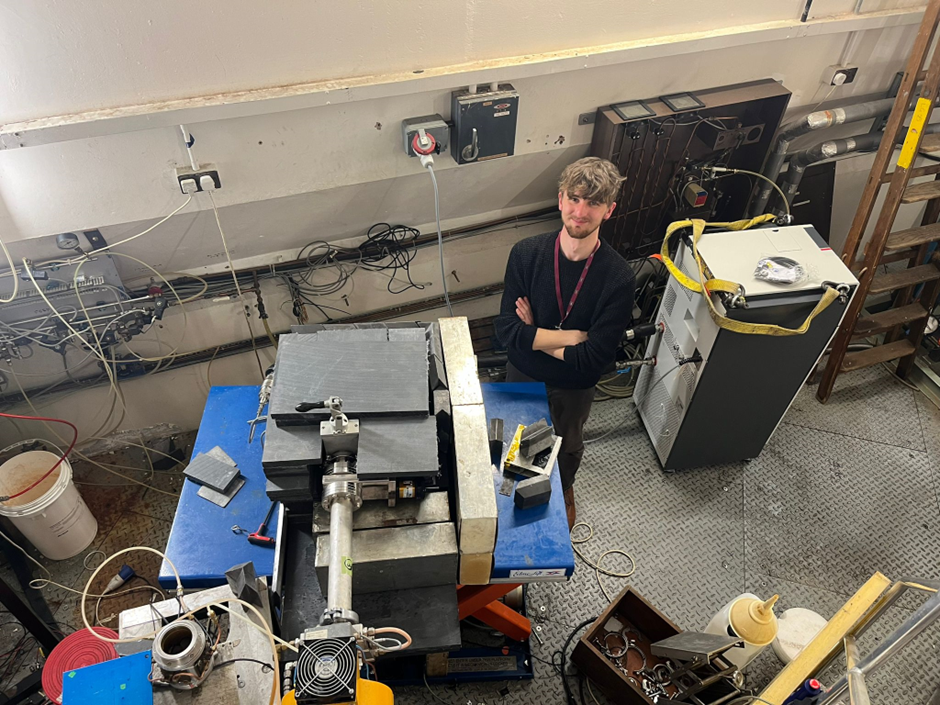
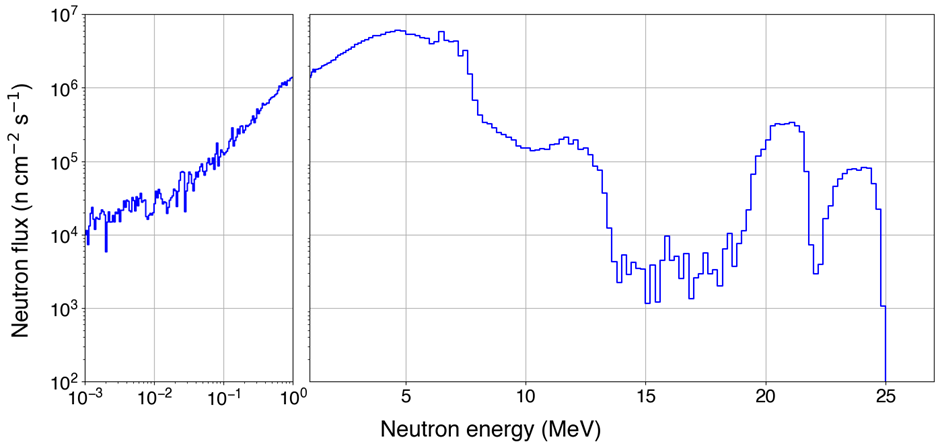
I am a PhD student researching accelerator-based neutron sources in the School of Metallurgy and Materials. My work involves taking measurements with our source at the University’s MC40 Cyclotron Facility and comparing them with predicted results made using a complex radiation transport model. This tells us whether the nuclear data libraries used in the model are accurate. If they are, it means they can confidently be used in simulations of other neutron facilities such as future fusion reactors or spallation neutron sources. If not, then using them in these simulations can lead to incorrect predictions being made.
Modelling radiation transport is done by running Monte Carlo simulations of billions of particles, which takes weeks to run locally on a single machine. Fortunately, the task is embarrassingly parallel, and the runtime can be shortened to only a few hours or days by running the simulations using multiple computing cores. By installing an MPI version of the MCNP code on BlueBEAR and running my model in parallel, I was able to run my simulations much quicker. The cluster has allowed me to run many versions of my model in the background while I concentrate on measuring neutrons, which is tricky enough!
We were so pleased to hear of how Louis was able to make use of what is on offer from Advanced Research Computing, particularly to hear of how they have made use of the BEAR compute – if you have any examples of how it has helped your research then do get in contact with us at bearinfo@contacts.bham.ac.uk.
We are always looking for good examples of use of High Performance Computing to nominate for HPC Wire Awards – see our recent winner for more details.