
In this case study, we hear from Sina Shafiezadeh, a postdoc in the Department of Metabolism and System Sciences, who is working to track and analyse the details of sperm motility from video microscopy.
Accurate and informative assessment of sperm motility is essential for diagnosing male infertility and optimising Assisted Reproductive Technologies (ART) such as in vitro fertilisation (IVF).

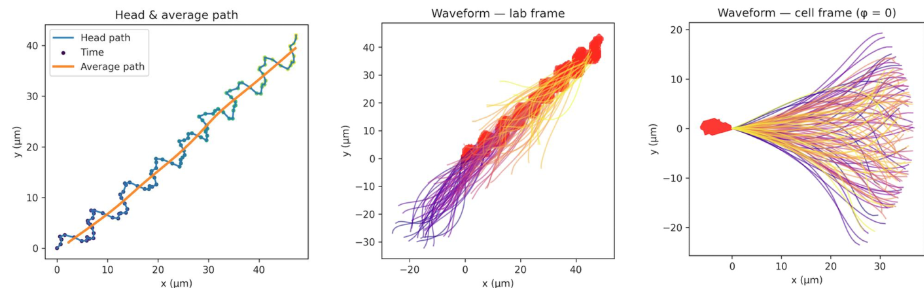
While Computer-Aided Sperm Analysis (CASA) systems have been available for decades, they focus on tracking sperm heads, neglecting the tail, which carries the critical information about motility patterns and functional integrity needed to draw insight into these sensitive cells. The team at the University of Birmingham, led by Meurig Gallagher, have been developing methods to track and analyse the rapidly beating flagella (tails) of swimming sperm for greater understanding.
Recently, there has been a surge in the capabilities of computer vision AI models, which have demonstrated remarkable performance in instance segmentation of everyday objects. However, their performance often degrades in specialised medical domains, including sperm segmentation, due to their rapid pace, thin segments, and low image sharpness at small scales.
By engaging with the Advanced Research Computing research software engineering (RSE) team, together with computation enhanced by BlueBEAR, we have sought to address key computational challenges. In a series of projects, we have developed video acquisition capability; established a robust pipeline to migrate our custom sperm analysis package from MATLAB to C++; and implemented a systematic testing framework to validate the new package’s performance, reliability, and consistency.
Support from the University of Birmingham’s Institute for Data and AI (IDAI) Collision Grant Fund allowed us to fund RSE support from James Tyrrell, Alex Lyttle, and Louise Brown to develop and fine-tune AI computer vision models, using multiple CPU nodes on BlueBEAR to perform parallel processing during the data preprocessing stage, followed by GPU nodes to efficiently train and fine-tune the model.
We were so pleased to hear how Sina was able to make use of what is on offer from Advanced Research Computing. If you have any examples of how it has helped your research, then do get in contact with us at bearinfo@contacts.bham.ac.uk.
We are always looking for good examples of the use of High Performance Computing to nominate for HPC Wire Awards – see our recent winner for more details.