Making accessibility solutions easier to find
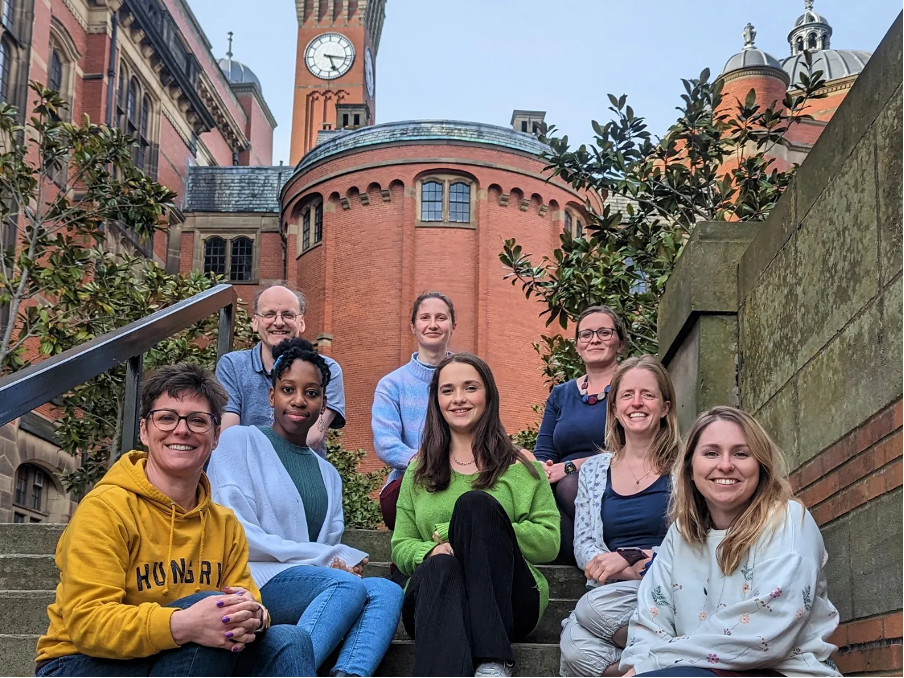
In this blog post, we hear from one of Advanced Research Computing’s Research Software Engineers (RSEs), Dr Helen Abbott, about her journey into accessibility and the inspiring work that followed. Working with Chemistry PhD student Izzy Cavill, she helped establish the Inclusive Research and Learning Centre – a project that is making a meaningful difference by breaking down barriers to participation in research and learning.
Earlier this year I went on a long and frustrating treasure hunt. It started at an accessibility hackathon organised by Catherine Smith, my Advanced Research Computing (ARC) Digital Accessibility co-lead, where we were manually testing our research websites. One of them was a chemistry website with a tool that converts a SMILES string (a line of text describing a molecule) into a picture of its structure, which a sighted chemist can understand at a glance. Alt text, however, just says “a molecular structure”, giving a blind chemist absolutely nothing. How could we make it accessible?
Searching online and asking AI got me nowhere, so I asked on public forums. Literally, three weeks of discussion later, I found the answer: specialist chemistry software on GitHub that had already been built and worked well. The solution was out there, but it was so difficult to find!
I thought of an eighteen-year-old student with a visual impairment starting a chemistry degree. They already have enough to do without spending a frustrating amount of time on forums searching for help. A Disability Services adviser, who can’t be expected to know every discipline, is unlikely to find it either. So, the student struggles on.
They are one of the many students who face similar challenges. Almost 1 in 5 UK students reported a disability in the 2024/2025 academic year (hesa.ac.uk), yet disabled representation falls at every step from postgraduate study to a research career.
Solutions like the one I found need a place where people know to search for them. As a Research Software Engineer, I could build that; but I needed input from someone who understood how chemistry is taught to disabled students and knew the people who support them.
I reached out to Izzy Cavill, who is a Chemistry PhD researcher building tactile models to help students with vision impairments learn chemistry. Her supervisors are Dr Zoe Schnepp, whose ChemBAM project (chembam.com) includes outreach for students with vision impairments, and Prof Pete Slater, whose group has designed tactile battery Jenga models (Using Jenga to explain lithium-ion batteries – University of Birmingham) to explain battery structures.
Over coffee, it turned out that Izzy had been thinking the same thing. As she puts it: “Lots of people are making accessibility solutions, but they never get into users’ hands.” She had already started gathering resources and research to change that, but didn’t have the technical skills to build a database. Our strengths complemented each other, and the Inclusive Research and Learning (IRL) Centre began.
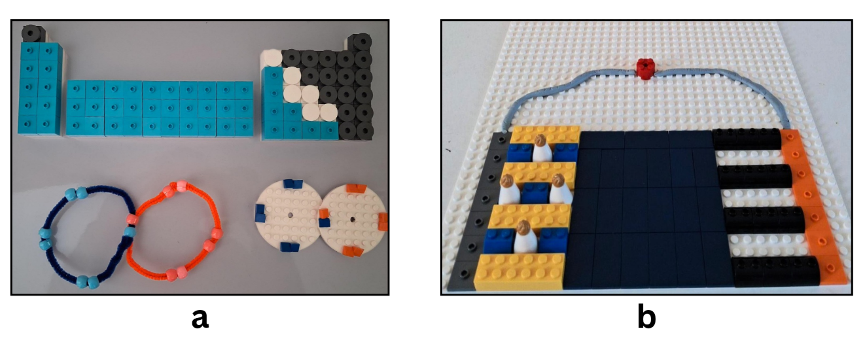
Our first step is a searchable database of specialist accessibility tools that sit outside standard support, starting with chemistry. It will be organised by discipline, research task and accessibility need, and include practical notes and reviews from people who have actually used each tool. The database has two aims: to help disabled students and researchers find solutions that work for them, and to help the wider academic community see where support is still missing.
As we interviewed more academics, students and professional staff, they revealed another gap. We found that when colleagues struggle, they ask the one person they know who “does accessibility”. That person carries the extra work, what they know stays in one department, and people doing similar work elsewhere never find each other.
Then there are the questions no database can answer. How do we recruit disabled participants for research studies? Who could user-test a very niche piece of software? Our interviews suggest the answers are out there. Someone somewhere usually knows!
That’s why the IRL Centre is a community as well as a database. We’re still in the early stages, so now is a good time to get involved, whether you have a tool to share, a question to ask, or an interest in making research and teaching more accessible.
Join the Inclusive Research and Learning Centre
Coffee morning – Tuesday 1 December 2026, 10:30–12:00, Library Café
An informal chance to meet others, share experiences and talk about accessibility and inclusion in learning and research. Researchers, Disability Services staff, QTVIs, professional services colleagues and anyone with an interest in inclusive practice are all welcome.
Teams channel
The IRL Centre UoB Network is for colleagues across the university who work on, or care about, accessible research and teaching. Use it to share your work, ask questions, find testers or participants, or point people to a tool that worked for you. Email Helen or Izzy (below) to be added.
Get in touch
To ask about the coffee morning, discuss accessibility requirements or contribute to the Centre, contact Helen Abbott (h.e.abbott.1@bham.ac.uk) or Izzy Cavill (ifc195@student.bham.ac.uk).
Helen’s profile: https://linkedin.com/in/heleneabbott
Izzy’s profile: linkedin.com/in/isabelle-cavill-52a1b1a5