
In this case study, we hear from Anil Taskin, a researcher in the School of Engineering, who has been leveraging BEAR (Birmingham Environment for Academic Research) to study fluid dynamics in Scroll Expanders and Static-Shaft Wankel Expanders.
A significant amount of research is dedicated to efficiently harnessing renewable energy sources such as solar, wind, and geothermal energy, as well as the vast potential of industrial waste heat, either for direct use or conversion into electricity. Expanders play a critical role in these power generation systems, directly influencing energy efficiency and cost-effectiveness.
I work under the supervision of Dr. Raya Al-Dadah in Mechanical Engineering. Our research focuses on developing expanders for Organic Rankine Cycle (ORC) systems, a closed-loop thermodynamic cycle designed for power generation from low-temperature heat sources (60–90°C).
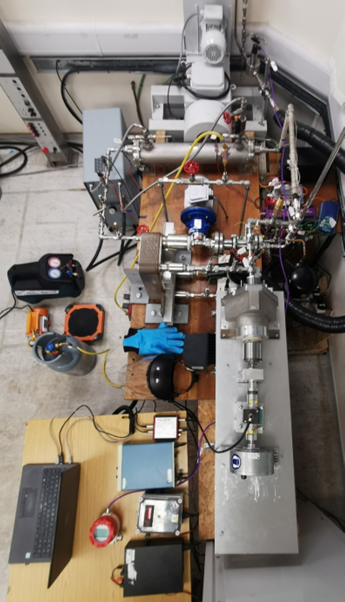
To better understand expander performance, I have developed a new numerical model based on a deterministic approach in MATLAB, combined with Ansys Fluent simulations on BEAR. The high computational power of BEAR allows us to run multiple simulations simultaneously, enabling detailed analysis of the expansion process and thermal-hydraulic characteristics of these machines. As a result, we have recently published high-impact factor papers on both Static-Shaft Wankel Expanders, I`m waiting the review process of scroll expander papers.
- https://doi.org/10.1016/j.enconman.2024.119331
- https://doi.org/10.1016/j.enconman.2023.117859
- https://doi.org/10.1016/j.energy.2024.132770
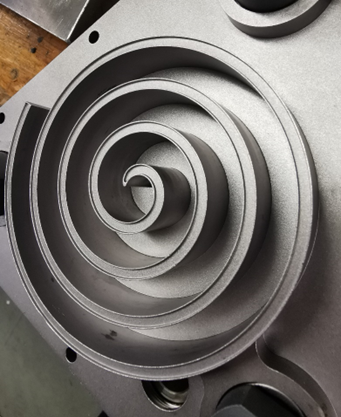
I have developed both Static-Shaft Wankel Expanders and Scroll Expanders to convert low-temperature waste heat into electricity. Without BEAR, designing expanders solely based on experimental results would have been extremely costly and time-consuming. The insights gained from our Ansys simulations on BEAR have been instrumental – like a light at the end of the tunnel—guiding us toward optimized expander designs.
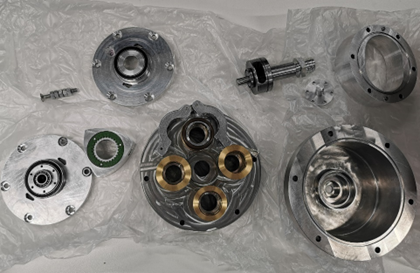
After my PhD, I have been working with Dr Dawei Wu to develop compressor for Cryogenic- hydrogen storage applications.
Access to the BlueBEAR HPC environment has allowed us to accurately predict the complex fluid dynamics within expanders. Before BEAR, we had to wait a month for the results of a single selected simulation on office computers, but now we can run multiple simulations simultaneously and receive results within a day. This would not have been possible without the world-leading advanced computing facilities available at the University of Birmingham. Beyond providing fundamental insights, BEAR has also been an indispensable resource for accelerating our research and outreach activities.
Dr. Raya Al-Dadah
We were so pleased to hear of how Anil was able to make use of what is on offer from Advanced Research Computing, particularly to hear of how they have made use of BlueBEAR HPC – if you have any examples of how it has helped your research then do get in contact with us at bearinfo@contacts.bham.ac.uk.
We are always looking for good examples of use of High Performance Computing to nominate for HPC Wire Awards – see our recent winner for more details.