
In this case study we hear from Ronan and Anubrata, both research staff in Cancer and Genomic Sciences, who have been using BlueBEAR to find therapeutic targets and biomarkers for the diagnosis of ALT-reliant cancers such as high-grade glioma.

Our lab is investigating the Alternative Lengthening of Telomeres (ALT) process; a molecular mechanism used by 10-15% of all cancers to survive and proliferate by elongating the repetitive DNA at the ends of their chromosomes. There are currently no useful treatments for cancers that rely on ALT to survive. By understanding this process we hope to find therapeutic targets and biomarkers for the diagnosis of ALT-reliant cancers such as high-grade glioma.
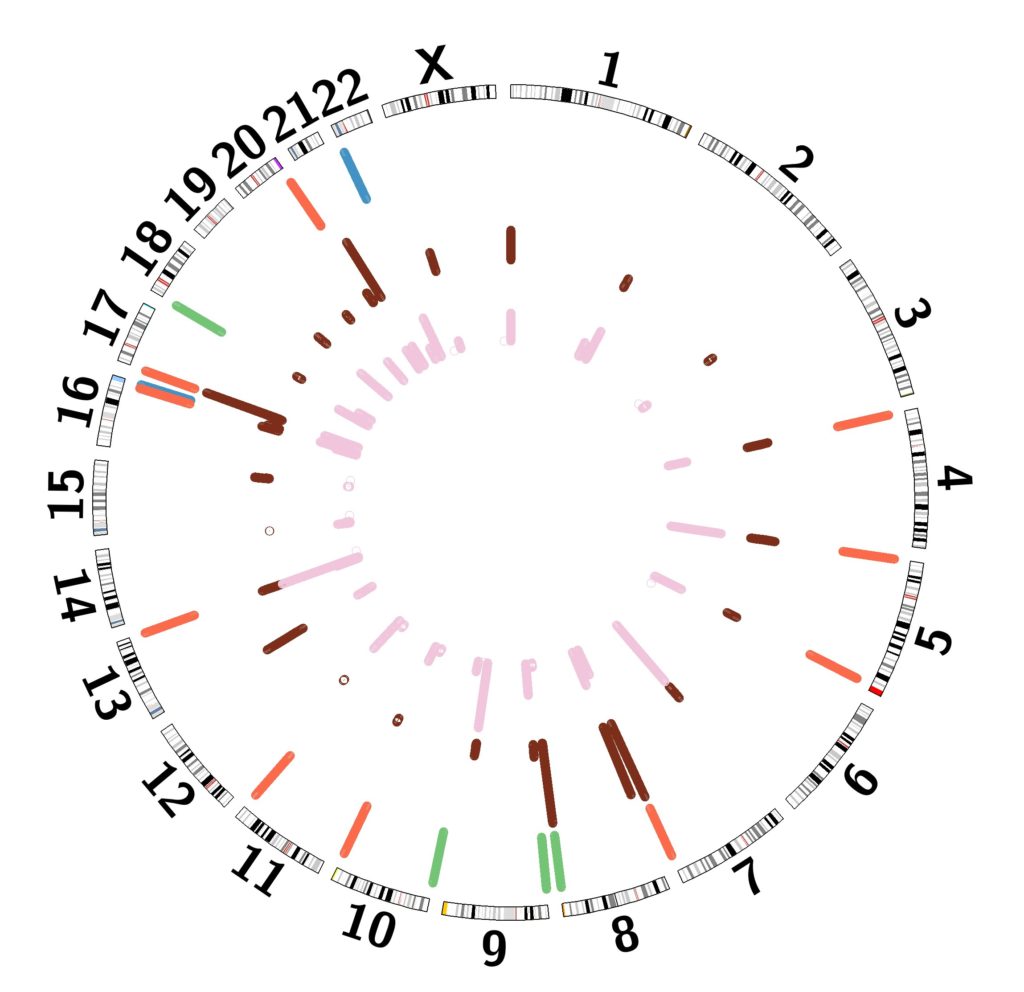
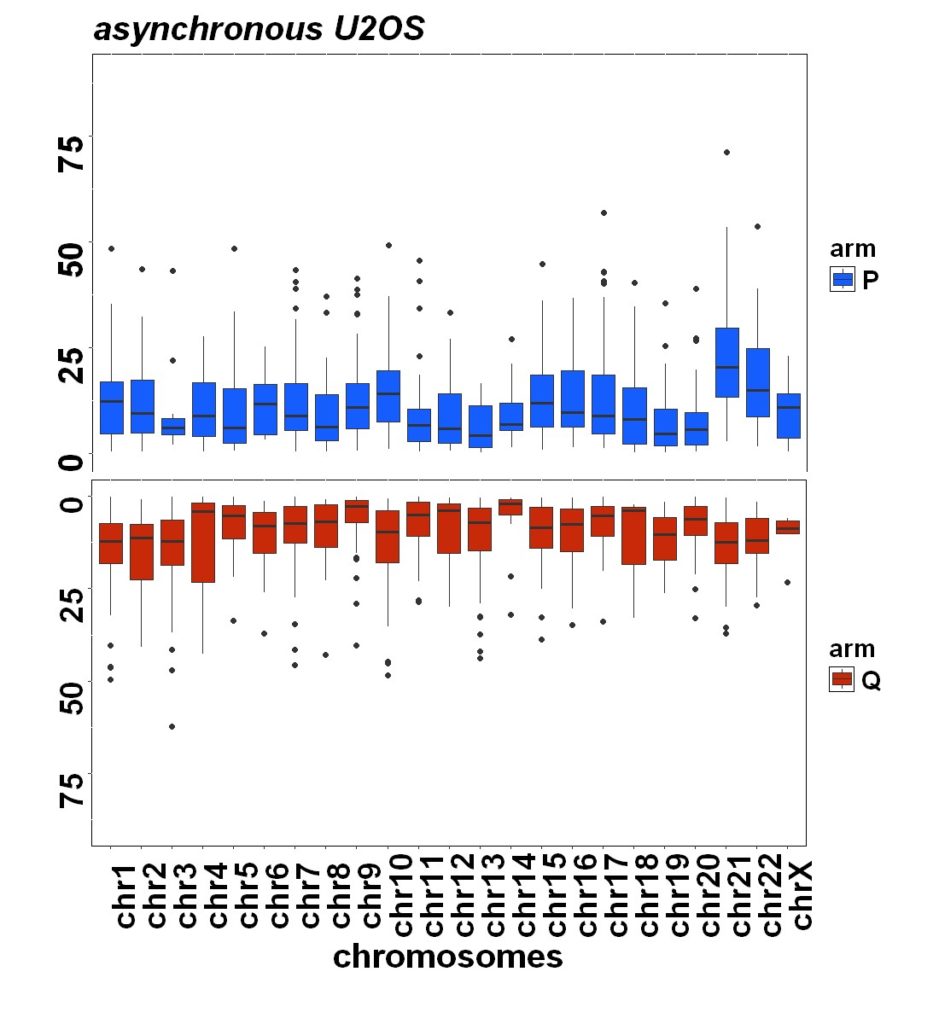
At present, we are using BlueBEAR compute, BEAR Research Data Storage (RDS) and BEAR Gitlab extensively for our research projects. One of the things we are interested in is looking at changes to telomeric DNA by long read sequencing. Here, we use the Oxford Nanopore (ONT) platform in collaboration with Genomics Birmingham and the RDS provides us with safe and secure storage of our high throughput genomic data, using a Globus endpoint for high-speed data transfer [Editor: see the BEAR Data Transfer service for details].
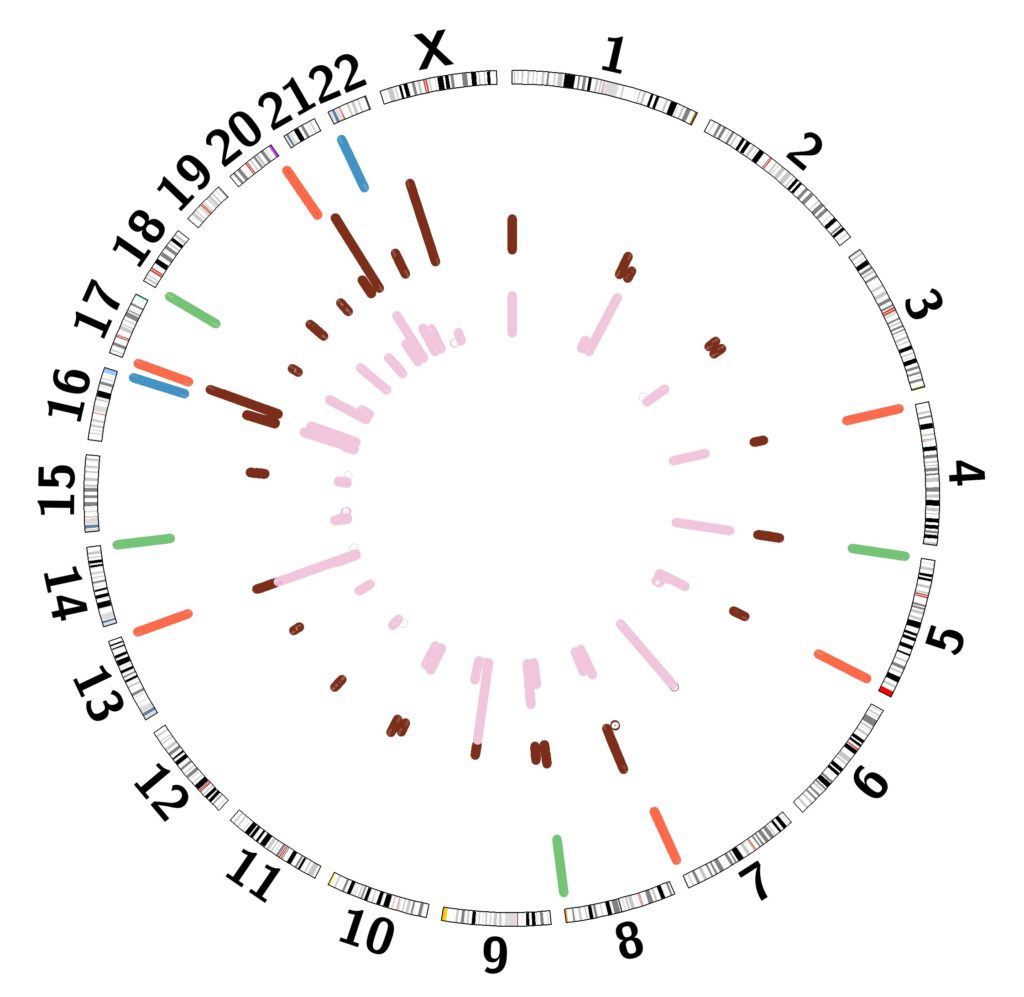
Schematic of telomeres mapped to human genome created with Circos: BEAR apps version 2022b
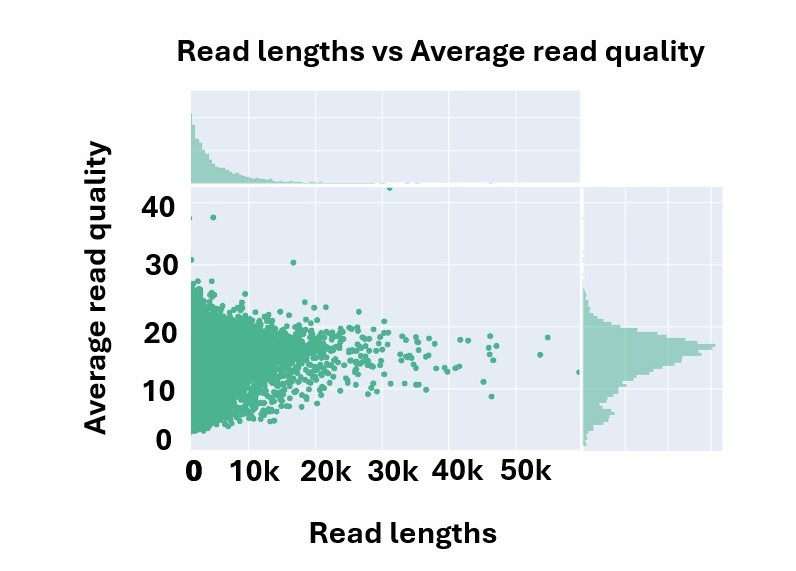
Plot of long read sequence data using NanoPlot:BEAR apps version 2023a
The ONT toolbox uses GPU dependent Neural Networks to infer DNA sequence from the raw read data and the GPU nodes at BlueBEAR have given us the compute resources for this. The repo facility at BEAR Gitlab has helped our team members collaborate efficiently on our DNA and image processing scripts. We are also now exploring the use of Deep Learning tools for image- analysis and again, BlueBEAR has an extensive collection of image processing libraries like Cellpose and Ilastik, which have been so useful for us.
We receive excellent technical support from the BEAR portal staff, whether it be the installation of custom tools or making available compute resources or guiding us for optimizing our protocols.
We were so pleased to hear of how Ronan and Anubrata were able to make use of what is on offer from Advanced Research Computing, particularly to hear of how they have made use of the BEAR compute and storage – if you have any examples of how it has helped your research then do get in contact with us at bearinfo@contacts.bham.ac.uk.
We are always looking for good examples of use of High Performance Computing to nominate for HPC Wire Awards – see our recent winner for more details.