

In this case study, we hear from Jack (Wei-Chieh Tsai), a doctoral student from History of Art and Geography who examines how cultural intermediaries, including artists, curators, and cultural organisations, have contributed to urban development. My PhD research examines the role of artistic interventions in transforming post-industrial Birmingham between 1986 and 2016. The project examines how cultural … Continue reading “Modelling Birmingham’s Cultural Ecology and Urban Oral History Using BlueBEAR”
Tag: BlueBEAR
Binary classification of lung tissue immunofluorescence images by deep learning
In this case study we hear from Ellen Jenkins, a postdoctoral student from the Institute of Inflammation and Ageing. Ellen is looking into developing a deep learning model to automatically differentiate the tissue from the air space. There is an ongoing project in the respiratory research group (CMH, IIA) which utilises samples of human lung … Continue reading “Binary classification of lung tissue immunofluorescence images by deep learning”
Modelling accelerator-based neutron sources using the BlueBEAR cluster
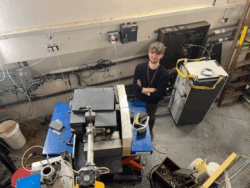
In this case study we hear from Louis Butt, a doctoral researcher from Metallurgy and Materials, who has been using BlueBEAR to research accelerator-based neutron sources. I am a PhD student researching accelerator-based neutron sources in the School of Metallurgy and Materials. My work involves taking measurements with our source at the University’s MC40 Cyclotron … Continue reading “Modelling accelerator-based neutron sources using the BlueBEAR cluster”
The value of version control

The Research Software Group’s mission is rooted in the observation that most current research requires software, often written by researchers themselves, and that the application of a few core software engineering principles leads to more effective research. This is neatly captured by the Software Sustainability Institute‘s tag line: “better software, better research”. A core technology … Continue reading “The value of version control”
Investigating the Alternative Lengthening of Telomeres (ALT)
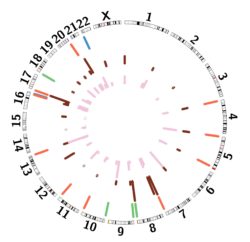
In this case study we hear from Ronan and Anubrata, both research staff in Cancer and Genomic Sciences, who have been using BlueBEAR to find therapeutic targets and biomarkers for the diagnosis of ALT-reliant cancers such as high-grade glioma. Our lab is investigating the Alternative Lengthening of Telomeres (ALT) process; a molecular mechanism used by … Continue reading “Investigating the Alternative Lengthening of Telomeres (ALT)”
HPCwire Award 2025 winners!

For the third year running (see previous awards), we are pleased to announce that a research group who use our advanced computing facilities has been recognised as award-winning in the HPCwire 2025 awards! Advanced Research Computing is very proud to provide Birmingham Environment for Academic Research (BEAR) to support high-impact research at the University, which … Continue reading “HPCwire Award 2025 winners!”
Molecular simulations of small peptides as a means to interpreting mass spectra
In this case study we hear from Edwin, a PhD student in Biochemistry,who has been using BlueBEAR to evaluate the effectiveness of different Molecular Dynamics (MD) simulation protocols at assigning structural information to Ion Mobility data Ion Mobility Spectrometry (IMS), Traveling Wave Ion Mobility Spectrometry (TWIMS) and High-Field Asymmetric Wave Ion Mobility Spectrometry (FAIMS) are … Continue reading “Molecular simulations of small peptides as a means to interpreting mass spectra”
Energy Data Landscape – Challenges and Opportunities
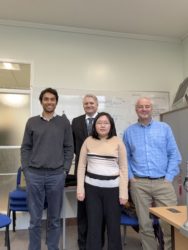
Edward Barbour and Grant Wilson, Associate Professors in Chemical Engineering, explored detailed domestic heat pump demand data and became interested in their operational costs under different energy tariffs. They quickly discovered that tariff data was difficult to obtain and compare across different suppliers. With help from Mingxue (Jean) Du, a Research Software Engineer, they identified … Continue reading “Energy Data Landscape – Challenges and Opportunities”
SMLM Data Exploration with Nano-org and BlueBEAR
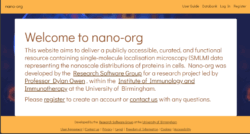
This case study highlights the ongoing collaboration between the Research Software Group, Professor Dylan Owen, and Dr Sandeep Shirgill in the development of Nano-org. Nano-org has recently been published in Nature Communications. Nano-org uses ultra-precise coordinate data to represent the nanoscale distributions of individual proteins within cells. The unique functionality provided by Nano-org supports a … Continue reading “SMLM Data Exploration with Nano-org and BlueBEAR”
How green is the BEAR? 2025 updates

In 2022, we took part in the University’s Sustainability Town Hall and published a blog post highlighting Advanced Research Computing’s efforts in sustainable computing over the previous decade. Since then, we’ve continued to explore and develop initiatives in this space. With growing concerns around the energy demands of data centres – such as a recent … Continue reading “How green is the BEAR? 2025 updates”