
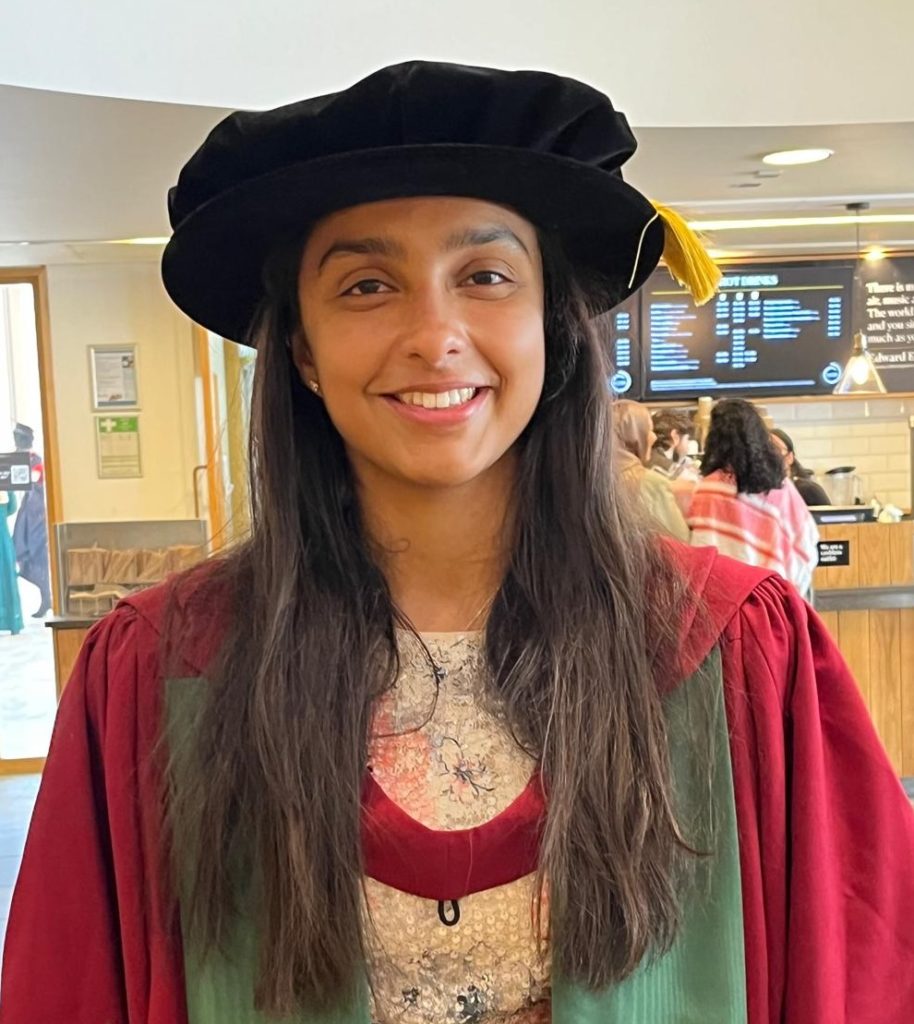
This case study highlights the ongoing collaboration between the Research Software Group, Professor Dylan Owen, and Dr Sandeep Shirgill in the development of Nano-org. Nano-org has recently been published in Nature Communications.

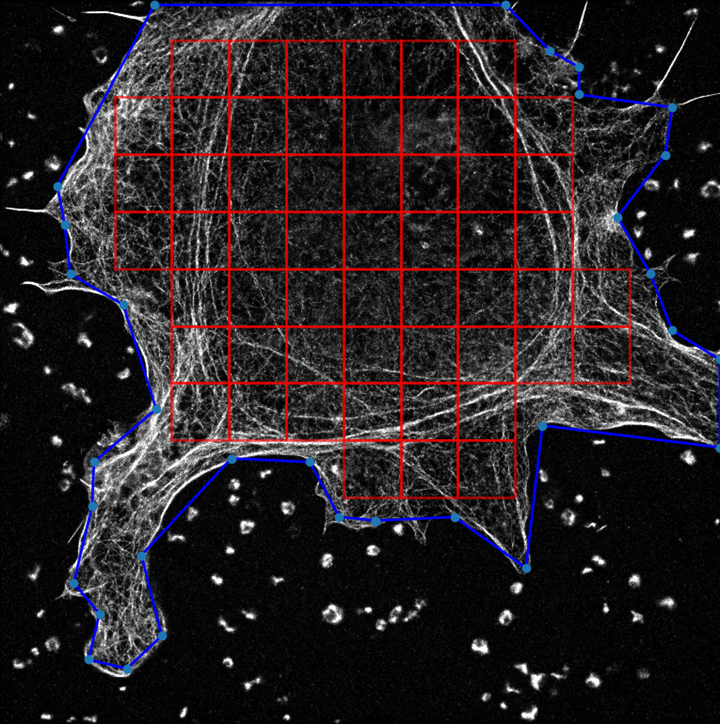
Nano-org uses ultra-precise coordinate data to represent the nanoscale distributions of individual proteins within cells. The unique functionality provided by Nano-org supports a new field of spatial nano-omics, allowing researchers to explore the relationships between nanoscale architectures across proteins, cell types, and experimental conditions.
The Nano-Org Project Team have made extensive use of the resources provided by BlueBEAR to support advanced analysis workflows. Custom algorithms have been developed for similarity analysis, enabling the platform to compare new datasets with existing entries and identify meaningful relationships. In addition, various clustering analyses are performed to group similar nanoscale patterns, helping researchers uncover biologically relevant structures across different cell types and experimental conditions. This large-scale, automated analysis is made possible by BlueBEAR’s capabilities, including virtual machines (VMs), SLURM scheduling, and parallel processing.
The platform itself is built using a modern web stack (Django, Python, Celery, HTML/CSS, JavaScript). As this is an ongoing collaboration between the Research Software Group and Dylan Owen’s lab, new features and analysis capabilities are continually being updated. Currently, development is focused on integrating a Contrastive Learning Model developed by Dr Sandeep Shirgill. This model is a form of machine learning, which is a part of the broader field of artificial intelligence (AI) which will help uncover meaningful nanoscale patterns in microscopy data. These patterns provide insights into protein function, treatment response, or cellular state.
This project is a great example of how BlueBEAR supports cutting-edge research. By providing computational resources, we can successfully transform complex research concepts into efficient, user-friendly software that delivers both high performance and meaningful academic insight.
We are so pleased to learn about how the Nano-Org Project team makes use of what is on offer from Advanced Research Computing, particularly to hear of how they have made use of the RSE group, BEAR compute and storage, – if you have any examples of how it has helped your research then do get in contact with us at bearinfo@contacts.bham.ac.uk.
We are always looking for good examples of use of High Performance Computing to nominate for HPC Wire Awards – see our recent winner for more details.
For further information, please visit:
Paper: Nano-org, a functional resource for single-molecule localisation microscopy data | Nature Communications
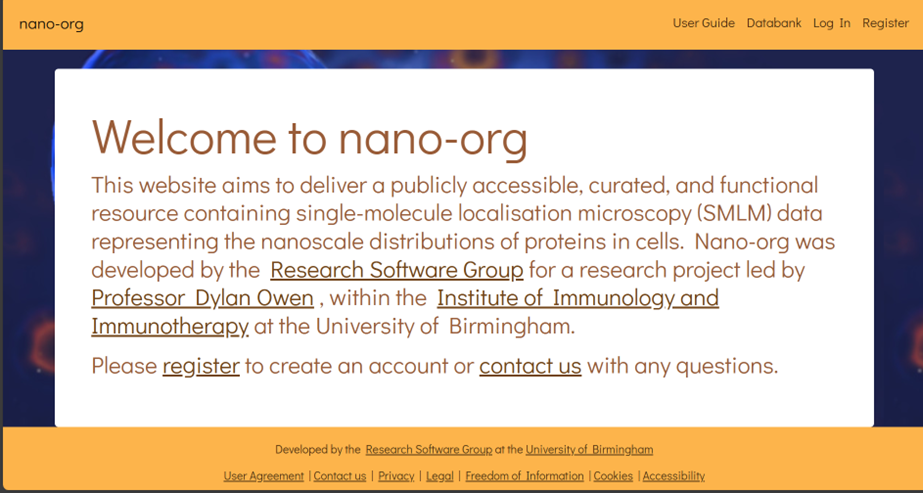
Nano-Org Website: nano-org
Dylan Owen: Professor Dylan M Owen – Department of Immunology and Immunotherapy – University of Birmingham