
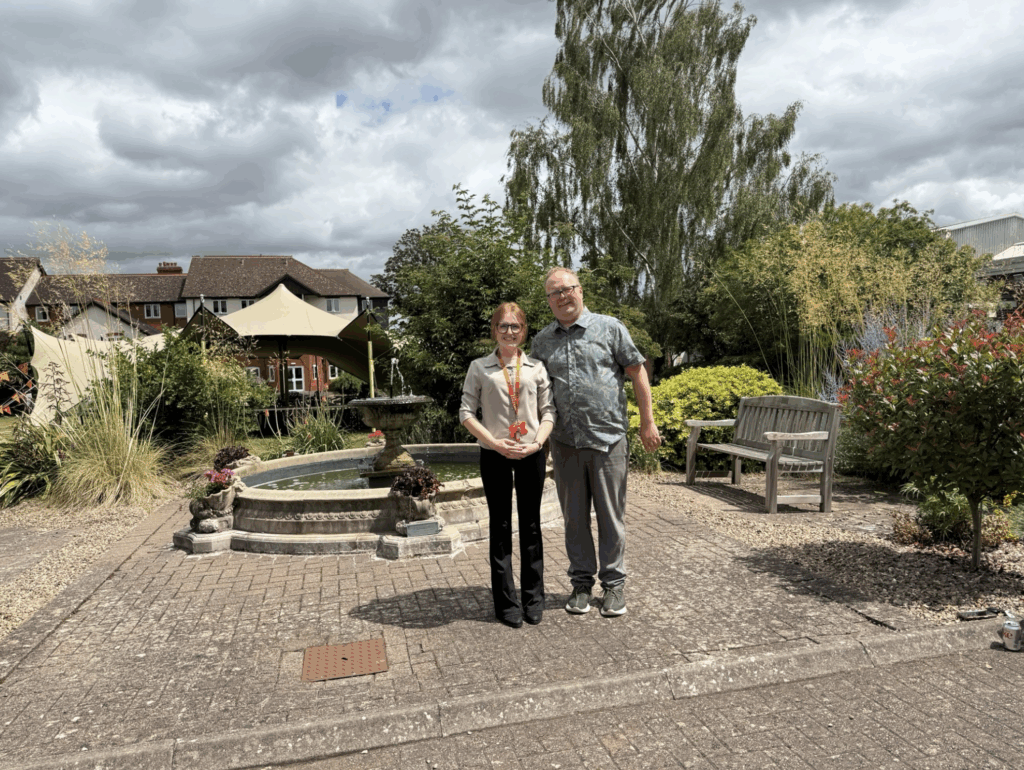
This week Dr. Jon Mueller (Metabolism and Systems Science) ran the first of two science workshops in New College Worcester, a national residential school and college for children and young people aged 11-19 with vision impairment or loss. This workshop was very well received. You can read what the teachers and students thought about it in their blog.
The science workshop was conceived through a partnership between academic researchers at the University of Birmingham, people with lived experience of Alström Syndrome and the teachers at New College Worcester. This collaboration started at an international workshop on sensory loss in Alström Syndrome held at the University of Birmingham in June 2025, which was organised by Dr. Gabriela da Silva Xavier (Metabolism and Systems Science) and Prof. Graeme Douglas (Disability, Inclusion and Special Needs) in association with the Alström Syndrome research team at the College of Medicine and Health and Alström Syndrome UK, with funding and organisational support from the University’s Institute of Advanced Studies. The science workshop directly addressed the difficulties of communicating science effectively to people with vision impairment at the international workshop, and a desire to do better. Jon is currently collecting feedback for his first science workshop from the students and teachers, to inform how he could better bring our research to life for them in a second science workshop. In the first instance, we are thinking about making bespoke educational tools that will allow us to better discuss structure of biomolecules for people with vision loss/impairment.
Delivery of the educational workshops is funded via a follow-on grant from the Institute of Advanced Studies to Gabriela and Prof. Katja Gehmlich (Cardiovascular Sciences). The workshops are part of a wider project, which includes research into the use of stem cells to model and look for treatment for vision impairment in Alström Syndrome. Jon, Gaby and Katja would like to thank everyone at the Institute of Advanced Studies for their support, Ms. Hester Richardson (Disability, Inclusion and Special Needs / VICTAR) for her invaluable advice and insights in the preparation of the science workshops, and the students and staff of New College Worcester for their enthusiasm, generosity and willingness in working with us.
Original blog post and photographs reposted below with permission:
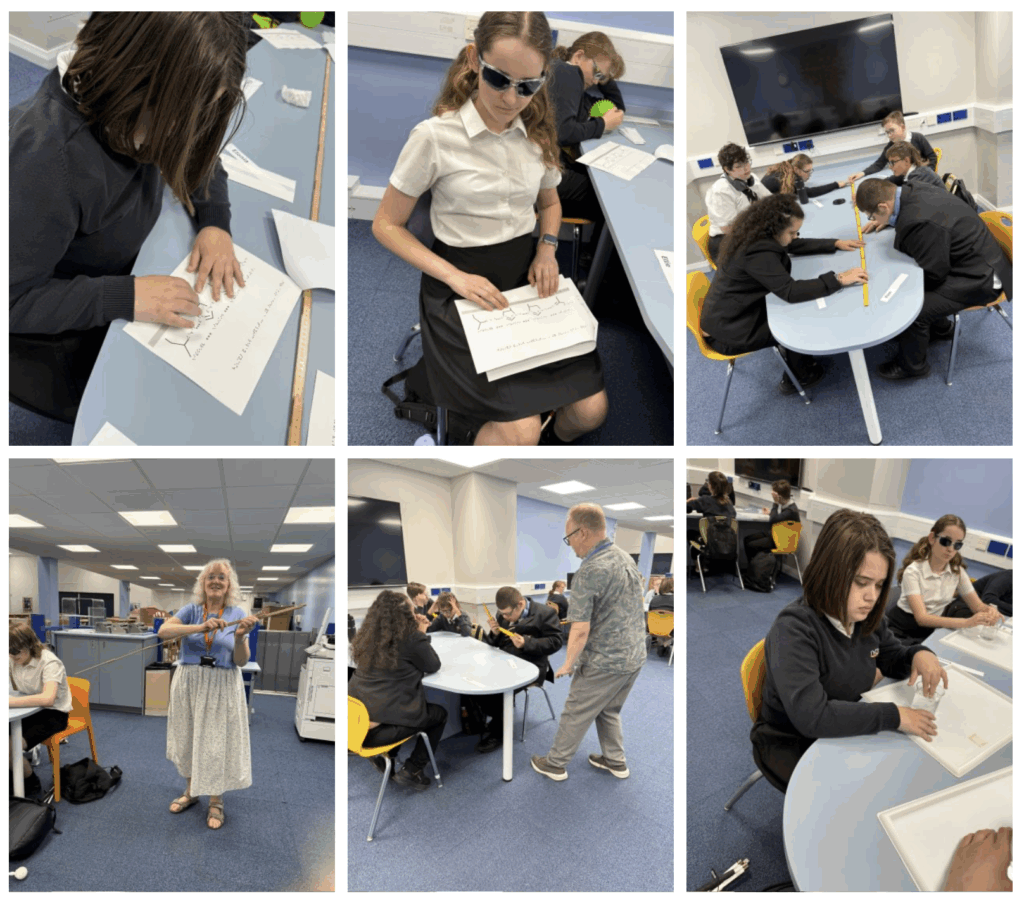
New College Worcester (NCW) was delighted to welcome Dr Jonathan Mueller, a leading biochemist from the University of Birmingham, who delivered an engaging and inspiring workshop for Year 9 and 10 students this week.
As both an internationally recognised researcher and lecturer, Dr Mueller provided students with a fascinating insight into the world of biochemistry, introducing them to emerging areas of scientific research and helping to bring complex scientific concepts to life through his enthusiasm and expertise.
Dr Mueller’s research focuses on understanding how proteins function within the body, particularly the role of enzymes in regulating hormone activity by switching biological signals on and off. Using a wide range of advanced scientific techniques, he investigates these intricate processes and has authored more than 40 research publications. Alongside his research, Dr Mueller has contributed to several biochemistry textbooks and is an award-winning educator, recognised for his commitment to student learning and innovative teaching approaches.
During the workshop, students explored the remarkable properties of water, DNA and proteins through a series of carefully adapted models and accessible diagrams. The session encouraged students to think critically about the building blocks of life and how scientific research continues to uncover new understanding of the natural world.
The workshop proved to be a real highlight for both students and staff, who were thoroughly impressed by Dr Mueller’s ability to make advanced scientific concepts engaging and accessible. It was equally rewarding to see Dr Mueller impressed by the students’ knowledge, curiosity and thoughtful contributions throughout the session.
Mrs Cheema, Head of Science at NCW, said: “It was a privilege to welcome Dr Mueller to NCW and to give our students the opportunity to learn from someone working at the forefront of scientific research. His ability to explain complex concepts in an accessible and engaging way was inspiring and our students responded with enthusiasm, curiosity and some excellent questions. Experiences like this help students to see where a passion for science can take them and bring classroom learning to life.”
Opportunities such as this help to broaden students’ horizons, providing valuable insight into higher education and careers in science while nurturing a love of learning and discovery.
We would like to thank Dr Mueller for taking the time to visit NCW and for delivering such an inspiring and memorable workshop.