
In this case study, we hear from Kiran Nutter (PhD student in the Nuclear Physics group), who has been utilising BEAR to study applications of gamma ray imaging.

I am a PhD student in the Nuclear Physics group at the University of Birmingham, and a part of the EPSRC Centre for Doctoral Training in Topological design. My work is focused on applications of gamma ray imaging, and during the course of my PhD I have worked on two distinct studies, both of which required me to utilise the capabilities of BlueBEAR in different ways.
Particle tracking simulations on BlueBEAR: Dosimetry for Boron Neutron Capture Therapy (BNCT)
Boron Neutron Capture Therapy (BNCT) is a form of cancer therapy that utilises both biological and physical targeting of the tumour cells and can achieve high precision dose delivery. However, obtaining an accurate measure of the dose that is delivered to the patient during treatment is particularly challenging. One possible solution to this problem is to image the gamma rays that are produced during the neutron capture reaction on boron and use this to infer the dose delivered.
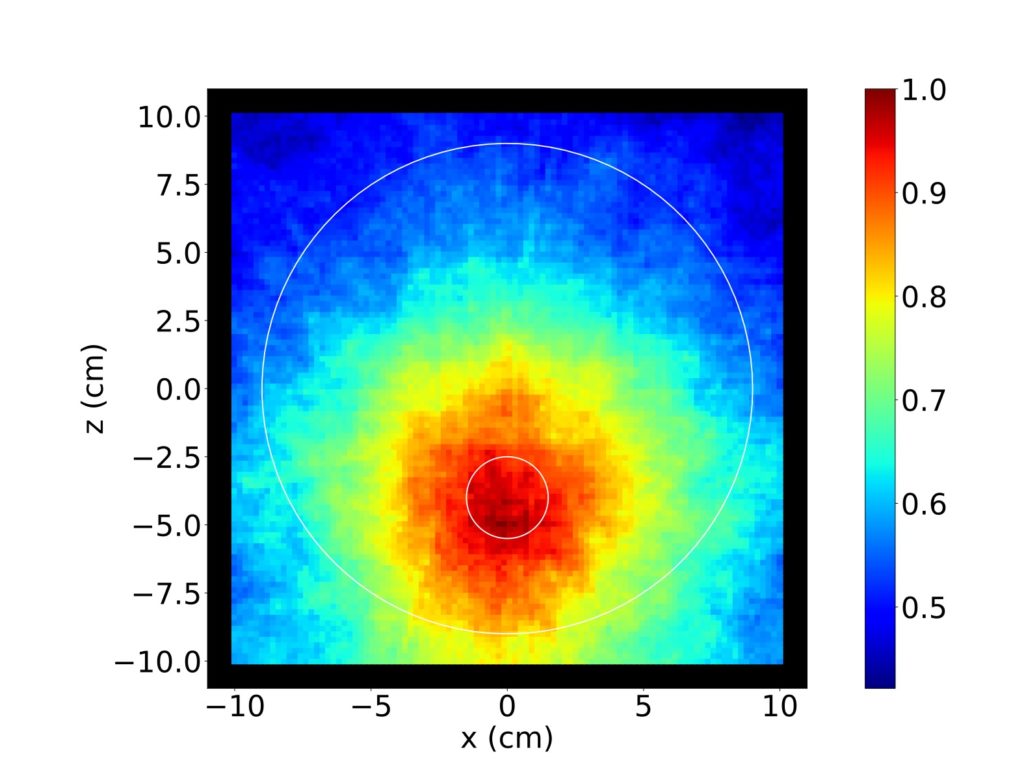
I proposed a design for an imaging camera that could be used for this purpose, and BlueBEAR provided me with the capacity to run detailed particle tracking simulations, with Geant4, to evaluate the feasibility of this camera design. The results from this study were very promising and were published in 2024; the image shown is presented as the main result in this paper, which was generated after a simulation running on BlueBEAR for approximately 30 days https://www.frontiersin.org/journals/physics/articles/10.3389/fphy.2024.1347929/full
Computational fluid dynamics simulations on BlueBEAR: Blood flow during venoarterial extracorporeal membrane oxygenation (VA-ECMO)
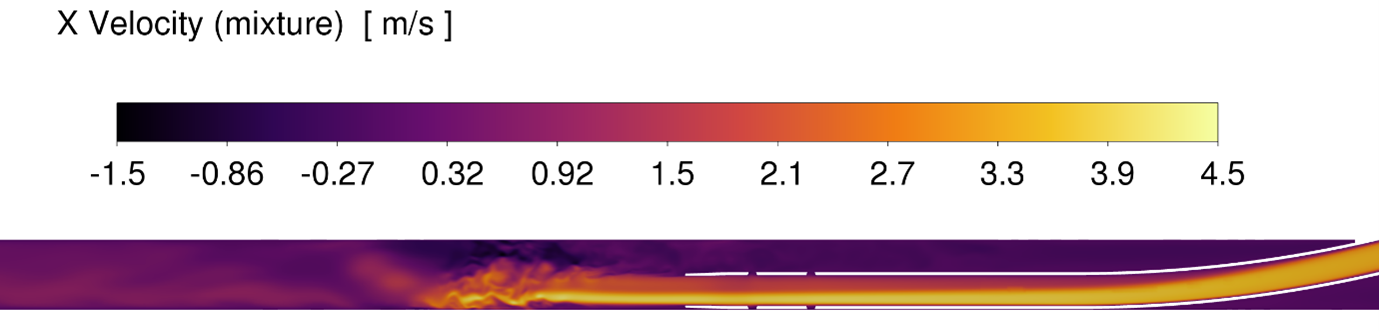
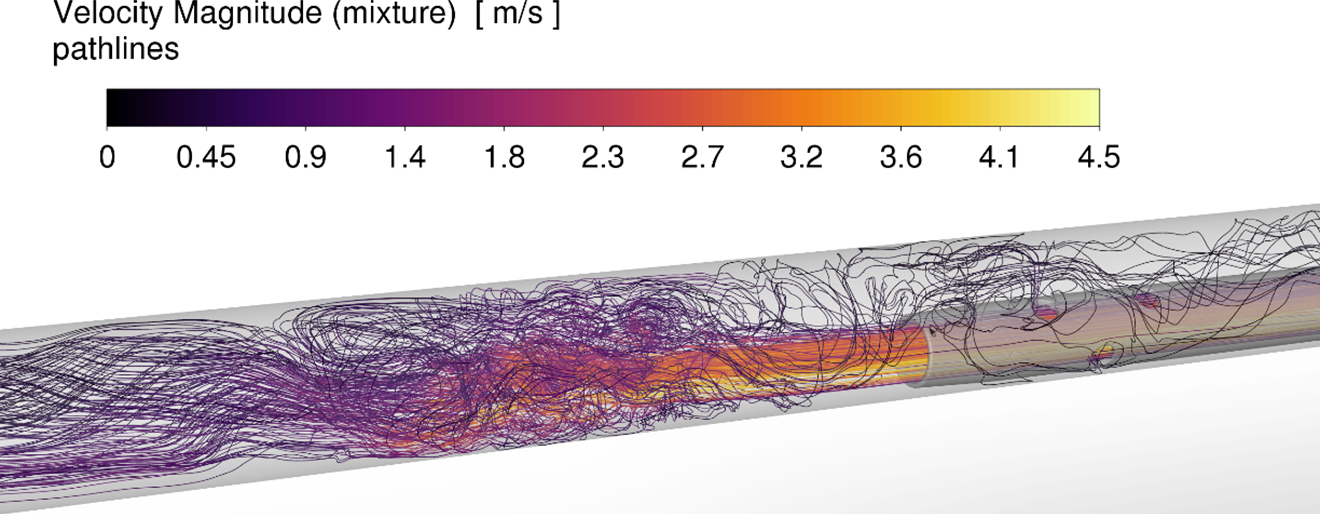
VenoArterial ExtraCorporeal Membrane Oxygenation (VA-ECMO) is a form of life support that offers cardiac and respiratory support. Although it has been used successfully for decades, there are many complications which can arise during treatment that have a significant impact on patient health and survival. To investigate the potential causes of these complications I have run Positron Emission Particle Tracking (PEPT) experiments with a model VA-ECMO setup, and designed Computational Fluid Dynamics (CFD) simulations to run in parallel with these experiments. Once validated against the experimental results, the CFD simulations can provide greater insight into the flow patterns, as well as the ability to investigate models of enhanced complexity. Running these high-fidelity simulations to utilise the full capabilities of the CFD simulations requires the computing power of BlueBEAR, as even when running across 500 parallel cores on BlueBEAR it may take days to simulate 1s of real flow time. The images provided below are examples of a velocity contour and a pathlines plot to demonstrate the detail of the flow that these simulations on BlueBEAR can produce.
We were so pleased to hear of how Kiran was able to make use of what is on offer from Advanced Research Computing, particularly to hear of how they have made use of BlueBEAR HPC – if you have any examples of how it has helped your research then do get in contact with us at bearinfo@contacts.bham.ac.uk.
We are always looking for good examples of use of High Performance Computing to nominate for HPC Wire Awards – see our recent winner for more details.